
Leave Your Message
-
Contact Phone
-
 Contact Email
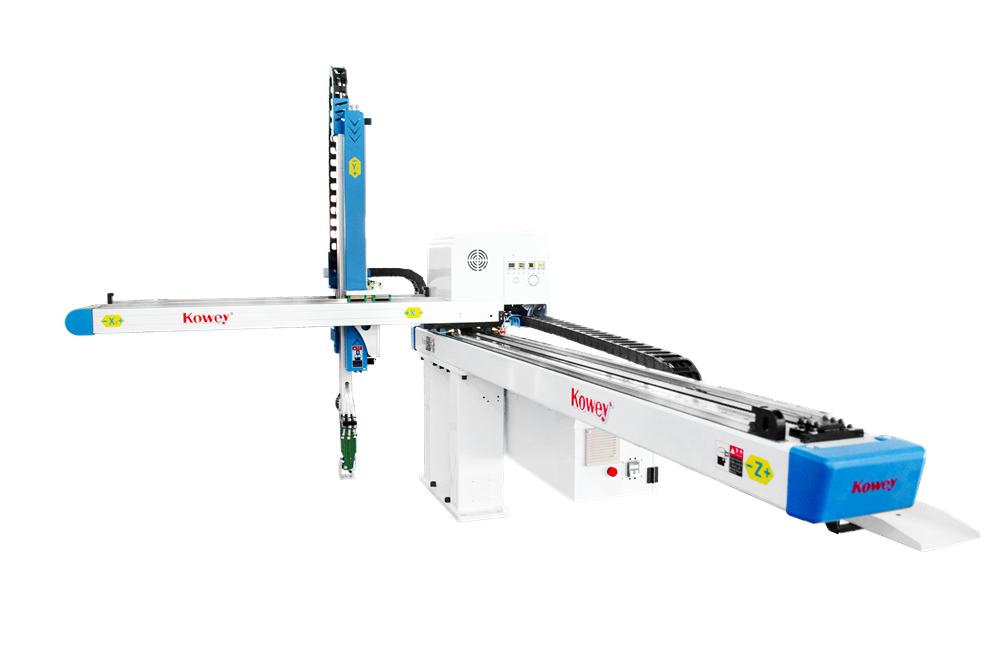
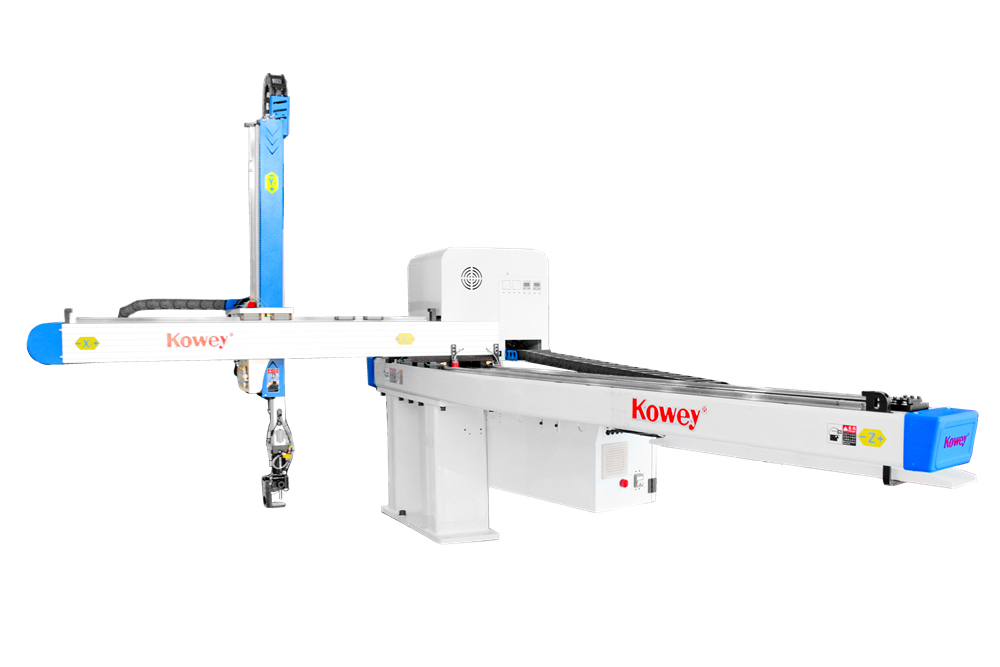
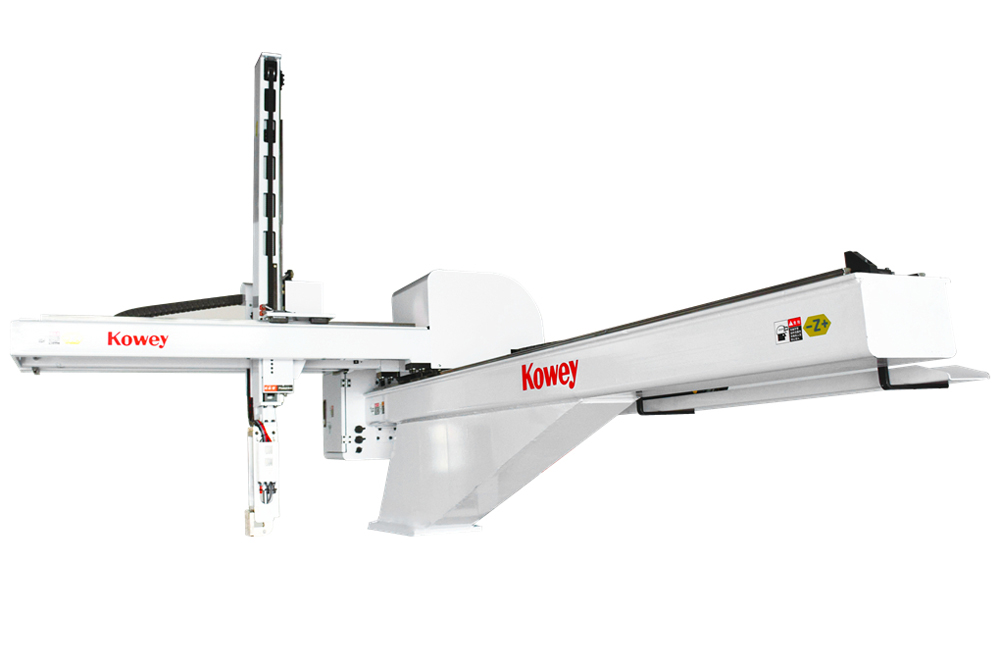
Precision engineered high-speed 3-axis and multi-axis servo robotics tailored for ultra-fast takeout and high-cavitation plastic container molding setups.
The manufacturing sector for plastic container packaging is experiencing a monumental paradigm shift driven by stringent quality benchmarks, sustainable lightweighting programs, and an aggressive demand for faster production cycles. In this high-velocity manufacturing sphere, Cartesian robots—particularly the 3 axis servo robot—stand out as the fundamental backbone of modern injection molding operations. Across food storage containers, beverage bottles, thin-wall dairy tubs, cosmetics jars, and industrial pails, deploying a dedicated 3 axis robot for plastic container packaging guarantees exceptional structural repeatability, ultra-short dry cycle operations, and zero-defect downstream handling.
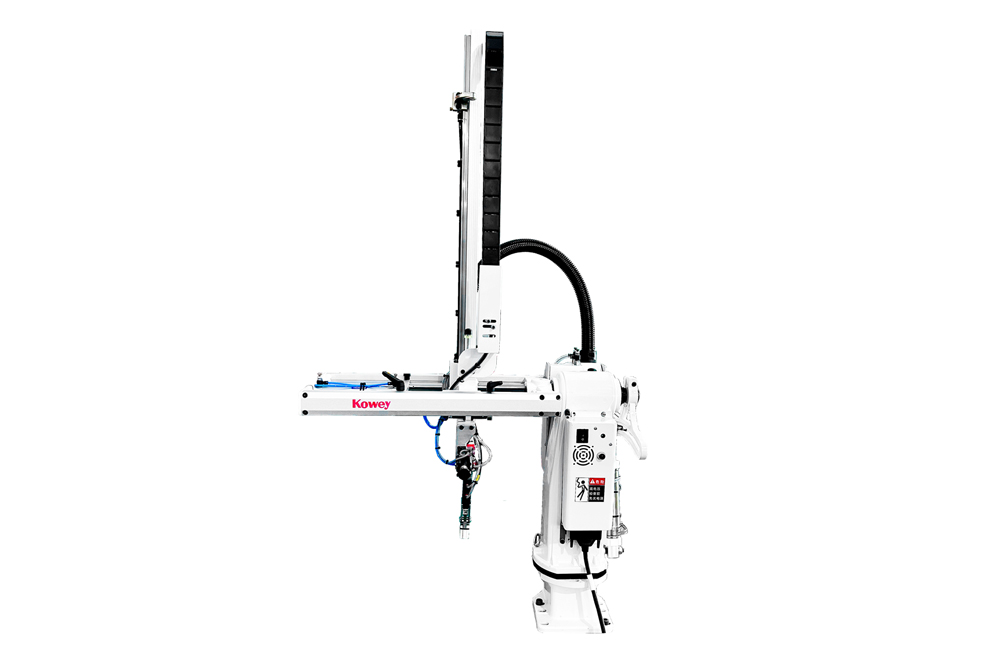
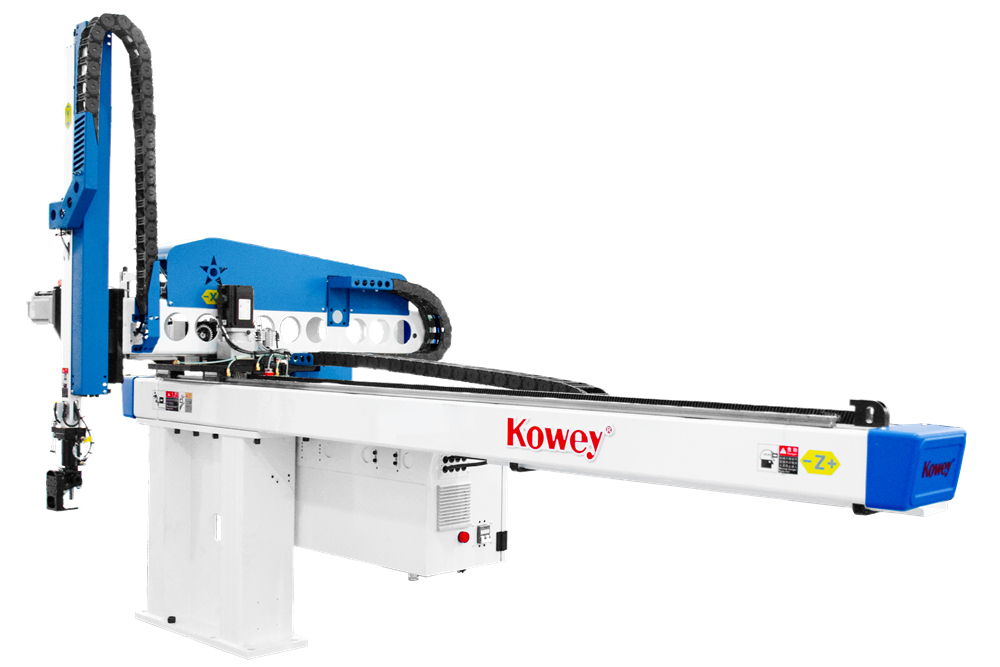
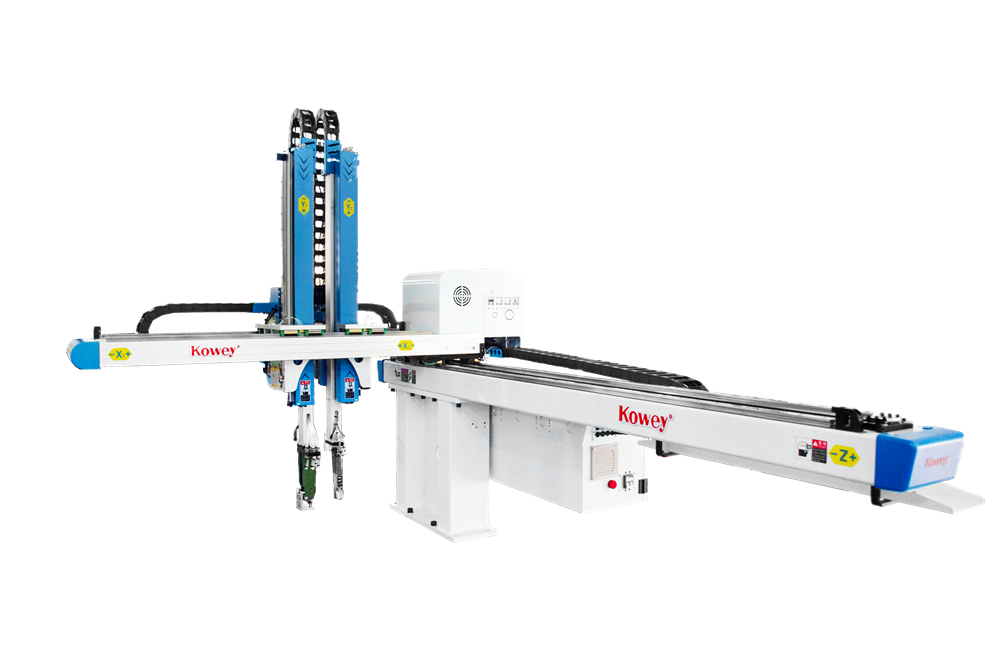
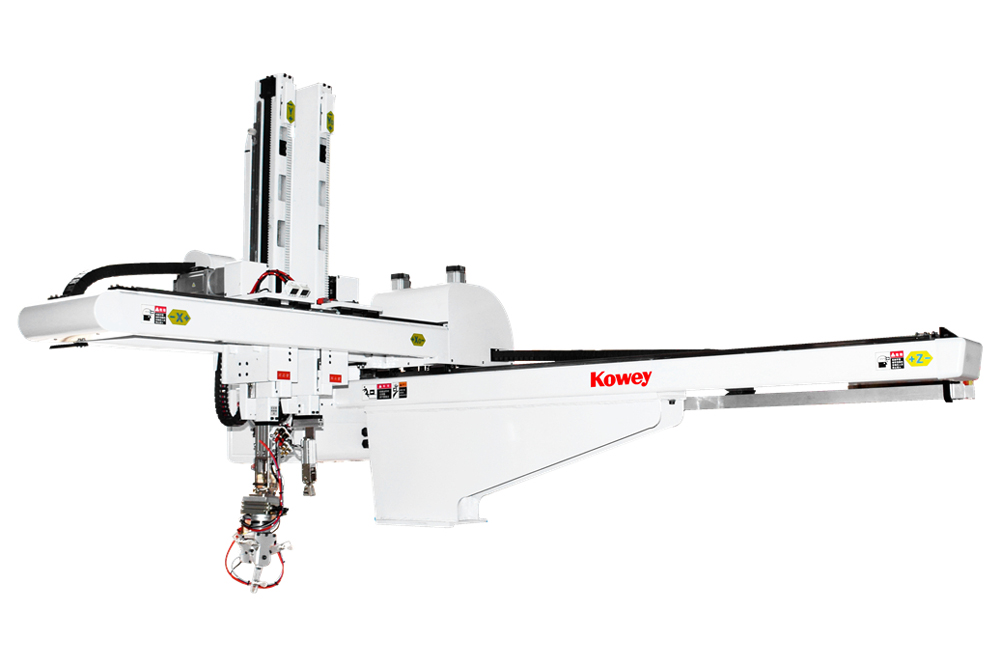
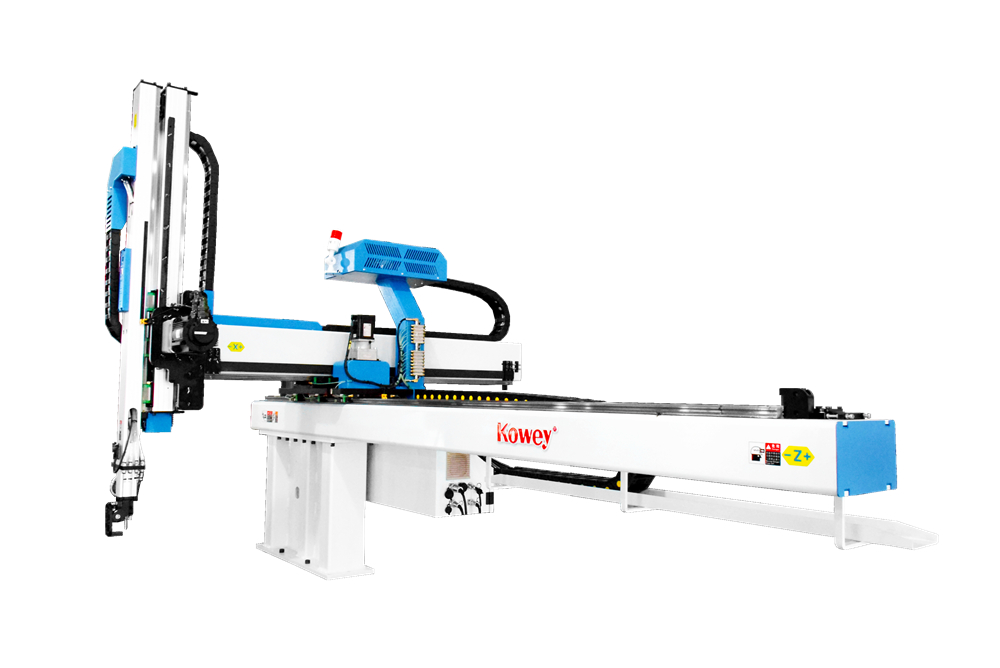
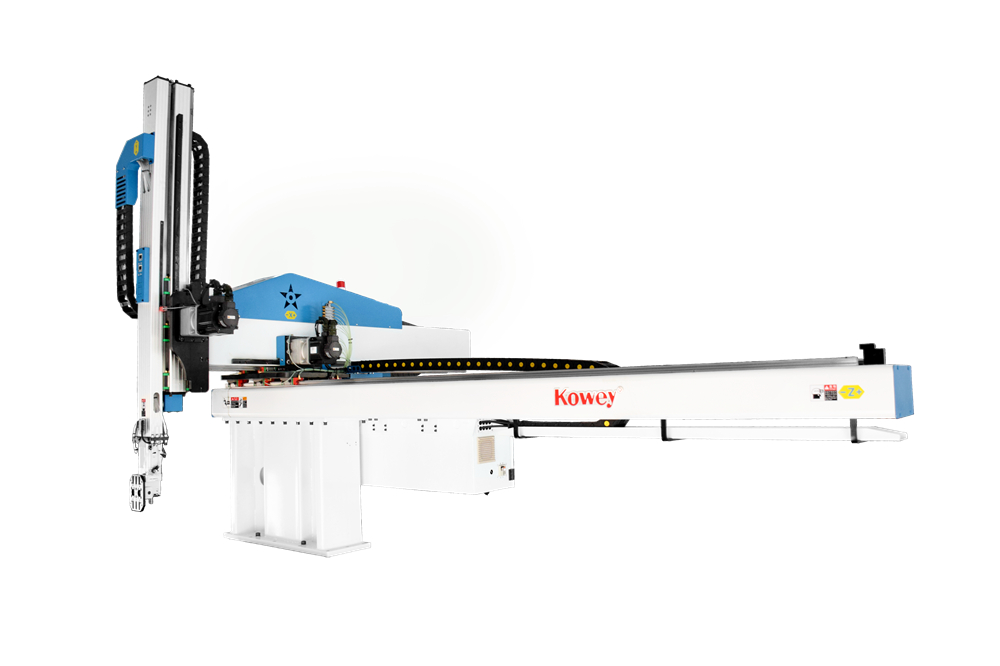
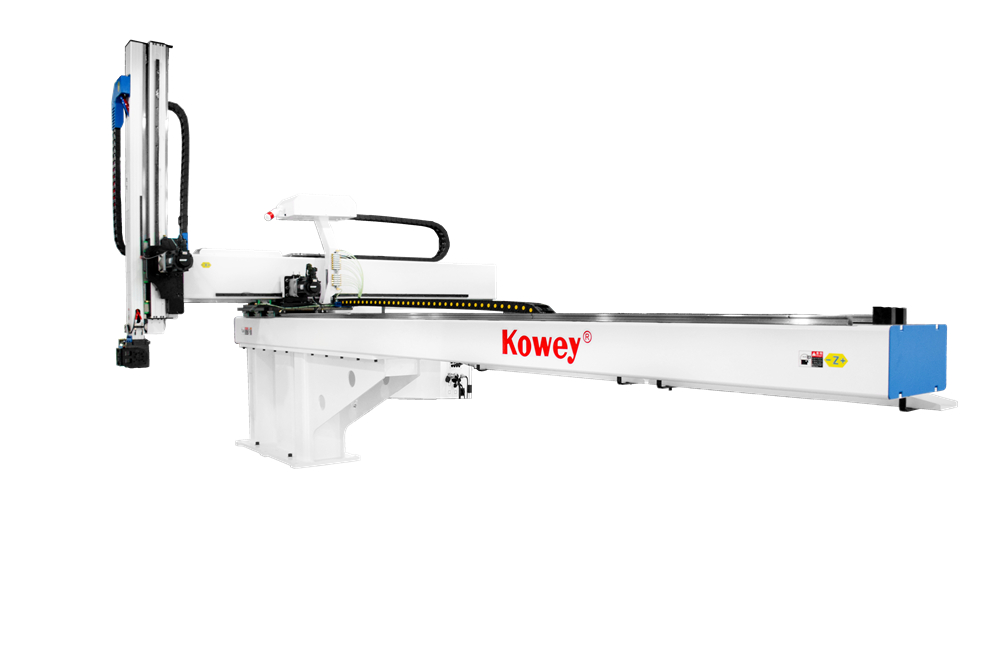
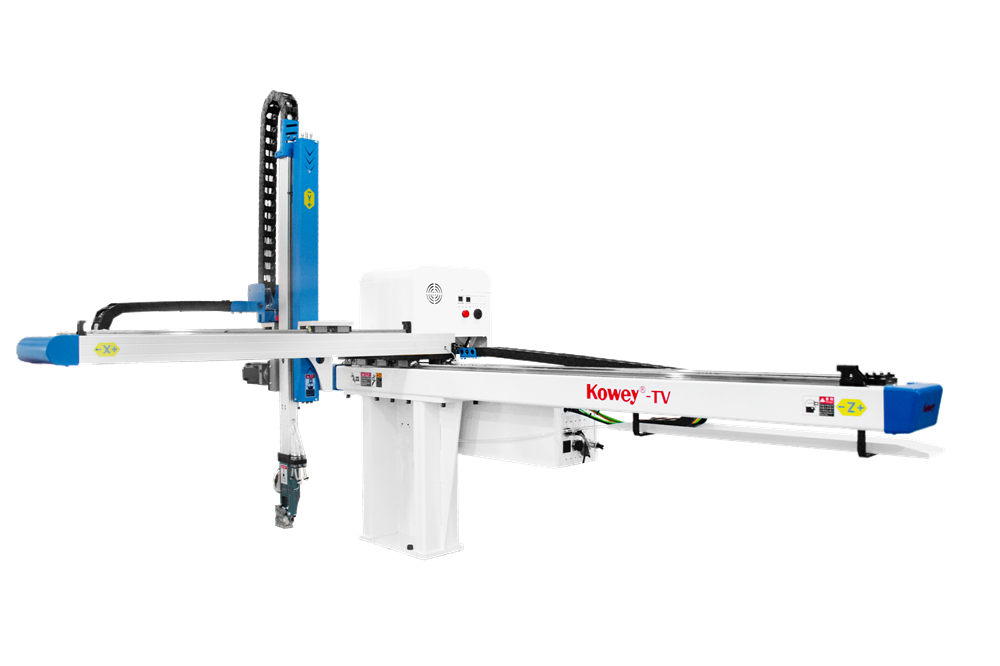
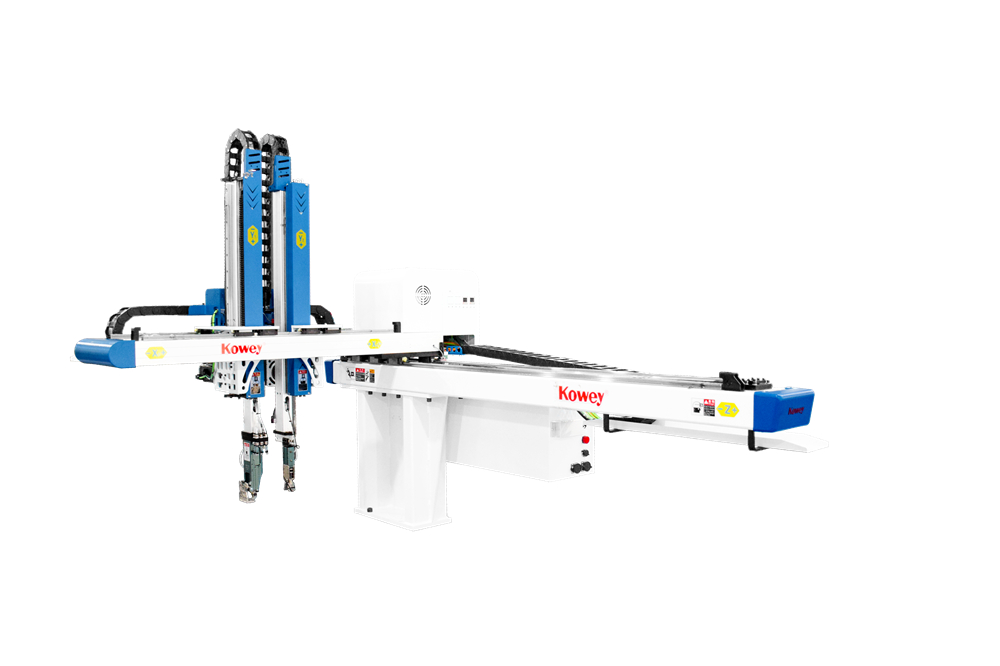
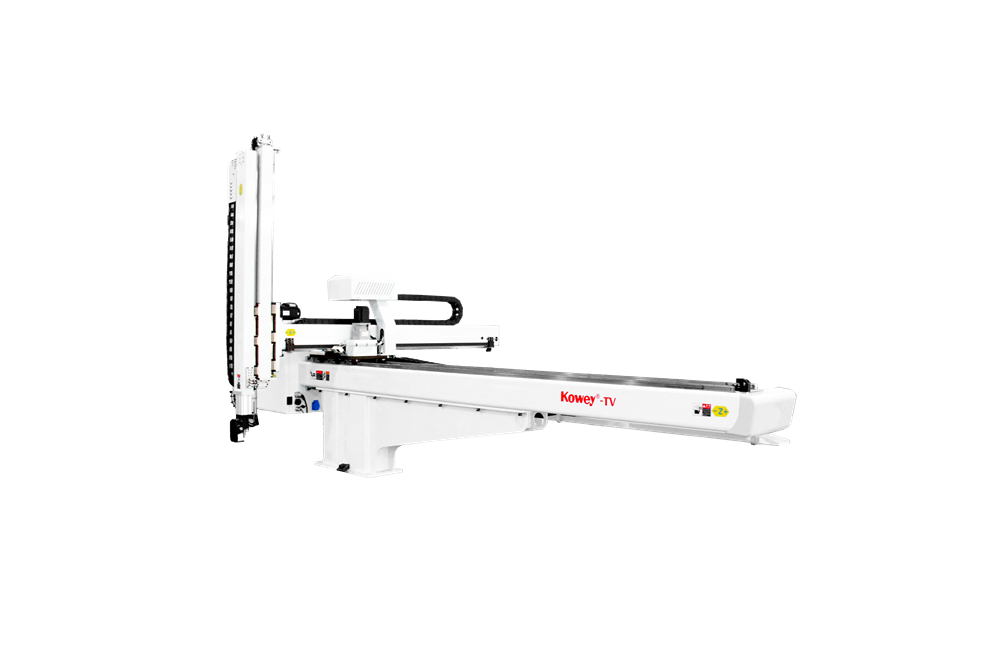
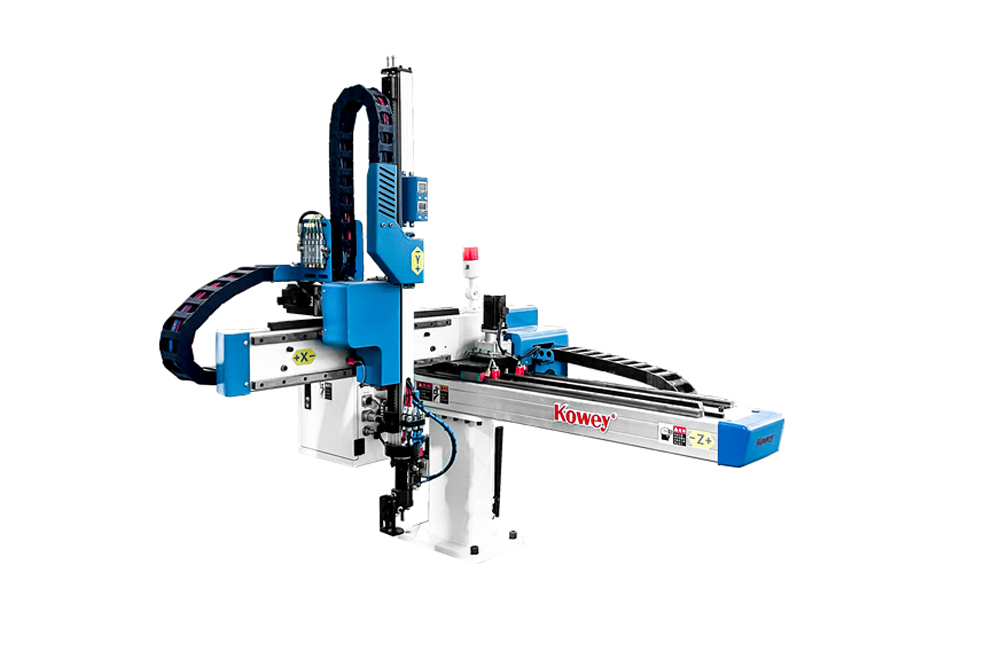
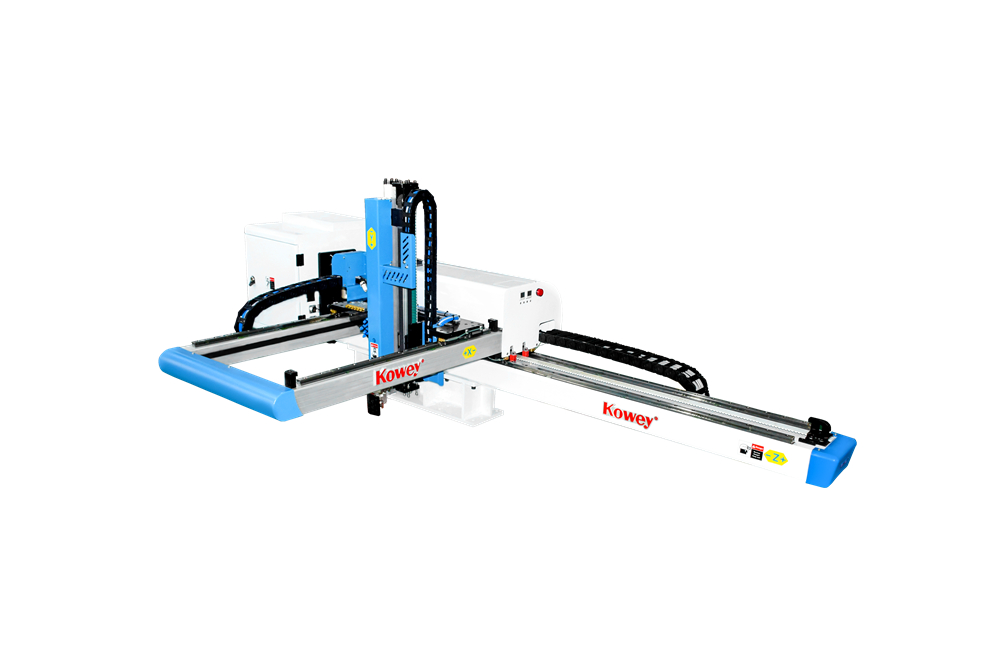
Historically, container demolding relied significantly on gravity drop mechanisms or rudimentary pneumatic sweep systems. While functional for lower-speed commodities, unassisted gravity discharge poses significant risks of product deformation, surface scratching, particulate contamination, and sporadic mold closure collisions. By contrast, a high-rigidity 3 axis Cartesian top-entry robotic system coordinates movement across three orthogonal degrees of freedom—traversing along the main carriage (X-axis), extending the forward extraction arm (Y-axis), and executing vertical insertion/stroke retraction (Z-axis). Driven by synchronized AC servo architectures, these automation powerhouses penetrate open molds during fractional-second clamp clearances to pull fragile, hot-molded polymer containers without compromising part geometry or dimensional integrity.
Optimized lightweight beam mechanics and high-torque servo drives lower mold-open intervention times below 0.6 seconds, eliminating thermal mold stalling.
Custom vacuum end-of-arm tooling (EOAT) engineered with soft non-marking polymer suction prevents scuffs, distortion, and aesthetic damage on gloss surfaces.
Unmatched micro-precision handling across 4, 8, 16, 32, or 64-cavity high-density molds ensures simultaneous orientation, extraction, and neat stacking.
From a commercial investment standpoint, the business case for adopting a 3 axis robot in packaging applications is directly anchored to unit margin enhancements. In the plastic container landscape, where millions of units are produced weekly, trimming cycle times by even 0.3 to 0.8 seconds generates exponential capacity gains without requiring additional floor space or capital allocation for extra injection molding machines (IMMs). A high-speed 3 axis double-stage robot delivers continuous, predictable cycling that runs 24/7 without fatigue, reducing labor variability and enabling molders to meet razor-thin profit margins profitably.
Furthermore, human-touch free extraction addresses stringent hygiene standards in food and medical packaging. Automated pick-and-place extraction eliminates direct human contact with hot items fresh out of the mold, satisfying ISO 22000, HACCP, and cleanroom class certifications. In tandem, real-time rejection sorting systems integrated with the robotic arm automatically isolate short-shot containers or flash defects based on pressure sensor feedback from the injection machine, diverting sub-standard items straight to regrind systems to optimize resin efficiency.
Modern 3 axis robots built for packaging are fundamentally different from general-purpose industrial pick-and-place robots. The architectural demands of packaging require superior rigidity-to-weight ratios to absorb immense kinetic forces during sudden deceleration. Key structural attributes include:
1. Dual-Stage Telescopic Arm Mechanics: To overcome the vertical height restrictions prevalent in standard industrial manufacturing plants, our telescopic vertical arm reduces the overhead profile by up to 40%. The dual-stage movement operates via high-tensile carbon-reinforced timing belts and precision linear motion guides, doubling the stroke speed while dampening dynamic vibration during bottom-dead-center container engagement.
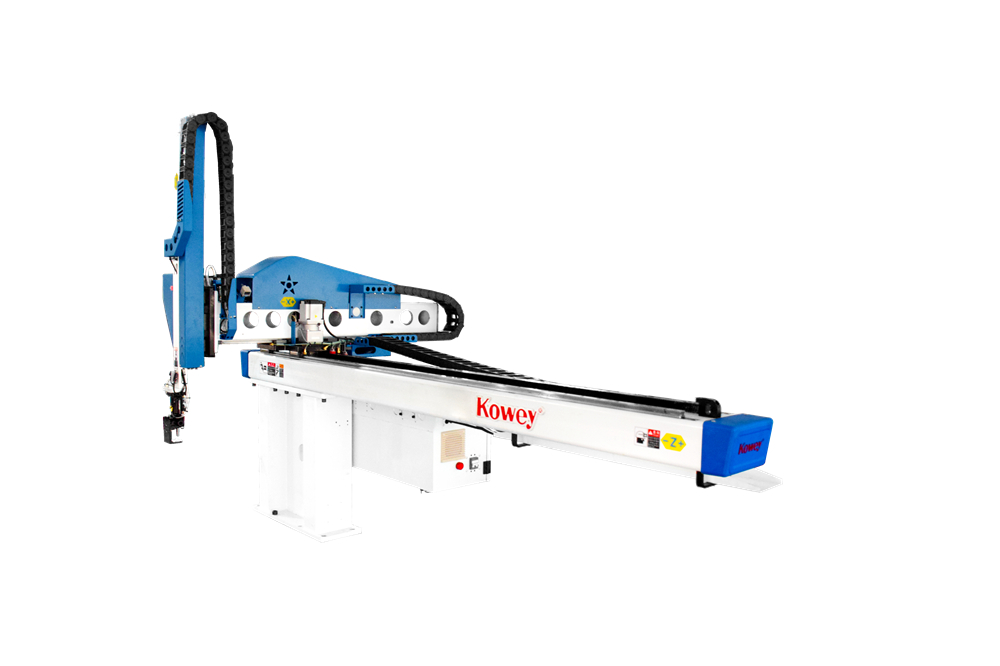
2. Bull-Head High-Rigidity Base Castings: The transition point between the traverse beam and the kick stroke arm represents an area of intense rotational torque. The heavy-duty "Bull Head" structural frame uses stress-relieved modular alloys that eradicate harmonic oscillation, ensuring the vacuum cups align with sub-millimeter precision against the packaging mold cores every single cycle.
3. Advanced EOAT (End-of-Arm Tooling) Systems: Handling thin-walled containers requires sophisticated tooling. EOAT frameworks are designed using ultralight aviation-grade aluminum and carbon fiber trusses, incorporating vacuum ejector cartridges, integrated air blast de-nesting mechanisms, and mechanical perimeter grippers. This ensures containers are extracted uniformly without vacuum dimples, even while parts are cooling rapidly.
The boundary between traditional motion mechanics and Industry 4.0 intelligence is rapidly dissolving. Future development of 3 axis robots for plastic container packaging centers around edge computing, predictive AI maintenance, and autonomous self-tuning algorithms:
Predictive Vibration Damping via AI: Emerging servo controllers utilize adaptive frequency response algorithms to monitor arm vibration signatures. If thermal expansion or mechanical wear begins shifting motion harmonics, the drive autonomously adjusts acceleration-deceleration curves, avoiding harsh vibrations that might crack fragile container lip seals.
Integrated Inline Edge Vision: Modern packaging lines demand 100% inline quality verification. High-speed cameras mounted directly onto the traverse beam or adjacent post-handling stations capture 360-degree container profiles within milliseconds of extraction, verifying gate cutoff quality, ovality, thin-spot transparency, and label positioning before stacking.
Energy Regeneration and Green Manufacturing: Environmental metrics have become critical corporate purchasing criteria. Modern servo architecture features kinetic energy recovery systems (KERS) that convert braking deceleration energy along the traverse and vertical axes back into electrical power, feeding it into shared DC bus circuits to cut machine energy footprints by up to 22%.
Explore our full line of specialized 3 axis and 5 axis Cartesian robots configured for plastic container extraction, deep-draw packaging, and high-speed packaging post-processing.
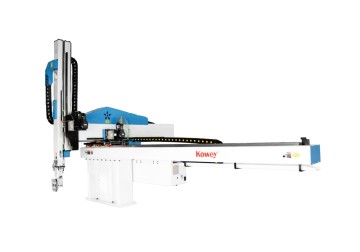
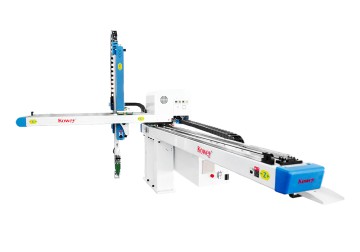
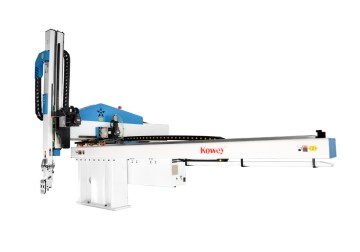


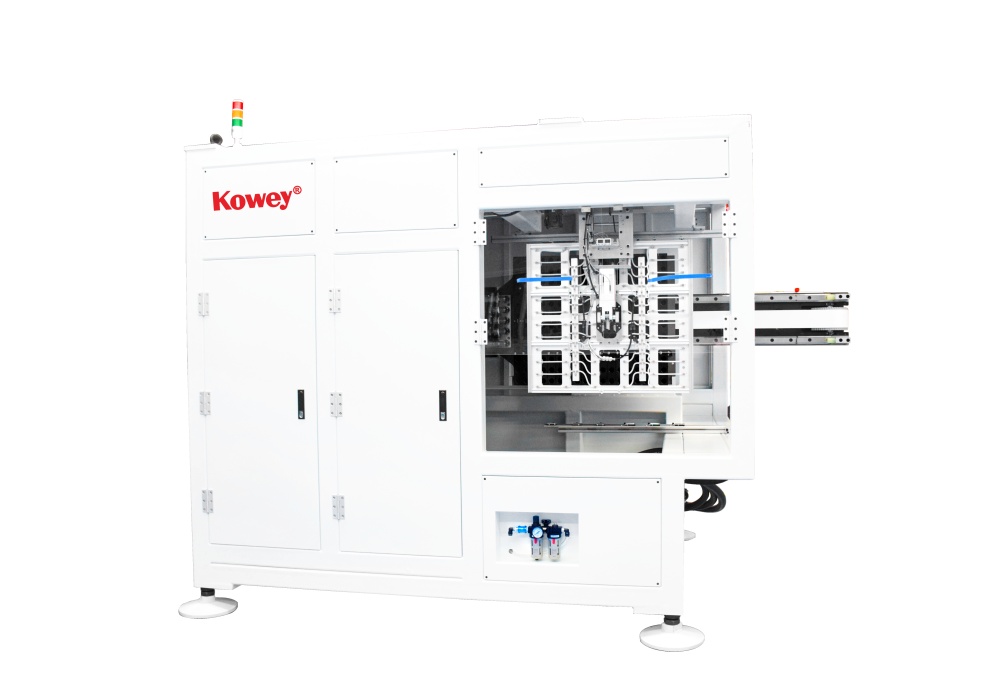
From single sprue pickers to high-capacity multi-axis servo systems and turnkey In-Mold Labeling (IML) configurations for global packaging manufacturers.