
Leave Your Message
-
Contact Phone
-
 Contact Email
Ultra-responsive multi-axis servo configurations engineered for high-speed take-out, tight-tolerance demolding, and integrated downstream handling.
Navigating escalating throughput demands, resin complexities, and geometric challenges in contemporary injection molding.
Over the past three decades, standard 3-axis Cartesian injection robots—operating strictly across linear X, Y, and Z planes—served as the operational benchmark for straightforward pick-and-place tasks. However, modern polymer manufacturing confronts radically altered parameters: ultra-thin walls, deep undercuts, delicate high-gloss finishes, complex multi-material overmolding, and demanding insert-placement cycles.
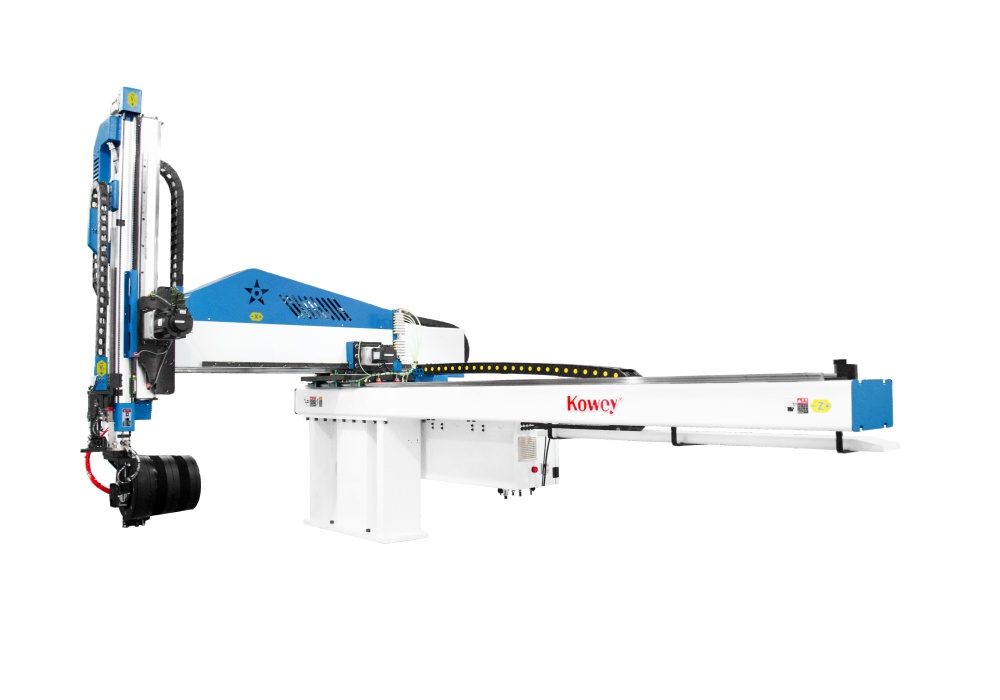
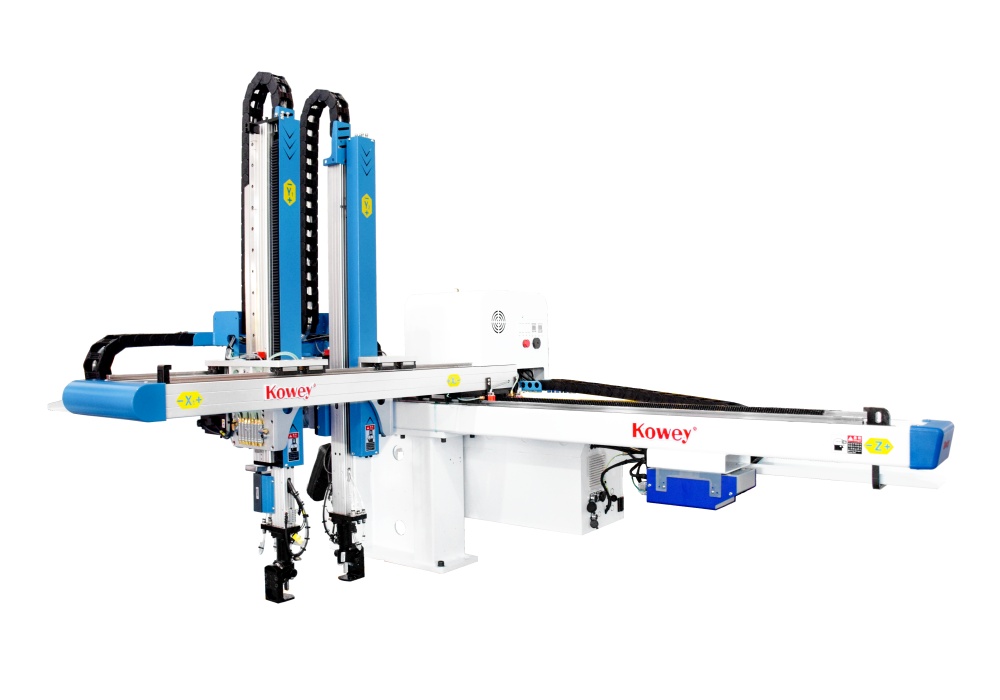
Traditional 3-axis units rely heavily on clumsy pneumatic flip cylinders at the wrist. These pneumatic devices introduce mechanical vibration, lack intermediate positional control, and demand substantial mold open clearance. In contrast, a genuine 5-axis injection robot for automated parts removal implements digitally coordinated servo motors across all primary axes (Traverse, Kick/Reach, Vertical) as well as the rotational wrist axes (B-axis tilt and C-axis rotational swivel).
By synchronizing wrist interpolation prior to entering the mold platen space, 5-axis systems avoid linear pauses, drastically shortening the vulnerable mold-open dwell time.
Closed-loop absolute servo encoders guarantee vibration-free component extraction and micron-precision secondary orientation on downstream conveyors.
This full servo integration transforms the robot from a basic unloader into an agile manipulation center. By dynamically tracking complex geometric paths inside the daylight opening, the 5-axis robot maneuvers around ejector pins, side-actions, core pulls, and mold ties without requiring excessive mold opening strokes. This directly cuts dry cycle durations, protects expensive molds from collision failures, and ensures consistent quality in tight-tolerance production lines.
Architectural innovations engineered to maximize cycle repeatability, energy efficiency, and operational safety.
Continuous CNC-grade trajectory computation allows smooth, simultaneous 5-axis contouring. The end-effector approaches negative angles and complex cavities with fluid micro-movements, eliminating sudden jerk profiles.
Proprietary dynamic load-balancing dampens high-frequency harmonic oscillations at extended arm reaches. End-of-arm tooling stabilizes instantaneously, safeguarding cosmetic surfaces from scratches.
Direct servo control over pitch and orientation enables in-line sprue separation, vision inspection presenting, gate degating, flame treatment, and organized matrix palletizing without secondary handling stations.
Examining field-tested performance benchmarks across demanding manufacturing sectors.
Automotive plastic molders face stringent challenges: Class-A surface aesthetics on exterior bumper fascias, optical clarity on headlamp lenses, and deep ribs on internal door modules. When molding large instrument clusters or radiator grilles, the parts cannot simply be pulled straight out along the mold opening vector. They often cling to angled lifters or require simultaneous diagonal release.
A 5-axis top-entry servo robot utilizes its programmable B and C axes to perform coordinated extraction. The end-effector can grip the molded component, match the dynamic trajectory of angled lifters as the mold opens, rotate 15 degrees to clear stationary tie bars, and exit the mold perimeter cleanly. Once outside, the robot can re-orient the part 90 degrees to present it to an ultrasonic gate-cutting station, an automated deburring head, or an in-line optical scanning rig prior to conveyor drop-off.
In ISO Class 7 and Class 8 medical molding cleanrooms, contamination vectors must be aggressively controlled. Pneumatic exhaust, grease particulates, and erratic part drops onto conveyors are unacceptable. Medical disposables—such as pipette tips (often 64- or 96-cavity molds), micro-centrifuge tubes, syringe barrels, and blood collection vials—demand rapid, highly organized extraction.
Here, a high-speed 5-axis injection robot operates with cleanroom-certified low-particulate linear guideways and enclosed servo housings. The robot extracts high-cavity arrays without allowing any parts to lose spatial orientation. It transfers the entire shot with pinpoint accuracy into secondary racks, automated blister packaging nests, or leak-testing fixtures, ensuring 100% traceability per cavity and zero airborne particle emission within the mold platen zone.
Food container buckets, yogurt tubs, and closures are dominated by split-second economics where total cycle times routinely dip below 4.0 seconds. In IML applications, the robot carries a dual responsibility: it must introduce statically charged or vacuum-held polypropylene labels into the female cavities with sub-millimeter precision, while simultaneously removing the finished, hot-formed thin-wall containers from the male cores.
With 5-axis servo agility, the robot achieves optimized entry and exit profiles. Instead of waiting for the mold to reach full stroke, the robot dynamically synchronizes its descent with the clamp opening motion. The secondary rotational axes allow rapid simultaneous label placement and vacuum cup engagement, shaving tenths of a second off the critical mold-open window and drastically lowering cost-per-part in multi-million unit production runs.
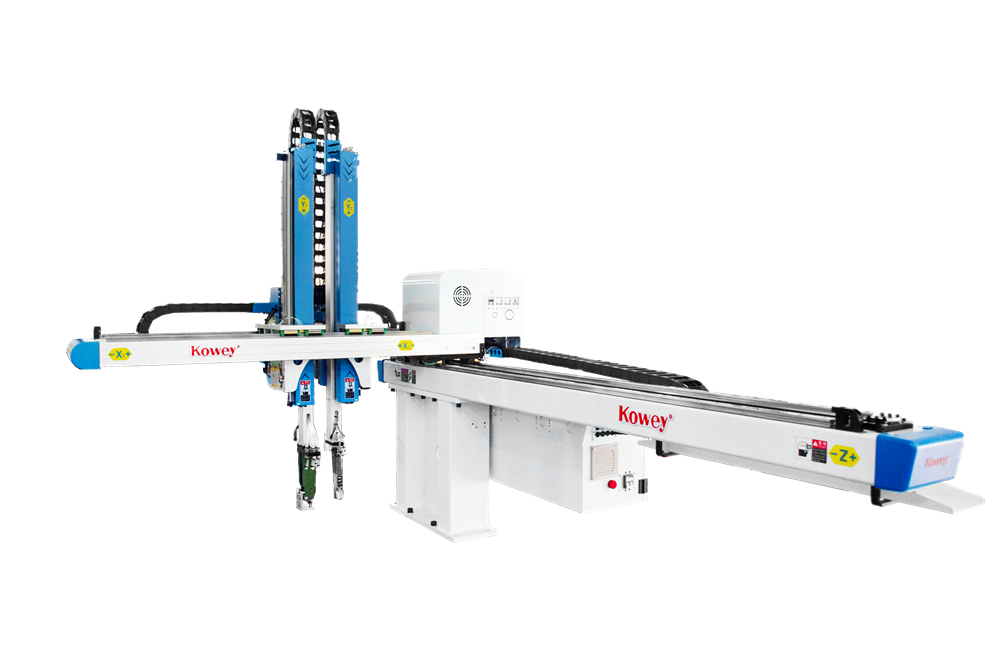
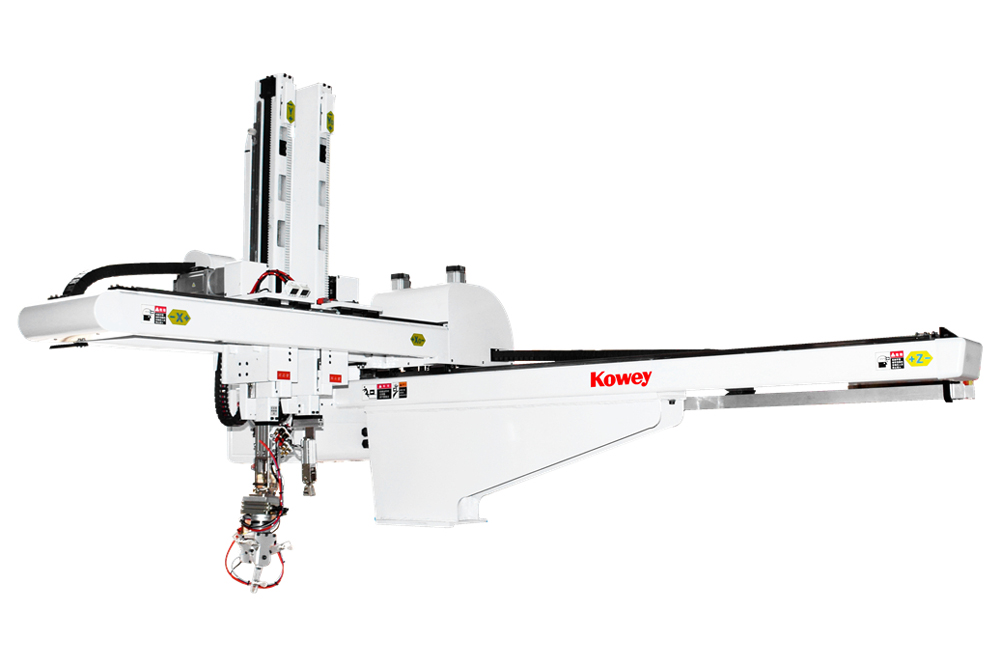
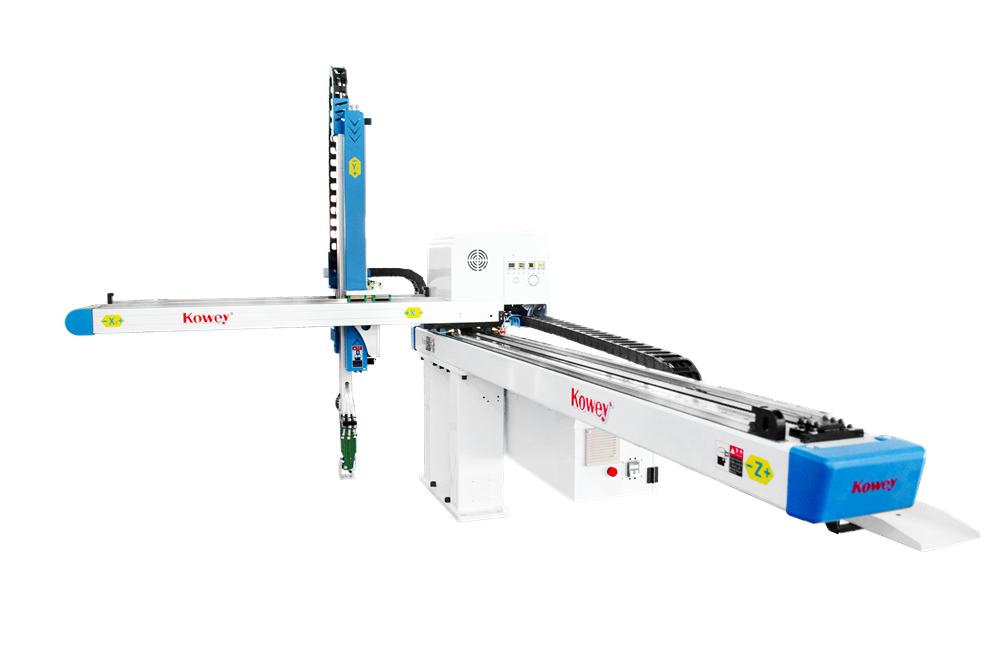
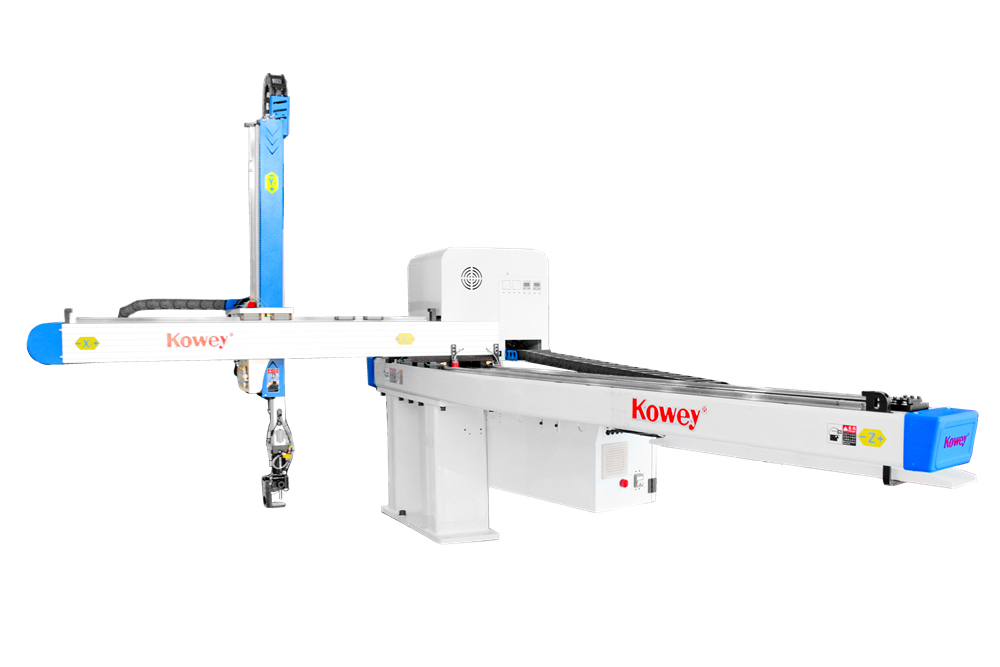
Comprehensive portfolio of standard, special, and non-standard industrial robots designed for seamless IMM compatibility.
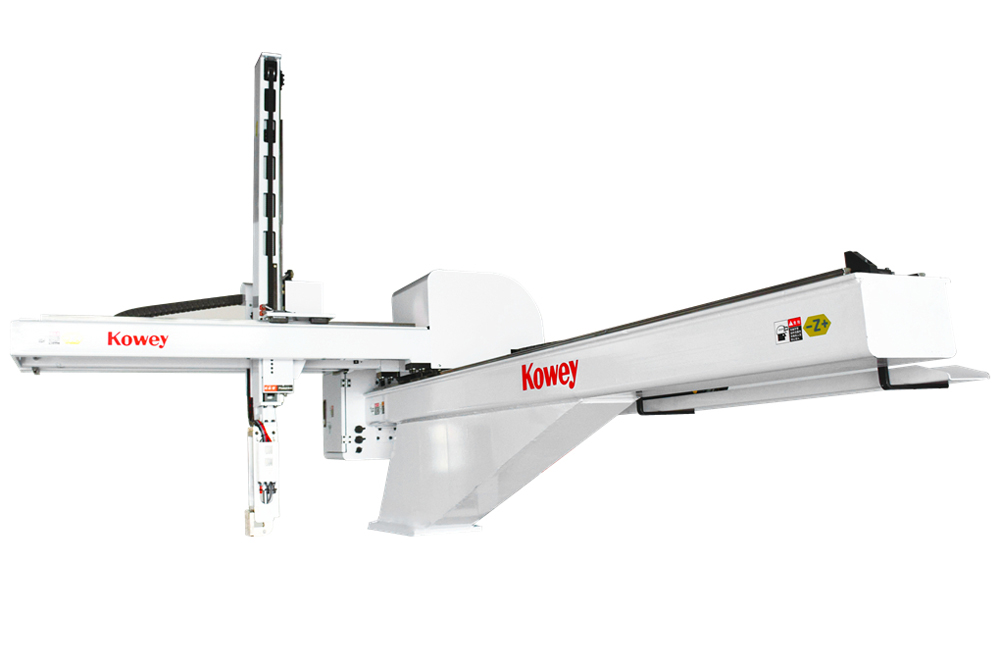
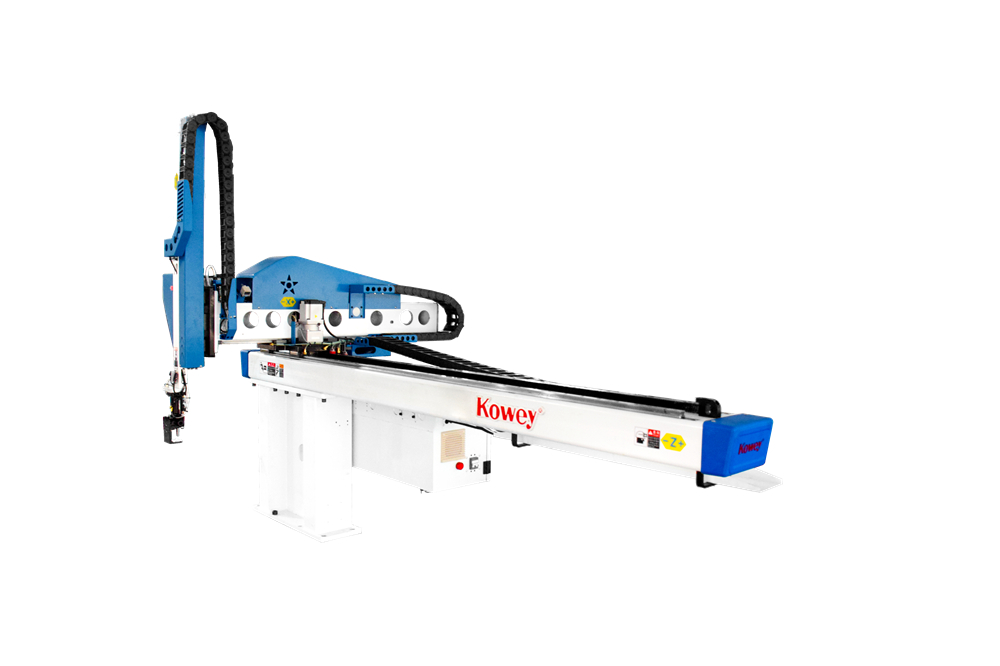
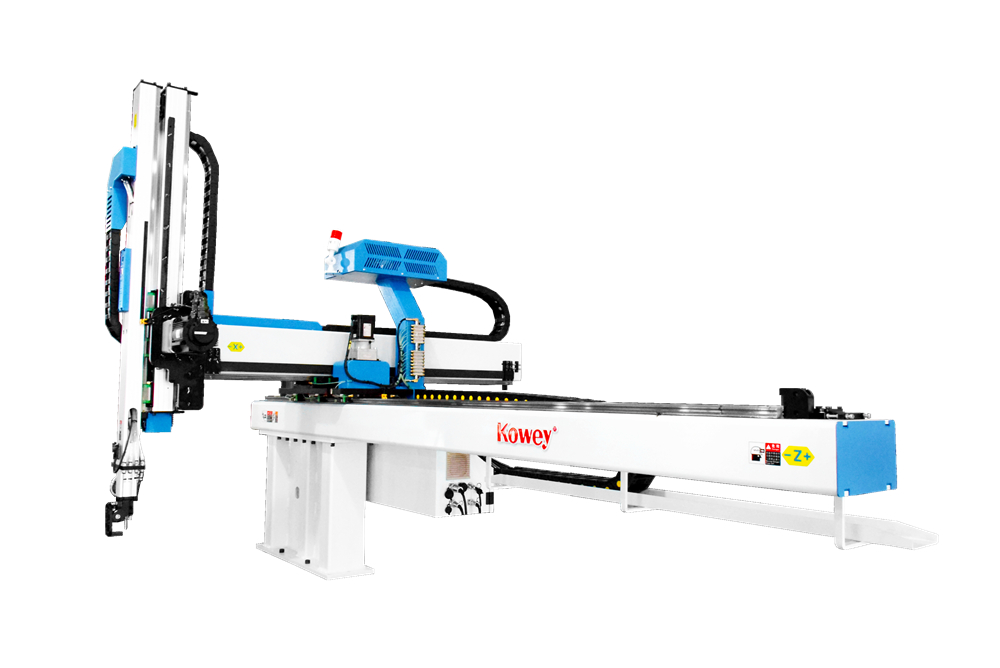
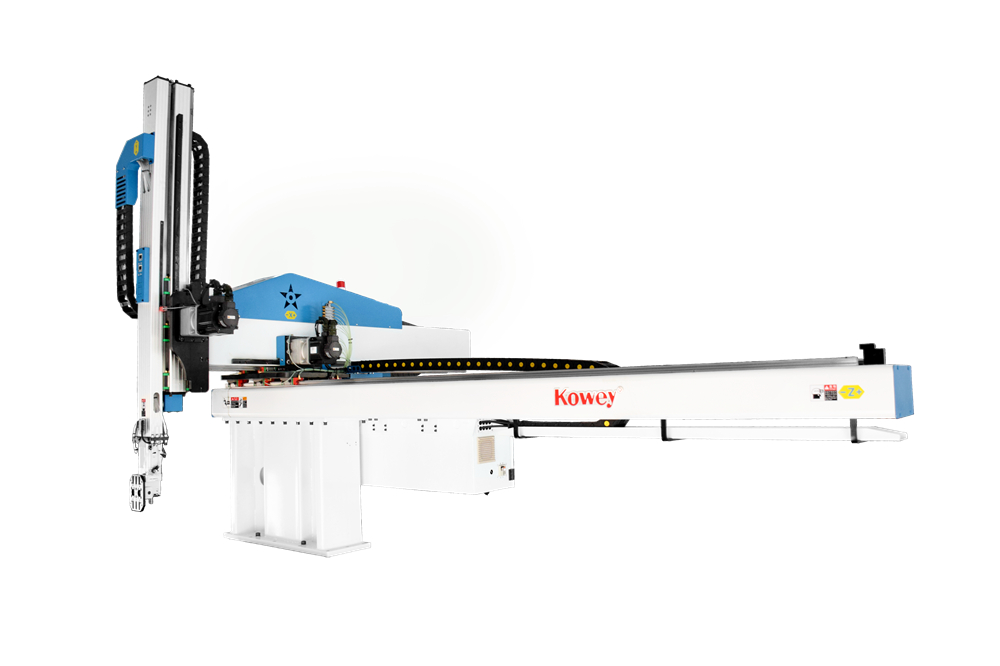
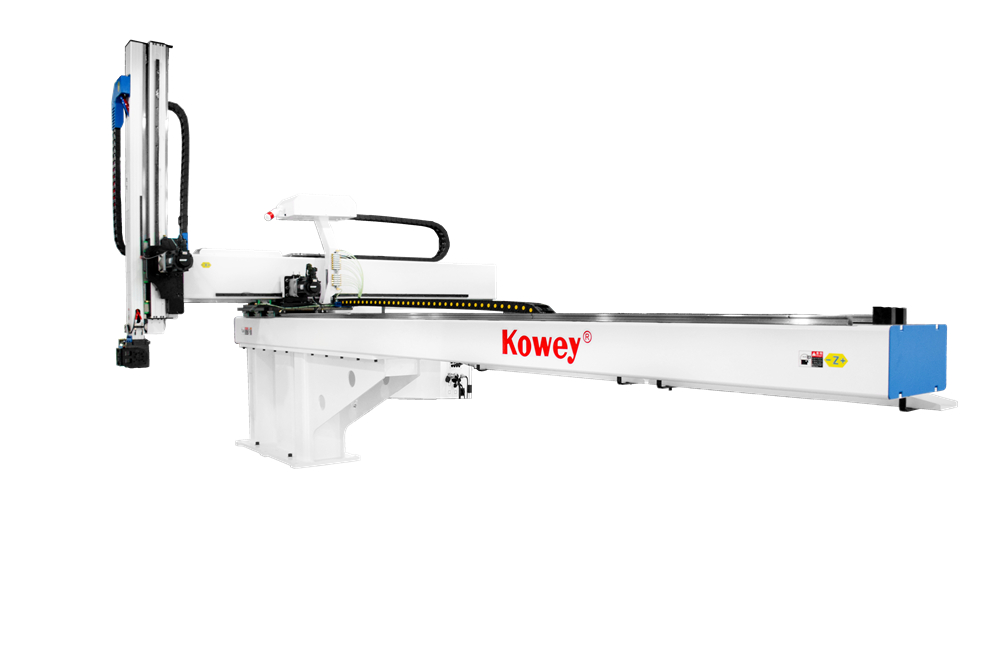
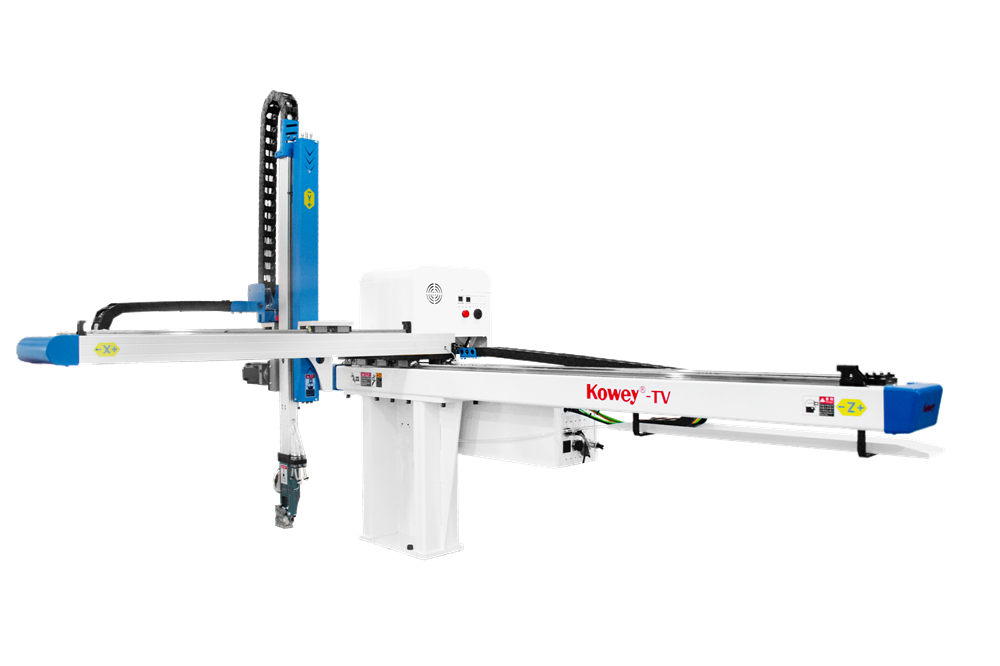
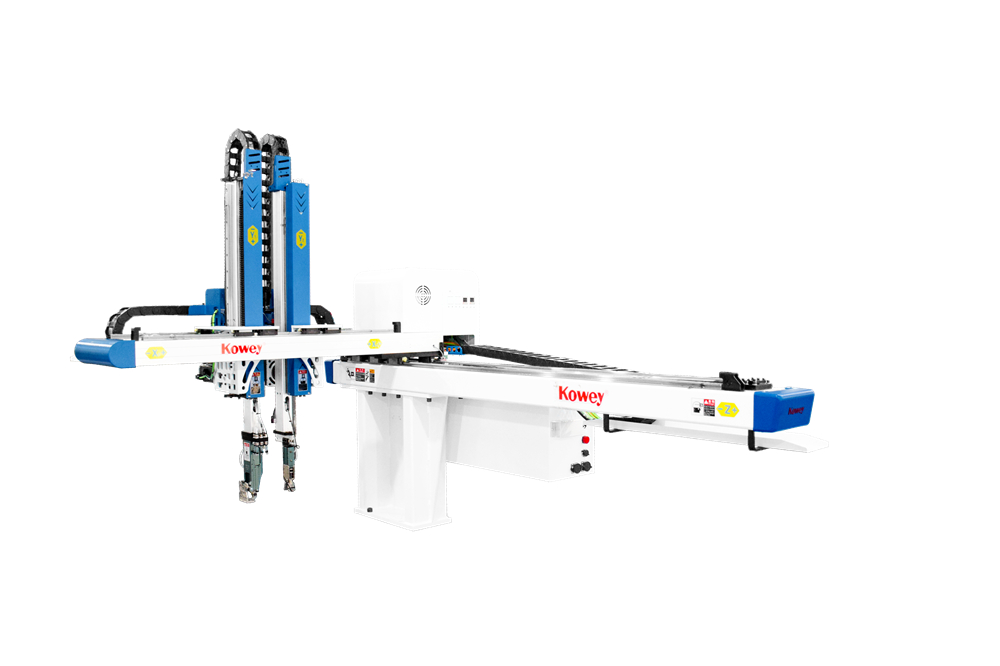
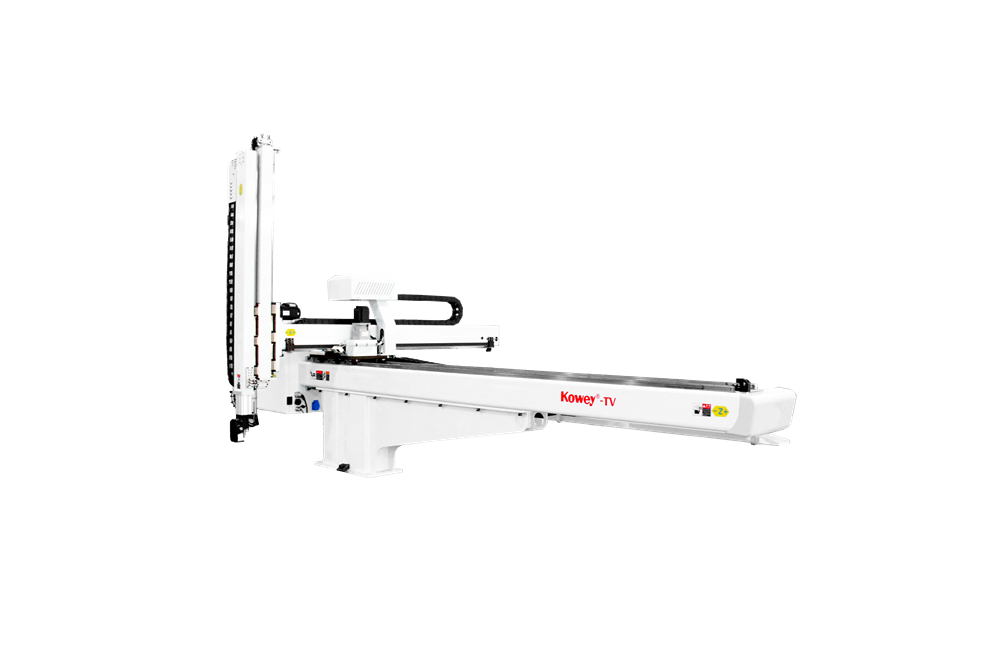
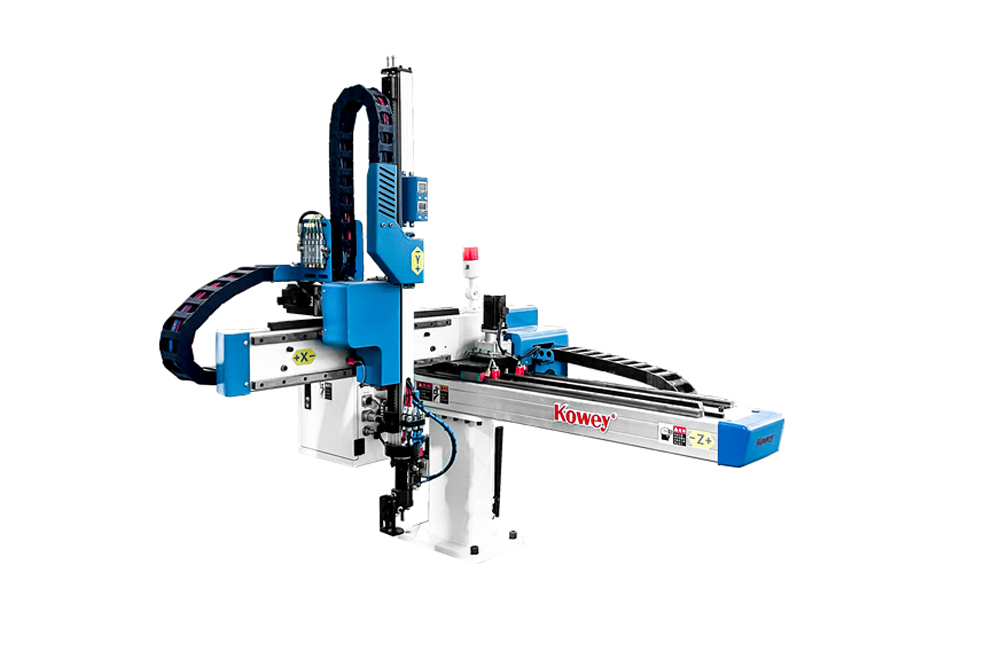
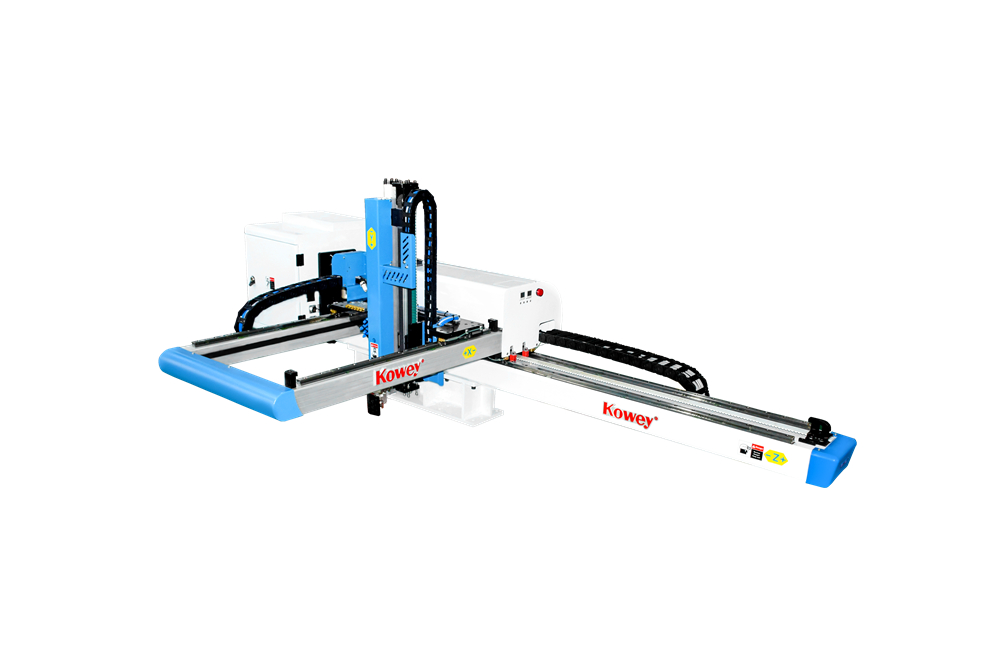
How artificial intelligence, predictive telemetry, and unified protocols are reshaping the factory floor.
The contemporary 5-axis injection robot is no longer an isolated mechanical device; it functions as an intelligent quality verification checkpoint. Equipping the End-of-Arm Tooling (EOAT) with lightweight edge-computing vision sensors and thermographic infrared cameras allows immediate part inspection while the components are being retracted from the core. Thermal profiling can detect cooling inconsistencies, short shots, or gate burn marks within 200 milliseconds of extraction.
If an anomaly is detected, the 5-axis kinematic controller dynamically adjusts its drop path. Rather than stacking the defective component with acceptable batches, the robot automatically diverts the flawed piece to an isolated reject chute, instantly alerting the injection molding machine's control system to adjust barrel temperatures, holding pressure, or cushion limits before scrap multiplies.
Historically, robots interacted with injection machines via basic dry-contact relays (Euromap 12 or Euromap 67). Today, modern automation systems are standardizing on Euromap 79 / OPC 40079, which harnesses OPC UA architecture for full digital twinning and bidirectionally shared operational parameters.
Through this open, cyber-secure network interface, the 5-axis robot continuously communicates its precise instantaneous position, motor torques, drive temperatures, and cycle milestones back to the central MES (Manufacturing Execution System). Mold setups become genuinely plug-and-play: loading a mold recipe on the injection molding machine automatically transmits the required 5-axis motion profiles, vacuum threshold parameters, and safety interlock dimensions directly to the robot pendant, eliminating human entry error.
With industrial electricity tariffs climbing globally, kinetic energy recovery systems (KERS) have migrated into multi-axis robotic drives. In a typical take-out sequence, the vertical servo axis executes high-deceleration braking dozens of times per minute. Modern servo drives equipped with active regenerative units convert this deceleration kinetic energy back into electrical current, feeding it into the shared DC bus or returning it to the plant grid. In continuous 24/7 high-volume facilities, regenerative drives deliver between 15% and 25% net electrical power savings across the robotic automation cell.
A strategic framework for evaluating robot sizing, wrist torque, and payback metrics.
When selecting a 5-axis injection robot, the aggregate payload rating must include not merely the weight of the molded polymer components, but the total mass of the End-of-Arm Tooling (EOAT)—including suction cups, pneumatic nippers, mechanical grippers, manifold blocks, and cable tracks. Because a 5-axis robot rotates and tilts this payload dynamically, calculating dynamic torque (Nm) and moments of inertia (kg·cm²) around the B and C axes is critical.
Under-specifying wrist torque can result in micro-chatter during rapid high-speed index movements, inducing premature wear on servo gearheads. Top-tier engineering design incorporates structural lightweighting—such as carbon-fiber mounting plates and topology-optimized 3D-printed titanium vacuum manifolds—to minimize overhang inertia and exploit maximum servo acceleration.
Investment justification for a high-performance 5-axis robotic cell typically rests on three quantifiable operational metrics:
Complete product spectrum of high-speed top-entry, heavy-duty PET, and bull-head servo injection robots.