

Leave Your Message
-
Contact Phone
-
 Contact Email
Engineered for high-cavitation thin-wall food containers, drinkware, caps, and industrial bucket molding.
Rising demands for thin-wall packaging, food-contact hygiene, and round-the-clock efficiency push converters toward full 5-axis servo motion control.
The global plastic packaging sector is undergoing a profound structural shift driven by sustainability directives, rising resin costs, and severe industrial labor shortages. Whether producing thin-wall takeaway containers, dairy tubs, tamper-evident closures, pharmaceutical vials, or 20-liter industrial paint pails, modern converters must operate at relentless speeds. Traditional pneumatic actuators or standard 3-axis Cartesian beam robots, while historically sufficient for simple unoriented drop-ejection, are failing to keep pace with contemporary manufacturing demands.
Modern injection molding machines (IMMs) cycling between 3.5 to 7.0 seconds require take-out robots that enter and exit the mold open space in mere fractions of a second—often under 0.6 seconds of mold open intervention time. At the same time, containers must not simply be grabbed and dropped into conveyors. They must be precisely extracted to avoid flash and surface marring, rotated 90 or 180 degrees, nested in stacks, verified via downstream optical cameras for seal lip integrity, and presented cleanly to automated packaging lines or case packers. This multi-step handling directly inside or adjacent to the molding cell has made the 5-axis servo injection robot the gold standard in competitive packaging operations.
Complete 5-axis synchronized servo interpolation allows the end-of-arm tooling (EOAT) to negotiate complex undercut molds, internal threads, and asymmetric packaging contours smoothly without cycle bottlenecks.
Engineered with lightweight carbon-fiber composite arms and rigid dual-stage telescopic beams, modern 5-axis systems execute take-out strokes at peak accelerations reaching 60 m/s², preserving vital cycle seconds.
Enclosed cable chains, dry-lubricated linear rails, and enclosed zero-backlash harmonic drive wrists eliminate grease splatter, meeting stringent ISO Class 7/8 and HACCP food-contact requirements.
Eliminate human contact, drop scrap rates below 0.05%, and safeguard sensitive hot-runner molds from mechanical crashes via real-time servo torque monitoring and intelligent anti-collision algorithms.
A technical breakdown of mechanical degrees of freedom, trajectory agility, and operational versatility.
In standard 3-axis robots, linear motion is restricted to X (traverse), Y (strip/kick), and Z (vertical demolding). Orientation of the part is solely dependent on fixed mechanical stops or simple pneumatic flip cylinders (typically 0–90° flip). While this approach suffices for basic flat-part ejection, it introduces severe bottlenecks when molding complex plastic packaging products.
| Operating Parameter | Traditional 3-Axis Cartesian Robot | Advanced 5-Axis Full Servo Robot |
|---|---|---|
| Motion Axes | 3 Servo Linear Axes (X, Y, Z) + Pneumatic Wrist | 3 Linear (X, Y, Z) + 2 Integrated Servo Wrist Axes (B & C) |
| Wrist Articulation | Binary pneumatic tilt (0° or 90°); sudden shock stop | Continuously programmable servo angles (0–360° or ±180°) |
| Vibration & Dampening | Mechanical bounce upon hard deceleration; higher cycle dwell | S-curve acceleration & active digital resonance cancellation |
| Mold Clearance Agility | Linear entry only; requires wide mold open daylight | Articulated entry; maneuvers past deep cores in tight daylight |
| Downstream Integration | Basic release on flat belt conveyor; manual re-orientation | Multi-cavity counting, nested stacking, visual inspection, case packing |
| Changeover Flexibility | Requires manual mechanical adjustment of stroke limiters | 100% digital recipe changeover via high-resolution touch HMI |
When producing deep-draw plastic tubs, 5-gallon pails, or tall beverage cups, the daylight requirement of the injection molding machine becomes critical. With a traditional robot, the mold clamp must open wide enough to clear the full length of the container along the core pulling line. A 5-axis injection robot, by contrast, can initiate extraction using simultaneous diagonal interpolation—combining vertical, kick, and wrist rotation to peel the container away from deep cores earlier in the mold opening stroke. This reduces necessary clamp travel by 15% to 30%, generating instantaneous cycle-time savings and extending machine toggle life.
From micro-tolerance medical blister trays to heavy-duty multi-cavity bucket operations.
PP and PET food packaging running in multi-cavity tools (4, 8, or 16 cavities) demands lightning-fast take-out to maintain thermal stability. Kowey's 5-axis robots achieve mold entrance, vacuum grip, strip, and mold exit within sub-0.8-second timeframes, seamlessly dropping parts onto downstream orientation tables.
IML setups require exact electro-static label dummy positioning followed by immediate finished-part extraction. The auxiliary servo axes of a 5-axis system enable the EOAT to pivot smoothly into tight mold spaces to deposit wrap-around or 5-sided labels on container walls with sub-millimeter repeatable precision.
Large containers (10L–25L buckets) present massive inertia and flex under high acceleration. Equipped with dual-arm servo architectures and double-stage telescopic masts, Kowey robots lift up to 50 kg payloads with rock-solid rigidity, executing automatic handle assembly and staggered pallet nesting.
Packaging closures frequently feature undercut hinge mechanisms, pour spouts, or internal threads. The rotating servo wrist can synchronize with unscrewing cores or perform automated rotational de-molding, bypassing complex and expensive hydraulic unscrewing molds.
Zhuhai Kowey Precision Machinery Co., Ltd. is deeply engaged in injection molding automation, recognized as a National High-tech Enterprise and Specialized, Refined, Differential & Innovative Enterprise.
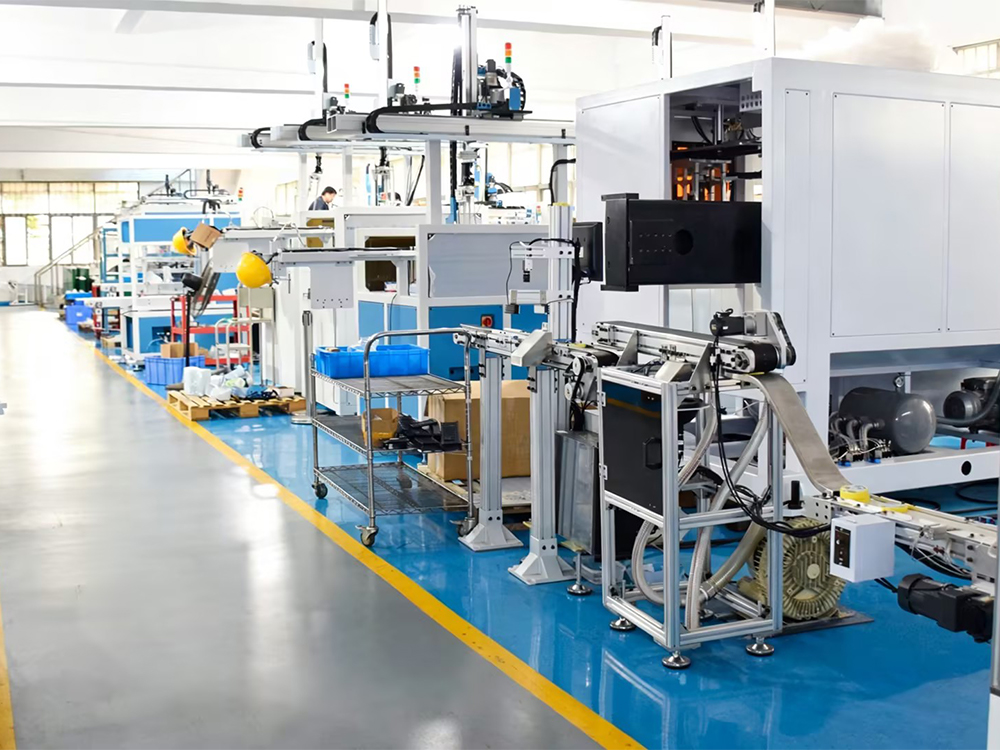
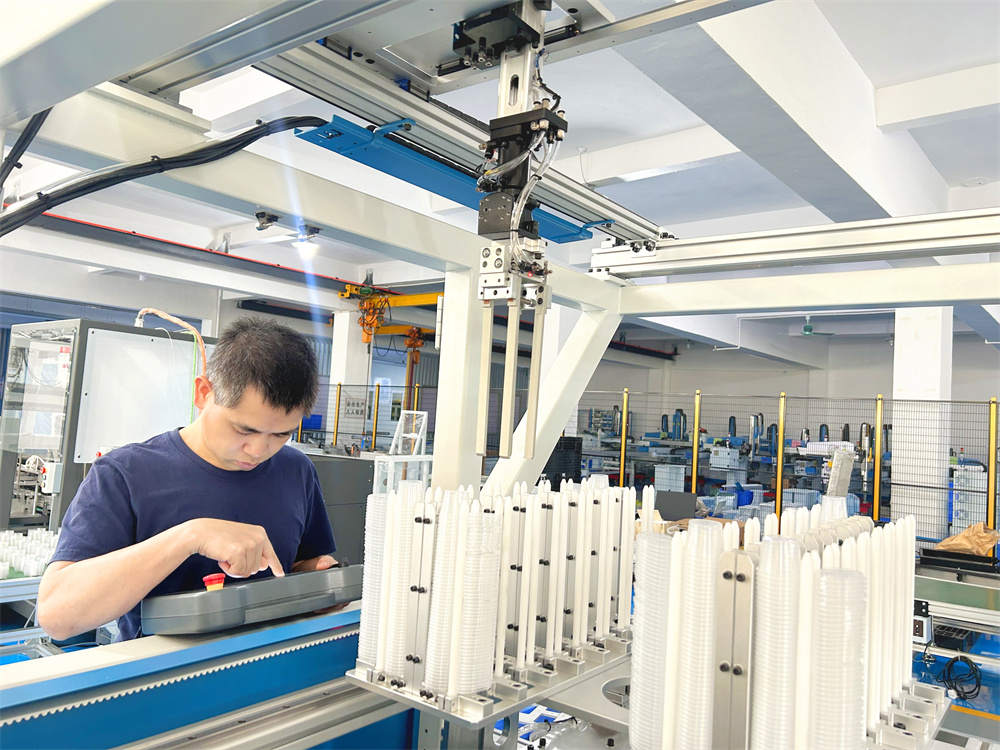
We focus on the automation upgrading of injection molding industry. Our main products include injection molding robots, In-mold labeling robot (IML) system, automatic plastic product packaging lines, customized non-standard automation equipment and industrial robots, delivering one-stop integrated solutions for injection molding automation.
All product lines have obtained EU CE certification. Adhering to international quality standards, we ensure stable and reliable equipment, empowering injection molding factories to cost reduce, efficiency increase and realize intelligent upgrade.
Two decades of relentless engineering and automated process development.

While pursuing the material and spiritual happiness of all employees, we provide stable, reliable and high-quality automation equipment for the injection molding industry.
Become a well-known brand in the global injection molding automation industry.
Enhancing mindset and expanding operations.
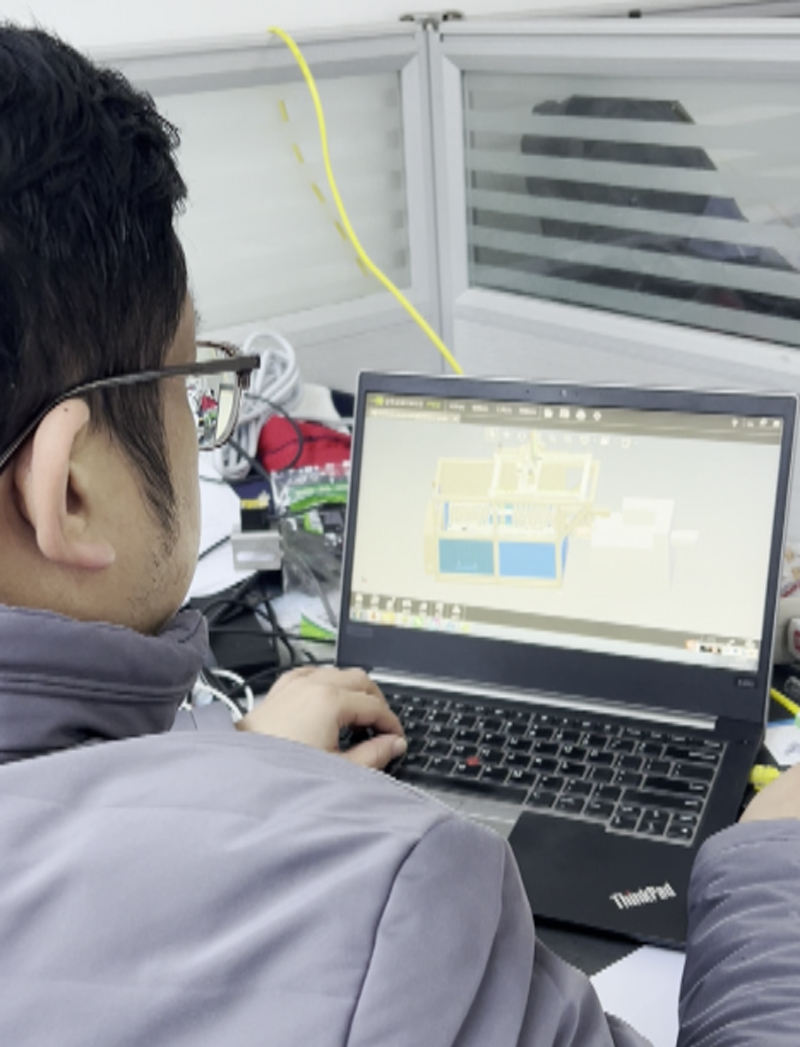
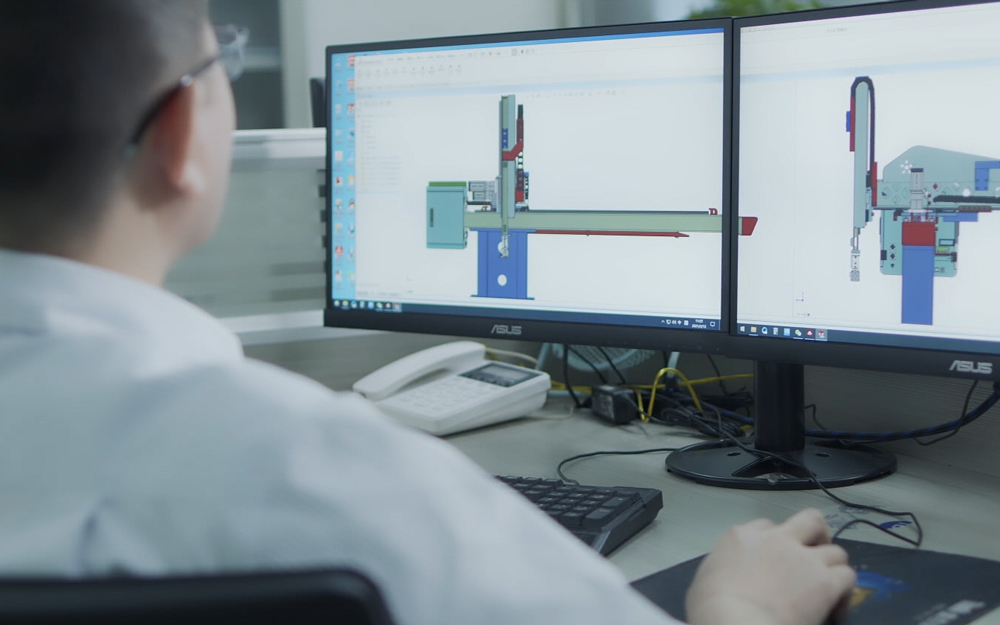
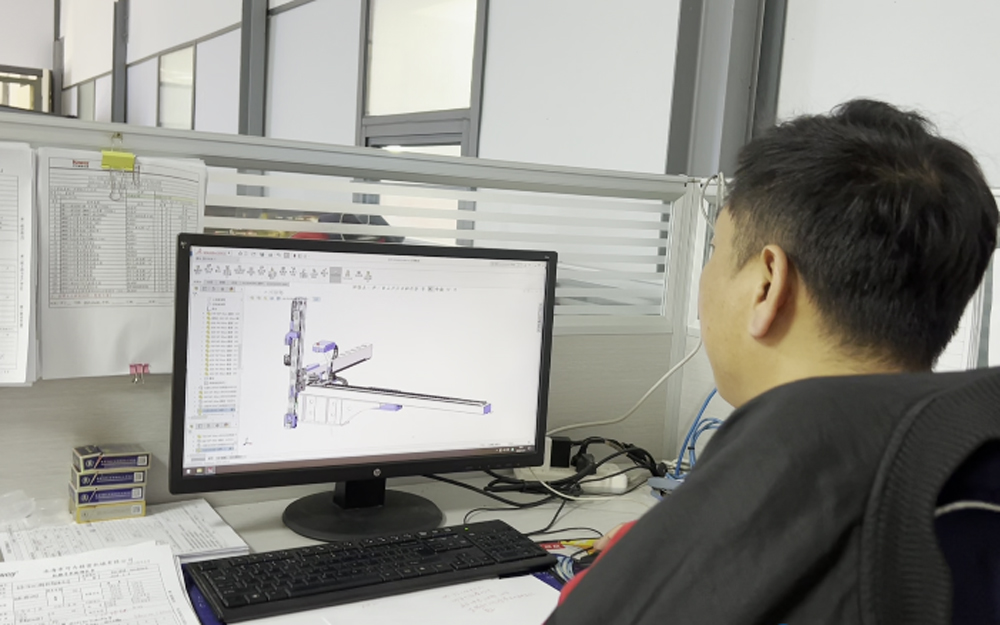
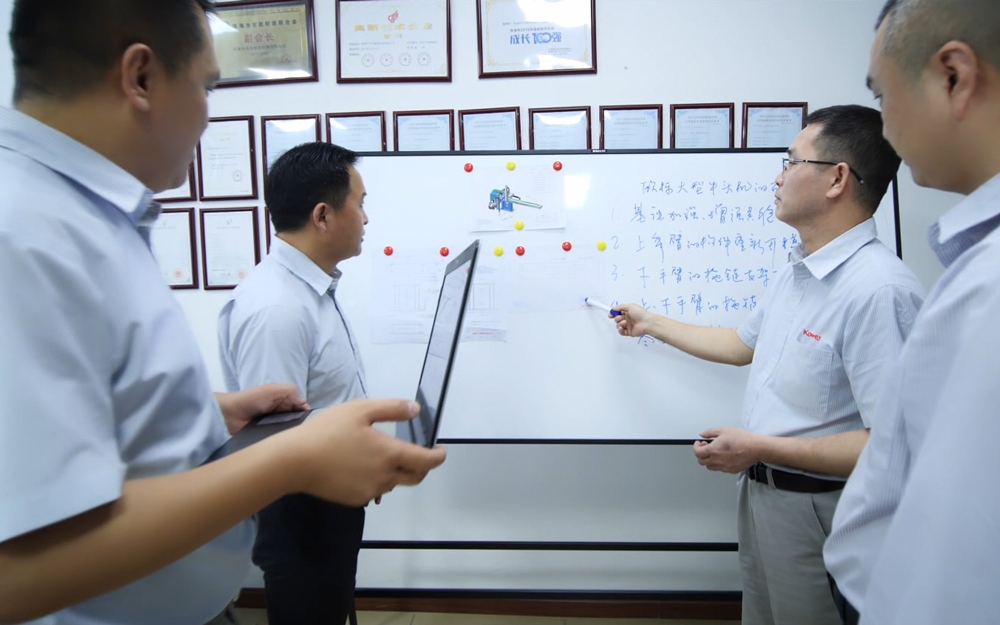
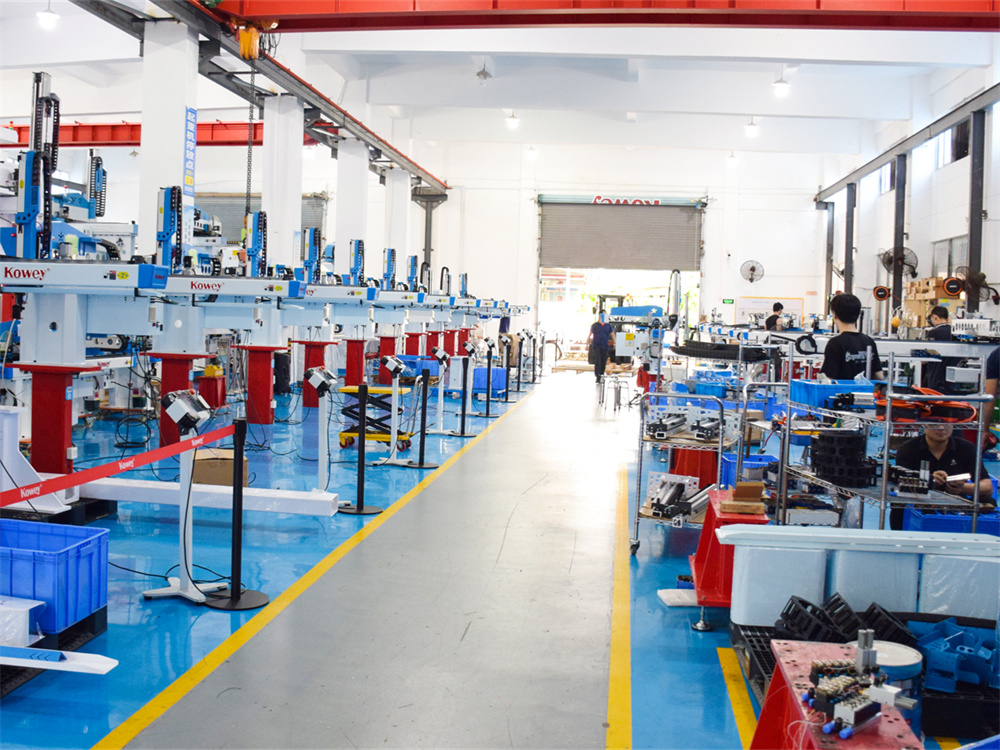
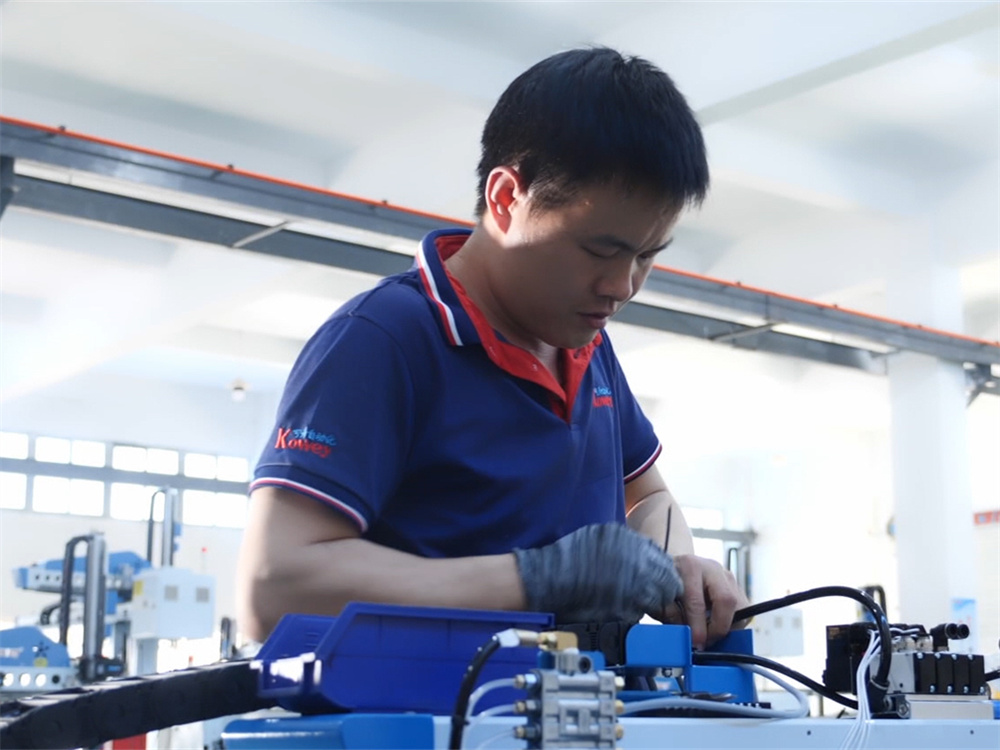
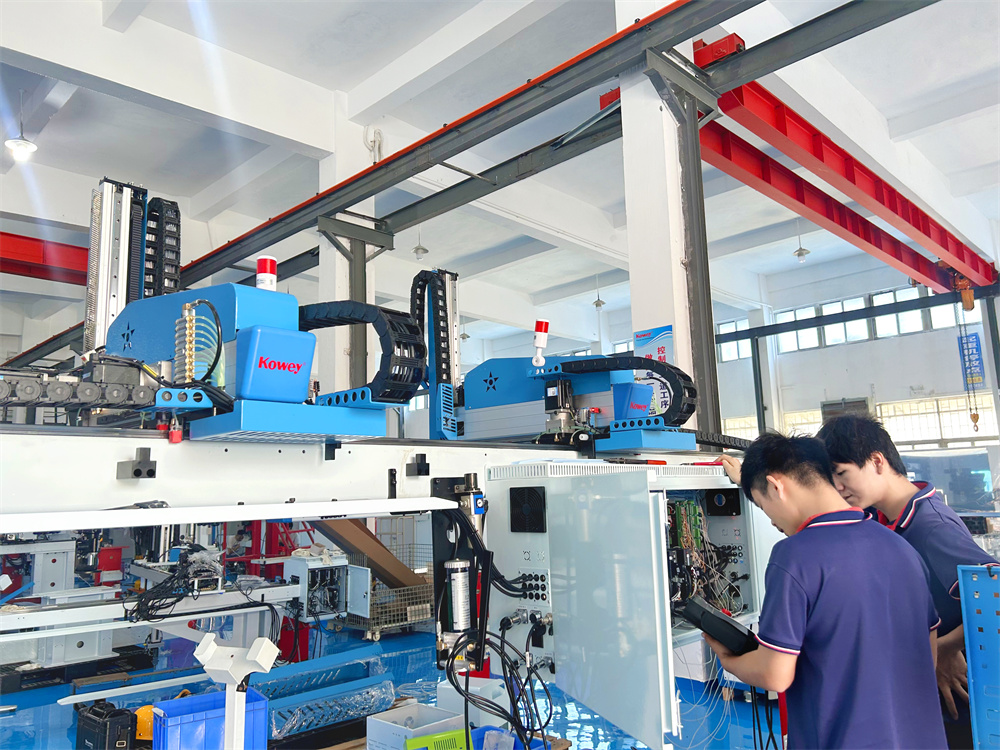
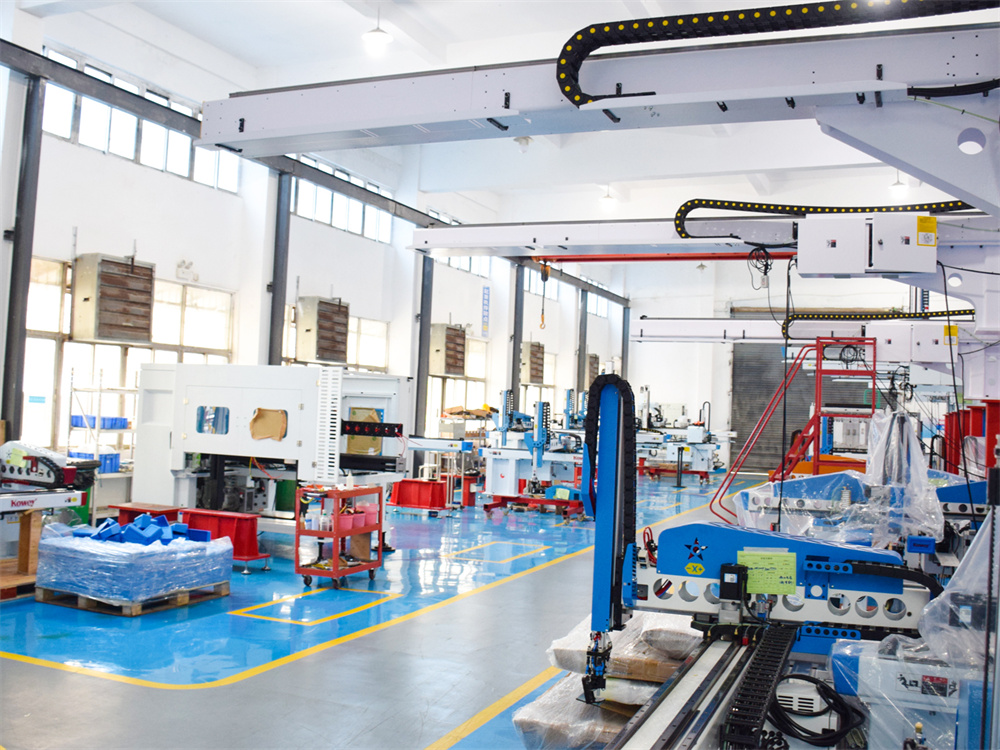
Our dedicated robotics R&D center focuses on dynamic finite element analysis, servo motion algorithms, and custom EOAT systems for complex packaging containers.
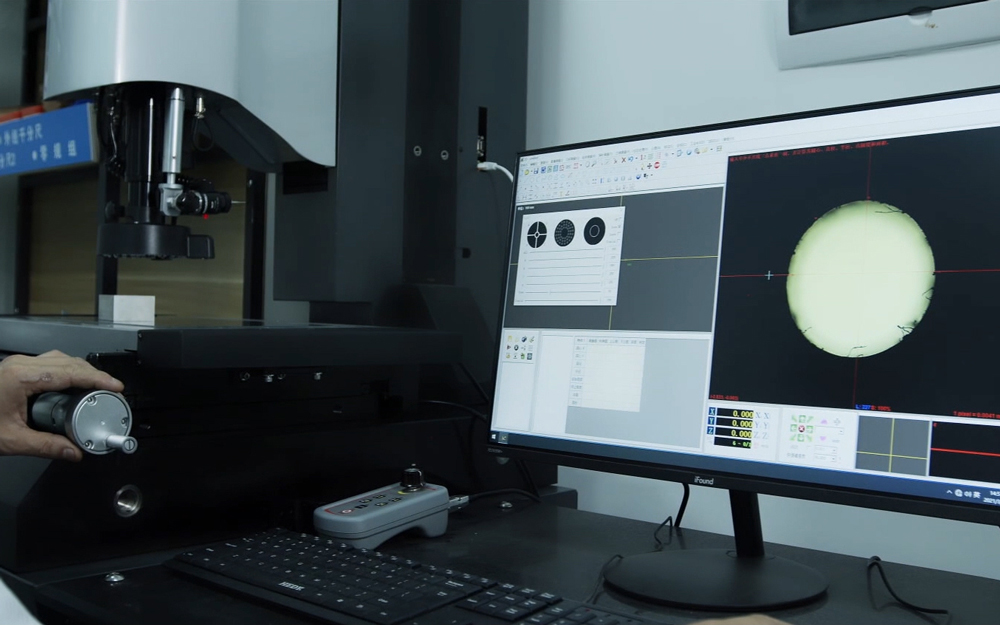
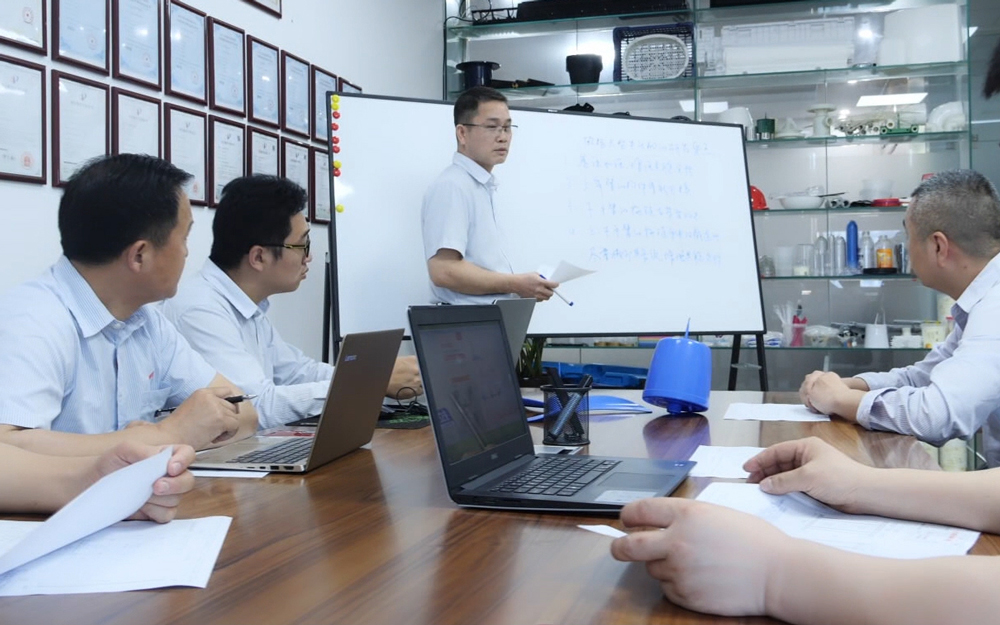
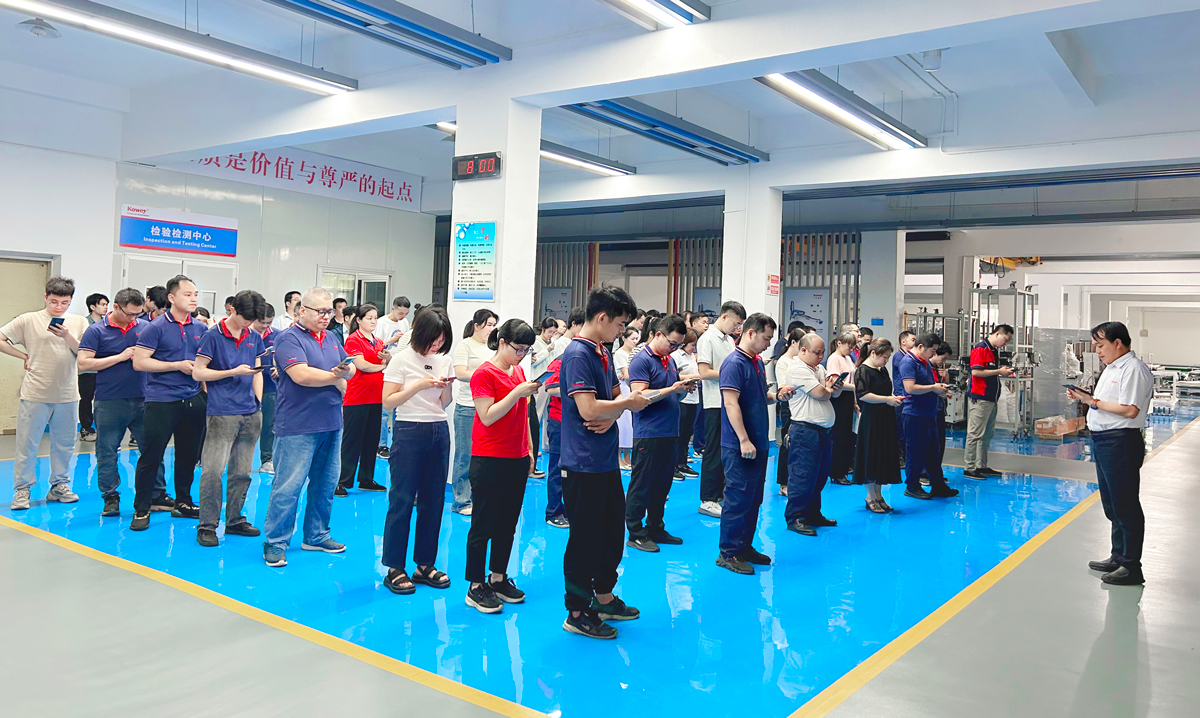
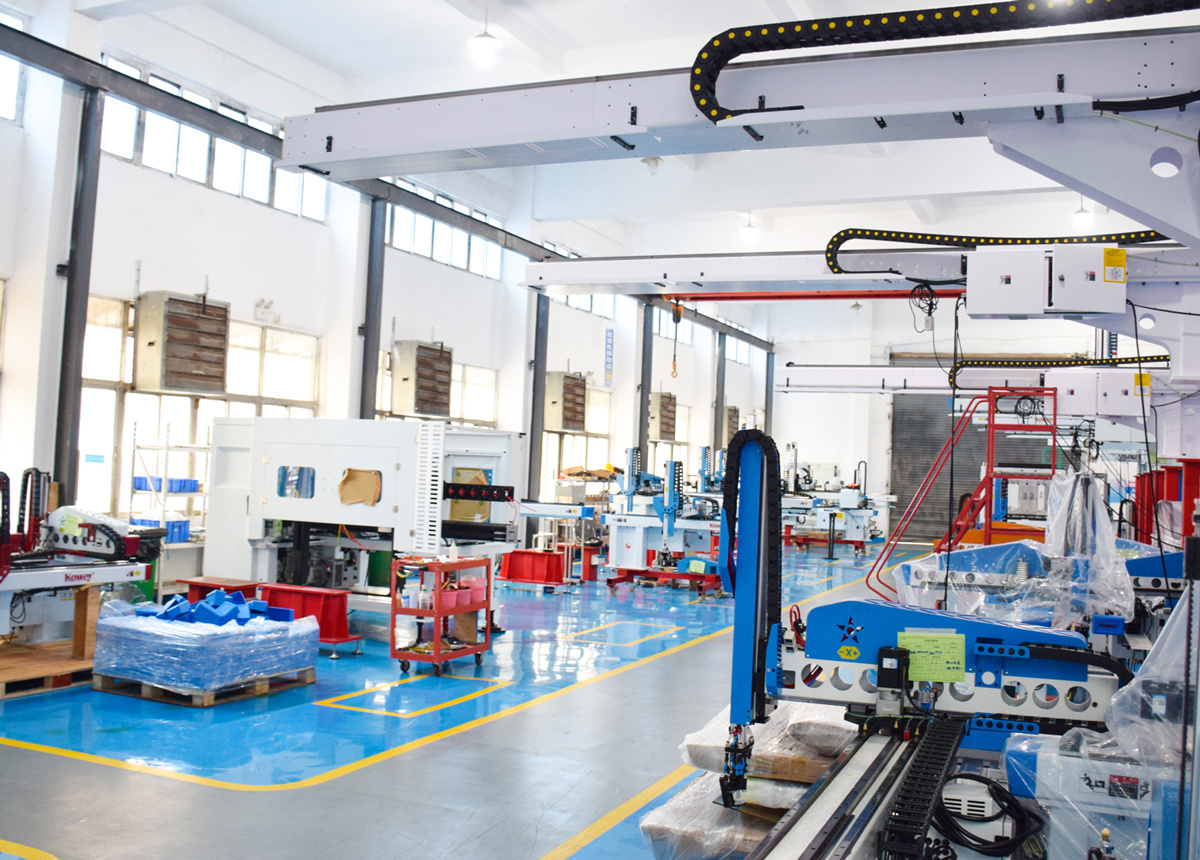
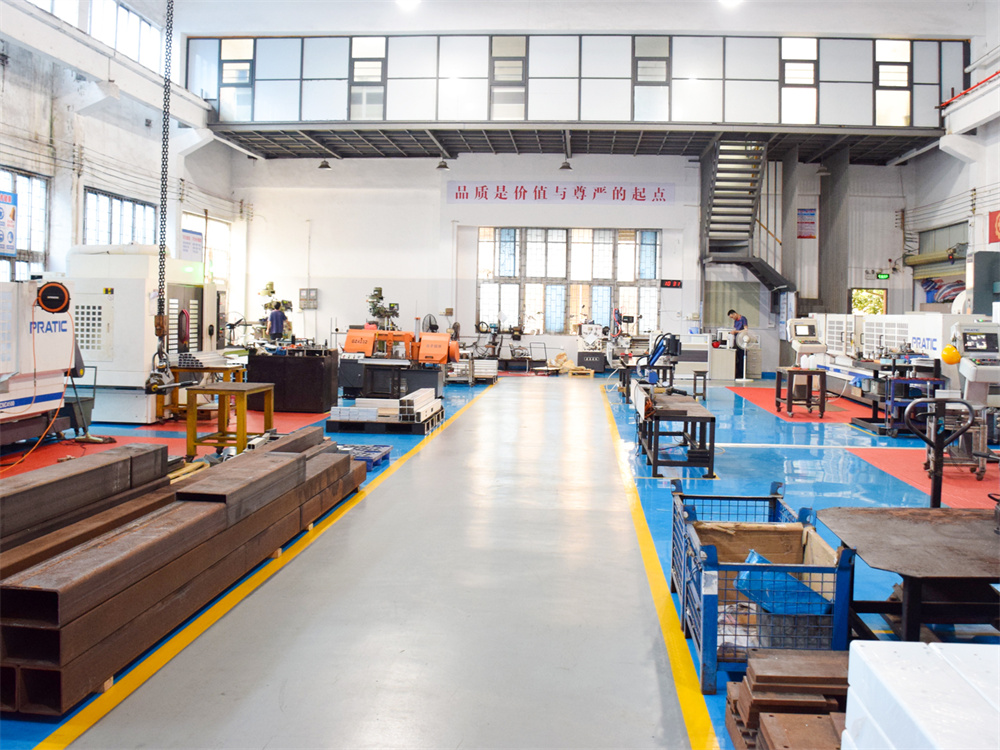
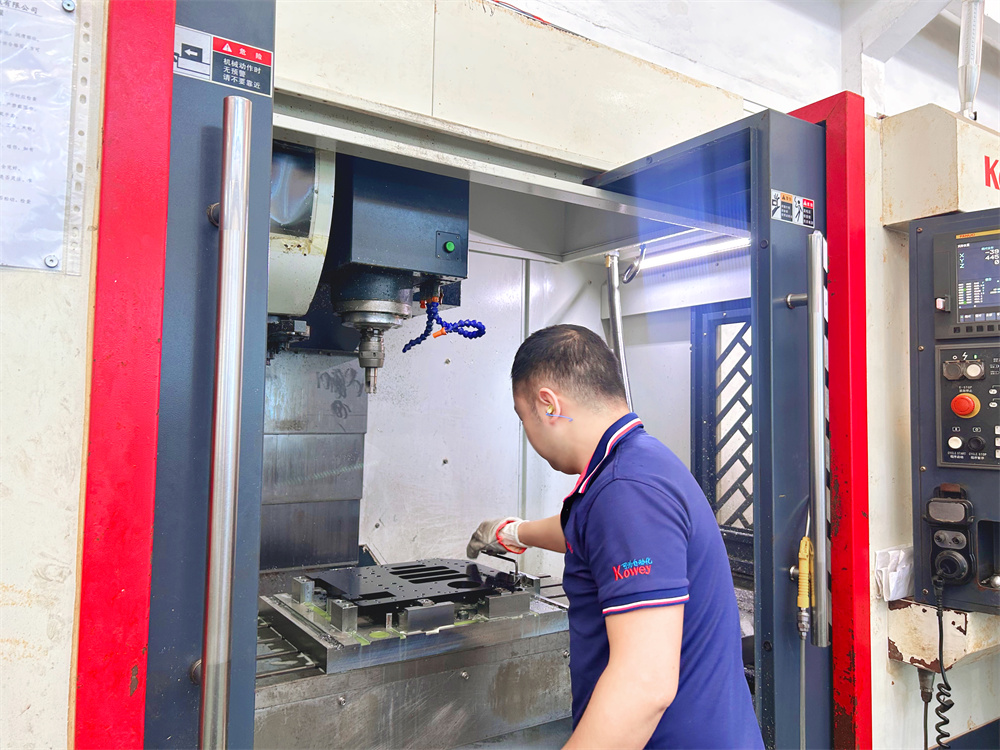
Explore our high-precision machining, strict ISO-compliant quality control, and scalable manufacturing base in Zhuhai.
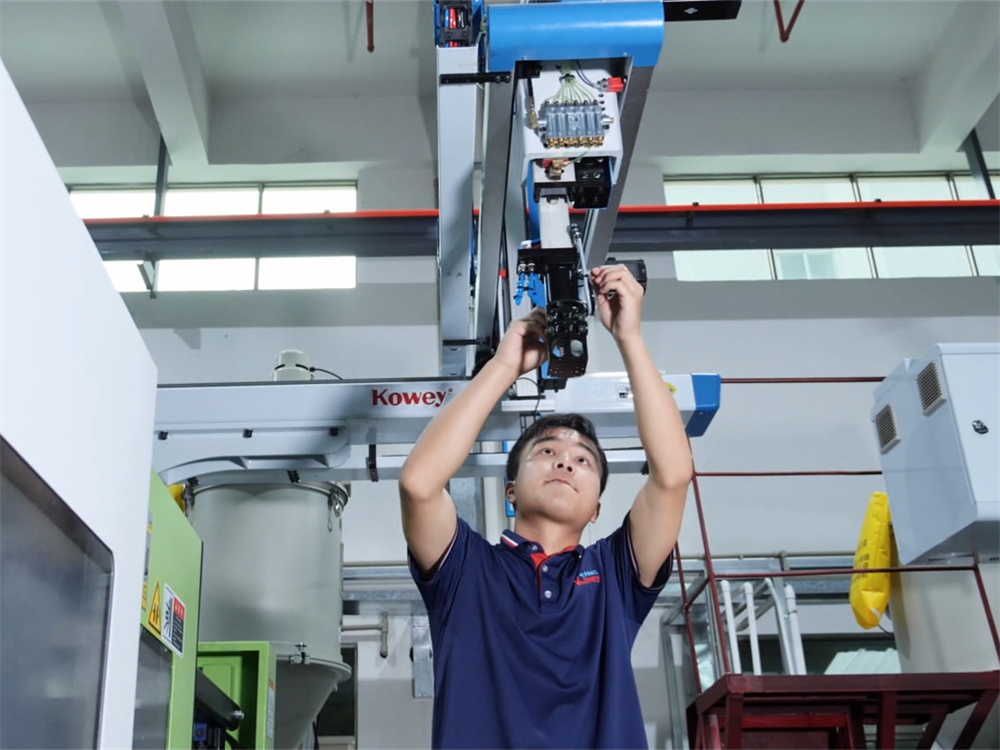
How intelligent injection automation drives double-digit productivity gains for packaging converters.
Container manufacturers regularly switch mold cavities between round deli cups, rectangular lunch boxes, and dual-compartment meal trays. The future of 5-axis robotics relies heavily on 3D-printed selective laser sintered (SLS) nylon or carbon-fiber end-of-arm tooling. These modular grippers reduce payload inertia by up to 45%, allowing the robot to execute rapid direction changes without inducing machine-frame vibration, while automated pneumatic tool-changers enable job setups in less than 3 minutes.
Instead of sending millions of molded containers to an offline inspection station, modern 5-axis robots position parts directly in front of high-resolution CMOS cameras during traverse motion. The wrist tilts the container 45 degrees to verify the sealing lip, inspect for short shots, detect bottom gate pinholes, and monitor wall thickness consistency—all within transit time. Defective containers are immediately segregated into a dedicated reject chute, guaranteeing 100% zero-defect packaging lots.
Through standard OPC UA and Euromap 67 / Euromap 79 interfaces, Kowey robots communicate bidirectionally with the injection molding machine and factory MES. Servo current signatures, harmonic drive temperature sensors, and vibration telemetry are evaluated in real time. Anomalies in rail lubrication or belt tension trigger automated maintenance alerts long before an unscheduled line stoppage occurs.
For an injection facility operating 10 packaging cells on a 24/7 schedule, deploying 5-axis servo robots typically yields complete payback in 8 to 14 months. Labor savings from eliminating manual de-gating, stacking, and box-packing work in tandem with a 0.7-second cycle optimization. Across 6 million cycles annually per machine, a 0.7-second reduction creates room for over 800,000 additional sellable containers without requiring additional capital expenditure for new injection molding machines.
Explore our complete range of servo Cartesian robots, high-speed IML systems, and compact automation solutions.

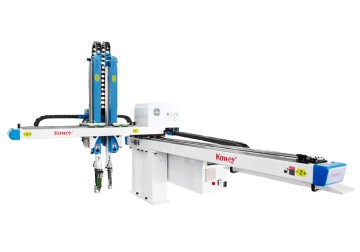
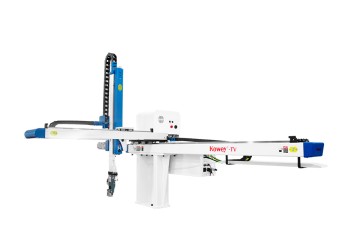
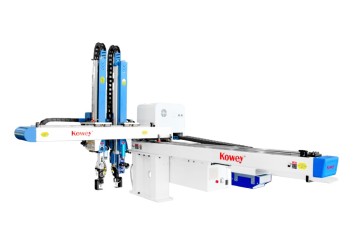
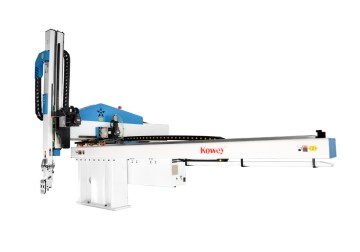

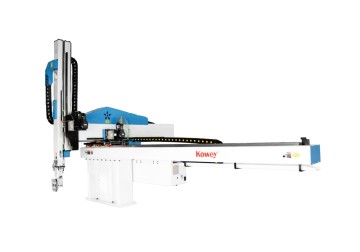
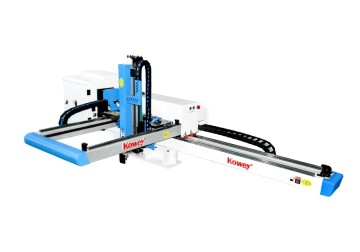
Everything you need to know about integration, compatibility, and speed optimization.
A 5-axis robot adds fully programmable servo wrist axes (rotation and tilt). This allows complex manipulation—such as de-gating, stacking nested containers, turning parts upside down for optical inspection, and maneuvering around high mold cores—without requiring separate downstream actuators.
Yes. Kowey robots interface seamlessly with all global injection molding machines (Engel, Haitian, KraussMaffei, Arburg, Sumitomo, Demag, etc.) via standard industry protocols including Euromap 67, Euromap 12, and the latest Euromap 79 Ethernet communication.
Depending on the cavity layout and part geometry, Kowey's high-speed servo packaging robots achieve dry take-out intervention times between 0.38 and 0.75 seconds, preserving high cavitation throughput and thermal mold consistency.