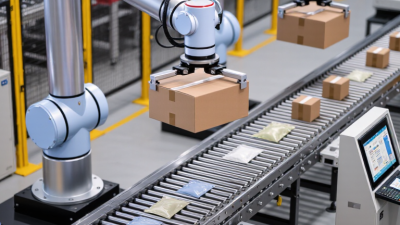
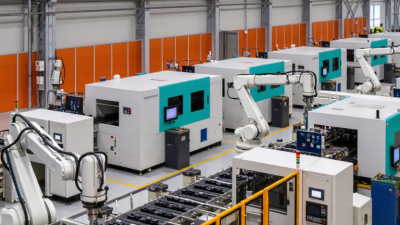
Picking out the best Kowey Robot model from China isn’t just about comparing prices or watching flashy promotional videos. You gotta think about what kind of work you’re doing—different models are suited for different environments like welding lines, material handling, palletizing, assembly, or inspection. For example, a robot that runs smoothly next to a conveyor might struggle in a dusty workshop or tight spaces with limited reach. It’s all about matching the right robot to your specific needs.
So, this guide is here to help you navigate the range of Kowey Robots based on real-world criteria. Stuff like payload, working reach, repeatability, cycle times, how user-friendly the controller is, installation requirements, and of course, after-sales support. Plus, it’s important to see how easily each robot can be hooked up with cameras, grippers, safety systems, and other gear you already have in your production line. Sure, specs matter, but what really counts is how they perform in actual working conditions.
A good evaluation should be backed up by documented test results, clear manuals, and insights from factories that are already using these robots. Don’t be shy about asking for demo applications, maintenance ideas, spare parts info, and certifications. Having a chat with seasoned engineers can also uncover stuff that brochures often gloss over—like how cables are routed, programming limits, or what to do if an emergency stop happens.
Remember, there’s no one-size-fits-all model that’s perfect for everything.
Ultimately, your choice will depend on your product weight, the layout of your space, how much you plan to produce, and how comfortable your operators are with handling new tech. I do want to mention that without doing some hands-on testing at the factory, I might miss certain strengths of a particular model. That’s why independent verification really pays off. Think of this guide as a helpful starting point, not the final say. By balancing solid technical specs with reliable service, you’ll be able to pick a Kowey Robot that keeps your production safer, more steady, and more efficient overall.
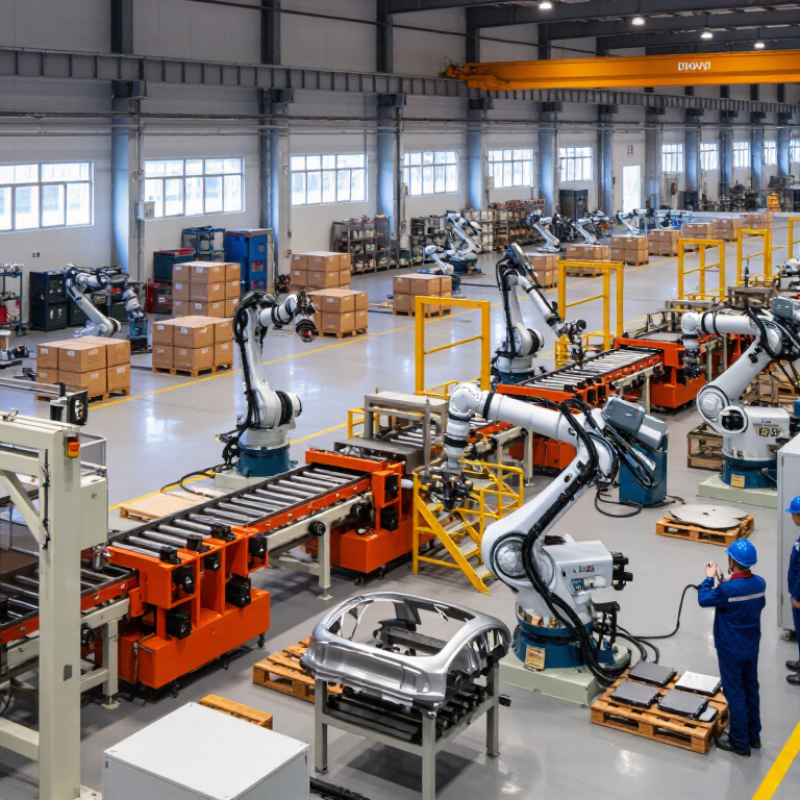
Kowey Robots: Brand Profile and Product Categories
A Chinese industrial robotics manufacturer is best understood through its product range, engineering focus, and support capability.
Its portfolio may include six-axis articulated robots, SCARA units, delta robots, palletizing systems, and collaborative models. Each category serves a different production problem.
Six-axis robots suit welding, machine tending, and complex assembly.
SCARA robots offer fast, repeatable movements for electronic components.
Delta robots handle lightweight sorting and packaging at high speed.
Palletizing robots manage heavier loads with wider working envelopes.
A useful evaluation starts with the workpiece, cycle time, payload, reach, and required accuracy.
Do not choose a robot only because its brochure lists impressive numbers. In a factory test, operators should check cable routing, gripper access, programming steps, and recovery after an emergency stop.
Small details matter. Software support matters too.
Clear manuals, spare-part access, training, and responsive technical service can reduce downtime. Published compliance documents and documented test methods also improve trust.
The “best” type depends on the application, not the country of origin.
A collaborative robot may simplify low-volume assembly, but it can disappoint when speed becomes the priority. A six-axis model offers flexibility, yet integration may require more space and engineering time.
I would also question unclear accuracy claims. Real performance changes with temperature, payload, fixtures, and maintenance.
A careful buyer should request sample programs, reference installations, and a realistic acceptance test before making a decision.
How Kowey Robots Are Designed and Built
Industrial robots built in China are designed around the task, not a fashionable shape. A six-axis arm suits welding, assembly, and machine tending because it reaches around fixtures. A delta robot moves lightweight products quickly on packaging lines. A mobile manipulator adds wheels, sensors, and safer navigation for changing work areas.
The design begins with payload, reach, cycle time, and environmental limits. Engineers then select servo motors, reducers, brakes, cable routing, and end-effectors. I have found that cable protection is often underestimated; one sharp bend can create costly downtime. Vision systems need controlled lighting, not only impressive cameras.
The International Federation of Robotics reported 541,302 industrial robot installations worldwide in 2023, with China accounting for 276,288 units.
That scale supports a broad manufacturing ecosystem, but volume does not guarantee quality.
Reliable construction includes dimensional inspection, torque testing, thermal checks, software validation, and repeated production trials. Safety functions should align with standards such as ISO 10218 and ISO/TS 15066, where collaborative applications apply. Manufacturers should document repeatability, payload derating, emergency-stop performance, and spare-part availability.
Small details matter. A polished demonstration may hide difficult maintenance access. Buyers should test the robot with real parts, dust, tolerances, and shift patterns. No single robot type is best. The right design is the one that remains predictable after months of ordinary use.
Key Kowey Robot Types and Their Main Functions
Choosing the best robot type from China depends on the task, workspace, and production rhythm. There is no universal winner. A careful selection begins with the main function required.
Automated guided vehicles follow marked routes and suit stable warehouse movement. Autonomous mobile robots use sensors and software to navigate changing paths. They can transport bins between storage and assembly areas. Articulated robots handle welding, palletizing, and repetitive material movement. Their multiple joints provide useful reach and flexibility. SCARA robots perform fast pick-and-place work on compact production lines. Delta robots are effective for lightweight sorting, packing, and food processing tasks. Collaborative robots support operators during assembly, inspection, and loading. They often need less floor space, but their speed and payload may be limited. Real factory conditions matter more than catalog promises. I would test cycle time, noise, safety stops, and maintenance access before ordering. A perfect choice rarely exists.
Tips: Match payload capacity with real loads, not average loads. Check spare-part availability and software support in your region. Request a live demonstration with your product. Measure accuracy after repeated cycles. Also review training requirements. A small pilot can reveal problems hidden by impressive specifications. Some teams choose advanced navigation too early. Simpler equipment may be more reliable for a fixed route. That judgment deserves another review.
Comparing Kowey Robots by Performance and Workload
What Is the Best Kowey Robot Type from China?
Choosing a Chinese robot type depends more on workload than appearance. The International Federation of Robotics reported 541,302 industrial robot installations worldwide in 2023. China accounted for about 276,000 units, showing the scale of its manufacturing ecosystem. However, high production volume does not guarantee the right machine for every factory.
Small six-axis robots suit welding, machine tending, and compact assembly. SCARA robots usually perform faster in flat, repetitive pick-and-place work. Delta robots fit lightweight food or packaging tasks. For heavier handling, a large six-axis model needs enough payload reserve. A useful rule is keeping the normal load below 70% of rated payload. Not perfect, but safer.
Measure the real workload.
The robot must repeat its motion thousands of times daily. Review cycle time, wrist torque, reach, repeatability, and operating temperature. The 2024 World Robotics report also shows continued growth in factory automation, making maintenance support increasingly important. A low purchase price can lose value when spare parts, programming, or downtime become expensive. Request cycle tests using your actual product, gripper, and conveyor speed. This exposes weak points early.
For a 10-kilogram load, a medium six-axis unit may offer useful flexibility. For fast 500-gram transfers, a delta design may be more efficient. Yet factory layouts vary, and my first estimate can be wrong without motion data. Compare measured output, energy use, software access, and service response before selecting the final type.
Choosing the Best Kowey Robot for Different Applications
Choosing the Best Robot for Different Applications
Selecting an industrial robot starts with the task, not the machine’s appearance. A six-axis articulated robot suits welding, machine tending, and complex assembly. It can reach around fixtures and approach parts from several angles. For fast picking on a flat work surface, a delta robot is often more suitable. Its lightweight arms can handle small products at high speed. SCARA robots work well for electronic assembly, screwdriving, and repetitive insertion tasks. They are quick, accurate, and relatively simple to program.
Payload and reach must match real production conditions. Include grippers, cables, tools, and the heaviest product in the payload calculation. A higher payload is not always better. It may increase energy use and reduce movement speed. I have seen layouts fail because operators ignored access space around the robot. Small gaps can make maintenance frustrating. Measure the work envelope carefully. Then check cycle time through a practical trial, rather than trusting a brochure.
Collaborative robots can support small factories and changing production lines. They are useful for packaging, inspection, and light assembly. However, they still need risk assessments, suitable end effectors, and clear operator procedures. Check controller compatibility, vision options, safety functions, training, spare parts, and local technical support. A low purchase price can become expensive when integration takes longer than expected. The best choice is the robot that fits the process, floor space, product variation, and future workload.
Maintenance, Safety, and Ownership Considerations
Choosing the best industrial robot type from China depends on maintenance access, safety design, and daily workload. A six-axis model suits flexible assembly, while a delta robot handles fast picking. For welding, a dedicated arm may provide better repeatability. Match payload carefully. A robot carrying heavy tools can lose accuracy and shorten joint life.
Maintenance should be practical, not theoretical. Check cable covers, grease points, connectors, and abnormal noise during weekly inspections. Keep a service log with operating hours, error codes, and replaced parts. Clean dust from control cabinets and cooling fans. Small debris can cause expensive downtime. Confirm that spare motors, cables, and controllers are available locally. Remote support helps, but it cannot replace physical diagnosis. I would also test software backups before changing settings. That step is easy to overlook.
Safety requires guarded work areas, emergency stops, light curtains, and controlled restart procedures. Operators need training on normal operation and fault recovery. Never treat a stopped arm as harmless. Stored energy can remain in its joints. A documented risk assessment should cover tools, payloads, sharp edges, and unexpected movement. Ownership costs include installation, training, calibration, electricity, and planned downtime. A cheaper purchase can become costly after one unavailable part. I have seen planning focus too heavily on the purchase price. That is a weakness worth correcting. A reliable choice is the robot that technicians can inspect, operators can understand, and managers can support for years.
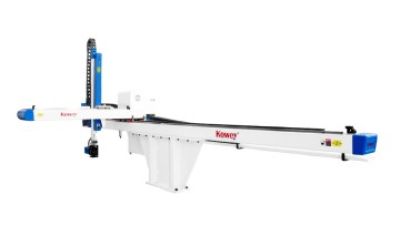
Bull Head T-Type Injection Molding Robot: Enhancing Precision, Speed, and Production Efficiency
The Bull-head T-type injection molding robot is designed to address the growing demand for faster, more flexible factory automation. According to the International Federation of Robotics’ *World Robotics 2024* report, 541,302 industrial robots were installed worldwide in 2023, reflecting continued investment in automated production. In parallel, PlasticsEurope reported global plastics production of approximately 413.8 million tonnes in 2023, increasing pressure on manufacturers to improve output, consistency, and equipment utilization. Against this background, the robot’s extended Z-axis stroke of 4,500 mm provides a practical solution for injection molding lines with demanding layouts and long transfer distances.
Its ultra-long-stroke structure supports bi-directional pick-and-place operations through both the front and rear safety doors of an injection molding machine. During one cycle, it can retrieve molded parts, complete unloading, and perform automatic docking through the front door; in the following cycle, it can switch to rear-door unloading through stable, preconfigured operating logic. This flexible mode selection allows one unit to serve multiple production scenarios while reducing the need for several conventional robots. Fewer devices also mean less line commissioning, simpler maintenance planning, and reduced production interruptions, while consistent movement control helps improve part handling accuracy and overall molding-line efficiency.
FAQS
Common types include six-axis, SCARA, delta, palletizing, collaborative, guided, and mobile robots. Each solves a different factory problem.
A six-axis robot offers multiple joints and flexible reach. It can handle welding, machine tending, and complex assembly.
SCARA robots suit fast pick-and-place work on compact lines. They are useful for electronic components and repeated assembly tasks.
Delta robots handle lightweight sorting, packing, and processing at high speed. They work well when products move quickly on a conveyor.
No. They can support assembly, inspection, and loading with limited floor space. However, speed and payload may disappoint in demanding production.
Match capacity with the real load, including grippers and fixtures. Average weight is not enough. Peak loads matter.
Test cycle time, cable routing, gripper access, noise, and emergency-stop recovery. Check repeated accuracy under realistic temperature and payload conditions.
Clear manuals, training, spare parts, and responsive support can reduce downtime. A robot may look capable but still create daily frustration.
Not always. Guided vehicles may work better on fixed routes. Simpler equipment can be more reliable, though this choice deserves another review.
Conclusion
Choosing the best Kowey Robot depends on the work environment, production goals, and required workload. This article introduces the product categories and explains how these robots are designed and built for different industrial tasks. It reviews key robot types, including models suited to handling, welding, assembly, packaging, inspection, and other repetitive operations, while focusing on their main functions, motion range, payload, speed, and accuracy. By comparing performance and workload requirements, readers can better match a Kowey Robot to applications of different sizes and complexity.
The article also provides practical guidance for selecting a suitable configuration based on workspace, duty cycle, integration needs, and operating conditions. In addition, it discusses maintenance routines, operator safety, spare-part planning, training, energy use, and long-term ownership considerations. The goal is to help users make a clear, responsible decision and achieve reliable automation performance without choosing a system that exceeds their actual production needs.


 Contact Email