Leave Your Message
0%

You know, by 2026, the way people are buying robotic manipulators is really shifting. It’s no longer just about looking at payload capacity, reach, or the price tag. Buyers are now digging deeper—checking things like how reliable the robot is (uptime), whether it plays nice with existing software, safety certifications, support options, spare parts availability, and overall costs over the long run. It’s become a lot more complex, really.

Back in 2023, the International Federation of Robotics reported over 541,000 industrial robots installed around the world, with more than 4.28 million operating in factories. That’s pretty impressive growth, but just because a robot has these numbers doesn’t mean it’s automatically the right choice for your needs. A robot that can move super fast might end up costing a ton if it takes forever to put into place. Or, you might find a cheaper model, but then you end up paying loads for programming and support.

Marina Bill, who’s president of the International Federation of Robotics, pointed out that “Robots are a key technology for the future.” That really hits home, especially as industries are shifting toward more flexible automation solutions. Big names like FANUC, ABB, Yaskawa, KUKA, and Universal Robots are all vying across sectors like manufacturing, logistics, electronics, and healthcare. But their systems aren’t the same—things like payload stability, control architectures, vision systems, and how support is handled can vary a lot depending on where you’re buying from.

When building a shortlist for 2026, it’s crucial to think about real-world factory conditions—think dusty workshops, tight spaces, or late-night shifts when there aren’t engineers around. Will the robot be able to recover safely if something goes wrong? Can your local techs fix it easily? And don’t forget to ask if the supplier has clear info on cybersecurity and the total cost over its lifecycle.

Honestly, there’s no one perfect choice. That’s the tough part. Sometimes procurement teams get stuck overestimating what specs can do and underestimate the risks involved in integrating new tech. That’s where this guide comes in. It compares the top options based on actual performance, the reliability of suppliers, real-world experiences, and independent industry evidence. At the end of the day, the best pick should match your specific process needs—not just impress everyone with slick spreadsheets.
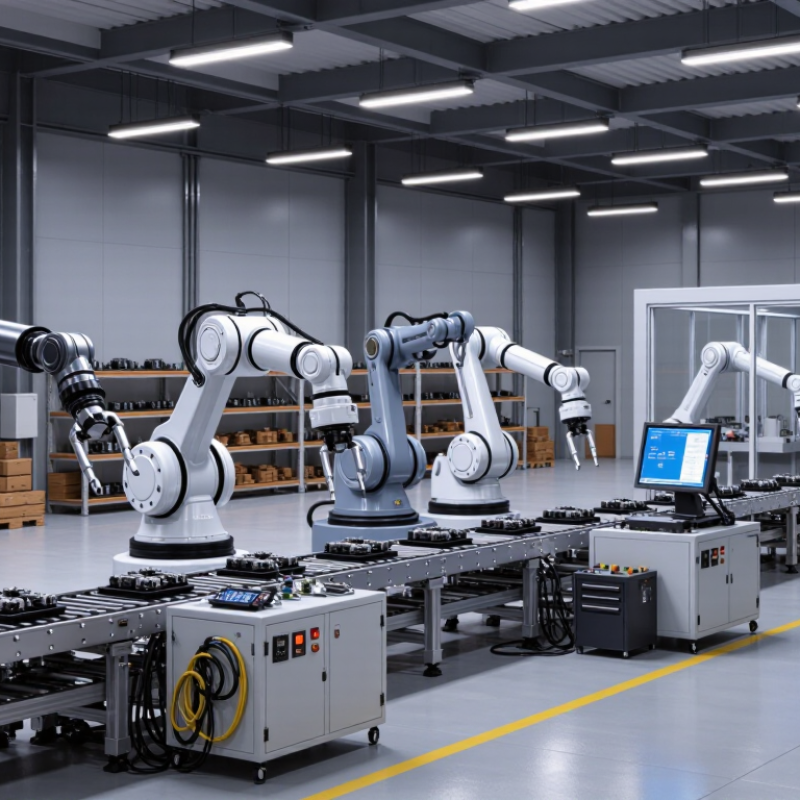
2026 Best Robotic Manipulator for Global Procurement?

Definition and Role of Robotic Manipulators in Global Procurement

2026 Best Robotic Manipulator for Global Procurement?

A robotic manipulator is a programmable mechanical arm that moves, positions, or handles materials. It usually includes joints, an end effector, sensors, and a control system. In global procurement, its role extends beyond factory automation. It affects labor planning, production consistency, workplace safety, and long-term operating costs. The best manipulator depends on the task, not attractive specifications alone.

Procurement teams should compare payload, reach, repeatability, cycle time, energy use, and software compatibility. A practical evaluation might involve lifting a 12-kilogram component, reaching 900 millimeters, and repeating the motion for eight hours. Suppliers should provide test records, maintenance schedules, training details, and clear warranty terms. Documentation matters when equipment crosses borders. Applicable safety standards, electrical requirements, spare-part availability, and local technical support also require verification.

Small details can change the decision. A manipulator may fit the payload but fail when the gripper adds two kilograms. A fast arm may need costly guarding or specialized programming. That is easy to miss. Procurement managers should request a site trial with real parts, variable temperatures, and actual production speeds. Initial quotations can also hide integration costs, customs charges, and downtime during installation. I would question any “best” ranking that ignores these factors. Even experienced teams sometimes prioritize purchase price over reliability, and that mistake becomes expensive later.

Key Types of Robotic Manipulators Available in 2026

Key Types of Robotic Manipulators Available in 2026

The best robotic manipulator depends on the task, not the highest specification. International Federation of Robotics data recorded 541,302 industrial robot installations worldwide in 2023. The global operational stock reached about 4.28 million units. These figures show a mature market, but selection errors remain common.

Articulated robots suit welding, machine tending, painting, and complex assembly. Their multiple joints provide broad reach and flexible positioning. SCARA robots deliver fast horizontal movement for electronics and small-part assembly. Delta robots work well above conveyor lines, especially for rapid sorting and packaging. Cartesian systems offer predictable movement and simpler maintenance. They can be practical for large, repetitive workspaces.

Collaborative manipulators support closer human interaction when risk assessments and safeguarding are properly designed. Their lower payload can limit heavy handling. That matters. Procurement teams should compare payload at full extension, cycle time, reach, repeatability, software integration, and service availability. A 2024 IFR report also identified electronics, automotive, and metal industries among major robot users, yet factory conditions differ sharply across regions.

I have seen specifications look impressive on paper. Installation costs later changed the decision. Buyers should request real cycle tests using their materials, fixtures, lighting, and operators. The International Organization for Standardization’s ISO 10218 framework should guide safety planning, while local requirements still need verification. No single manipulator fits every factory. That assumption deserves reconsideration.

2026 Best Robotic Manipulator for Global Procurement?

Key Types of Robotic Manipulators Available in 2026

Payload capacity is a practical procurement indicator. The chart shows representative lower and upper payload ranges commonly available in the global industrial robotics market in 2026. Cartesian and articulated robots generally serve the heaviest-load applications, while delta and SCARA robots prioritize speed and precision.

Core Performance Criteria for Selecting a Manipulator

2026 Best Robotic Manipulator for Global Procurement?

Core Performance Criteria for Selecting a Manipulator

The best choice is rarely the manipulator with the highest payload. It should match the real work envelope, tool weight, acceleration, and production rhythm. Measure the complete load, including cables and grippers. A unit rated for 20 kilograms may perform poorly near full extension. Reach, repeatability, cycle time, and joint speed must be tested together. The figures can change under heat, vibration, or continuous operation.

Global procurement also requires practical reliability. Check duty-cycle limits, ingress protection, controller compatibility, spare-part availability, and service response times. Documentation should clearly cover installation, maintenance, safety functions, and regional certification requirements. Avoid accepting laboratory data without application tests. Actual factory conditions are less forgiving. A short pilot run can reveal cable fatigue, awkward access, or unstable gripping. These issues are easy to miss in a spreadsheet.

Tips: Measure real loads. Test the full motion path. Request repeatability data at operating temperature. Confirm software interfaces before purchase. Compare total ownership cost, not only the initial quotation. Keep a written record of test conditions, failures, and corrective actions. A small error in reach estimation can create expensive layout changes. Procurement teams should also involve operators and maintenance technicians early. Their feedback may challenge the preferred specification, but that is useful.

Leading Applications Across Global Manufacturing Industries

2026 Best Robotic Manipulator for Global Procurement?

Leading Applications Across Global Manufacturing Industries

A strong manipulator must match the process, not merely the catalog. The International Federation of Robotics reported 541,302 industrial robot installations in 2023. Electronics, automotive, metal, and machinery remained major users. Automotive plants need high payloads for welding, body handling, and battery assembly. Electronics factories usually prioritize compact arms, precise motion, and controlled cleanliness. Metalworking requires reach, stiffness, and resistance to dust, heat, and vibration. Food production adds washdown protection and careful material handling. No manipulator wins every factory.

Procurement teams should compare payload, reach, repeatability, cycle time, controller compatibility, safety functions, and local service capacity. The IFR recorded more than 4.28 million industrial robots operating worldwide in 2023, showing the scale of installed automation. Yet installation numbers can mislead. A low-cost arm may create expensive integration work. A technically excellent system may lack technicians in the target region. I have seen projects underestimate gripper design, cable routing, and operator training. That mistake remains common. Global sourcing also needs spare-part availability, documented maintenance, and regional compliance evidence.

Tips: Test the manipulator with real parts, not ideal samples. Measure cycle time after gripping, sensing, and inspection steps. Request a digital simulation and a factory acceptance test. Keep one alternative specification, because the first design is rarely perfect. Review energy use and downtime data over several shifts. Reports provide direction, but production-floor evidence should decide.

Procurement, Integration, and Compliance Considerations

2026 Best Robotic Manipulator for Global Procurement?

Selecting a robotic manipulator requires more than payload, reach, or cycle speed. The International Federation of Robotics reported 541,302 industrial robots installed worldwide in 2023, with operational stock exceeding 4.28 million units. This scale increases procurement pressure, but it also exposes integration risks. Buyers should request measured repeatability, thermal performance, duty-cycle results, and documented maintenance intervals. Marketing claims are not enough.

Integration begins with the cell, not the arm. Confirm controller interfaces, fieldbus compatibility, safety-rated stop functions, and software access before issuing a purchase order. Conduct factory acceptance testing with representative loads, then repeat critical tests during site acceptance. ISO 10218-1 and ISO 10218-2:2025 provide current safety guidance for industrial robot systems. ISO/TS 15066 remains relevant when collaborative operation is planned. A global supplier should also provide risk-assessment documents, technical files, language-ready manuals, and traceable component records. Requirements may differ under regional frameworks, including the European Union Machinery Regulation 2023/1230.

Procurement teams should calculate total cost across five years. Include tooling, engineering, training, spare drives, cybersecurity updates, and production downtime. IEC 62443-based controls can support industrial network security, but certification alone does not secure a poorly managed plant. Ask for vulnerability-response procedures and update timelines. I have seen projects overvalue fast delivery and undervalue local service coverage. That mistake is expensive. A lower initial quote may hide integration hours, delayed compliance evidence, or unavailable replacement parts. Allow room for doubt. Specification sheets are often cleaner than factory reality.

2026 Best Robotic Manipulator for Global Procurement? - Procurement, Integration, and Compliance Considerations

Evaluation Dimension Light Collaborative Manipulator Medium Industrial 6-Axis Manipulator High-Payload Industrial Manipulator Global Procurement Consideration
Typical payload 3–20 kg 10–50 kg 50–300+ kg Select at least 20% payload headroom for tooling, cables, grippers, and dynamic loads.
Typical working reach 500–1,300 mm 1,000–2,000 mm 1,800–3,200+ mm Verify reach at the required wrist orientation, not only the manufacturer’s maximum horizontal reach.
Degrees of freedom Typically 6 Typically 6 Typically 4–6 Six-axis designs provide greater orientation flexibility; four-axis designs can reduce cost for palletizing and pick-and-place.
Repeatability range Approximately ±0.02–0.10 mm Approximately ±0.02–0.08 mm Approximately ±0.03–0.15 mm Confirm the test method, payload, temperature, speed, and measurement standard before comparing quotations.
Best-fit applications Assembly, inspection, machine tending, laboratory handling, light packaging Welding, machine tending, dispensing, material handling, packaging Automotive handling, palletizing, casting, forging, heavy welding, large-part processing Choose the smallest manipulator that meets payload, reach, duty cycle, and environmental requirements.
Human collaboration May support collaborative operation after risk assessment and safety validation Usually installed behind guarding or controlled access Normally requires physical safeguarding, exclusion zones, and interlocked access A collaborative label does not remove the requirement for application-specific risk assessment.
Ingress protection Commonly IP54–IP68, depending on joints and controller Commonly IP54–IP67 Commonly IP54–IP67; higher protection may be available for selected process areas Check the complete system rating, including teach pendant, cables, controller, dress pack, and end-of-arm tooling.
Cleanroom suitability Special configurations may support ISO 14644-1 environments Available only with designated cleanroom preparation Limited; requires application-specific validation and contamination controls Request particle-emission data, lubricants, materials declarations, and cleaning procedures.
Cycle-time evaluation Prioritize safe speed, ease of teaching, and changeover time Balance rated speed with acceleration, settling time, and process accuracy Prioritize torque, inertia, braking, and sustained duty-cycle performance Use a representative workpiece and complete motion profile for acceptance testing.
Controller and communication Ethernet-based industrial communication and configurable digital I/O are common Industrial Ethernet, safety I/O, fieldbus options, and robot-specific interfaces are common High-capacity I/O, safety networks, process interfaces, and cell-level synchronization are often required Specify protocol, update rate, cybersecurity controls, remote-access policy, and data ownership in the contract.
Safety and compliance baseline ISO 10218, ISO/TS 15066 where applicable, and ISO 13849-1 or IEC 62061 for safety-related control systems ISO 10218, ISO 13849-1 or IEC 62061, electrical safety requirements, and local machinery regulations ISO 10218, safeguarding standards, safety-rated monitoring, and local machinery regulations Compliance applies to the integrated robotic cell, not only to the manipulator arm.
Global market access May require region-specific conformity assessment, electrical documentation, and import records May require conformity marking, technical file support, EMC evidence, and country-specific registration May require additional lifting, electrical, workplace, and installation approvals Define destination countries, applicable standards, language requirements, and importer responsibilities before purchase.
Integration scope Arm, controller, gripper, vision, fixtures, safety assessment, and operator training Arm, controller, end-of-arm tooling, PLC integration, guarding, fixturing, and process qualification Complete cell engineering, tooling, material flow, guarding, foundations, commissioning, and validation Request a responsibility matrix separating arm supply, cell integration, safety validation, and production acceptance.
Procurement documentation Technical data sheet, user manual, safety functions, electrical drawings, and software documentation All light-duty documents plus load diagrams, maintenance schedules, spare-parts lists, and interface specifications All medium-duty documents plus foundation loads, transportation data, lifting instructions, and detailed service procedures Make document delivery a contractual milestone linked to payment and acceptance.
Maintenance planning Lower routine service burden; inspect joints, cables, brakes, tooling, and software backups Scheduled inspection of reducers, brakes, cables, lubrication points, batteries, and tooling More extensive preventive maintenance, lubrication, brake testing, reducer inspection, and lifting-equipment coordination Compare service intervals, local technician availability, critical spares, and maximum response time.
Total cost of ownership Generally lower capital cost, but tooling and vision can materially affect the final budget Balanced capital cost and throughput; integration, guarding, and commissioning are major cost drivers Higher capital, installation, foundation, energy, and maintenance costs Evaluate five-year cost including tooling, software, training, spare parts, downtime, energy, and compliance work.
Recommended selection profile Best for flexible, lower-payload tasks and frequent product changeovers Best general-purpose option for mixed manufacturing and repeatable production Best for heavy, high-throughput processes where payload and cycle time dominate For most global projects, the medium industrial category offers the strongest balance of capability, integration complexity, and lifecycle cost.

Note: Values are representative market ranges for preliminary procurement planning. Final specifications, conformity assessment, safety performance, and installation requirements must be verified against the selected configuration, application risk assessment, destination-country regulations, and supplier documentation.

How to Compare Robotic Manipulators for Different Use Cases

2026 Best Robotic Manipulator for Global Procurement?

How to Compare Robotic Manipulators for Different Use Cases

Choosing a robotic manipulator starts with the task, not the catalog. A compact unit may suit electronic assembly, while palletizing needs higher payload and reach. Measure the heaviest real object, including grippers and cables. Then check wrist torque, repeatability, cycle time, and working envelope. A small mismatch can cause expensive redesigns. It happens more often than expected.

Tips: Test the manipulator with your actual fixture, lighting, surfaces, and software workflow. Ask for sample programs, maintenance schedules, safety documentation, and regional service details. Procurement teams should also verify voltage, environmental ratings, training requirements, and applicable local standards. These details often matter more than headline speed.

Use-case comparison should include the full operating cycle. For welding or machine tending, heat resistance, routing protection, and recovery behavior deserve close attention. For inspection, stable motion and repeatable positioning may matter more than maximum payload. For collaborative work, force monitoring, workspace limits, and risk assessment require careful review. Do not assume “collaborative” means risk-free. Every installation needs validation.

Build a weighted scorecard with engineering, production, maintenance, and purchasing input. Include five-year costs, spare parts, integration time, and software support. A lower purchase price can hide difficult commissioning. Yet an expensive system is not automatically better. Recheck your assumptions with a physical trial. That step may challenge the original specification.

FAQS

How should a factory choose a robotic manipulator?

Choose according to the task, materials, workspace, and production speed. The highest specification is not always the best choice.

What work suits articulated manipulators?

Articulated systems fit welding, painting, machine tending, and complex assembly. Their multiple joints provide broad reach and flexible positioning.

When are SCARA manipulators useful?

SCARA systems suit electronics and small-part assembly. They move quickly across horizontal planes and save valuable cycle time.

Where do delta manipulators perform well?

Delta systems work above conveyor lines. They handle rapid sorting, picking, and packaging of lightweight products.

Why might a factory select a Cartesian system?

Cartesian systems provide predictable movement and simpler maintenance. They fit large, repetitive workspaces with clear straight-line paths.

What limits collaborative manipulators?

Collaborative systems support closer human interaction after proper risk assessment and safeguarding. Their lower payload may restrict heavy handling.

Which specifications deserve close comparison?

Compare payload at full extension, reach, repeatability, cycle time, controller compatibility, safety functions, and service capacity. Numbers can mislead.

What should buyers test before installation?

Test real parts, fixtures, lighting, sensors, and operators. Measure the complete cycle, including gripping and inspection. Ideal samples hide problems.

What hidden costs can affect global procurement?

Integration, grippers, cable routing, training, spare parts, and local technicians can change the final cost. The cheapest arm may become expensive.

How can procurement teams reduce selection mistakes?

Request digital simulation, real cycle testing, and a factory acceptance test. Keep an alternative design. The first plan may be wrong.

Conclusion

A Robotic Manipulator is a programmable mechanical system designed to move, position, and handle materials or tools with speed, accuracy, and repeatability. In global procurement, selecting the right manipulator requires understanding available configurations, including articulated, SCARA, Cartesian, delta, collaborative, and mobile systems. Each type offers different advantages for tasks such as assembly, welding, packaging, palletizing, inspection, and machine tending. Key performance criteria include payload capacity, reach, operating speed, precision, cycle time, flexibility, safety features, energy use, and ease of programming.

Successful procurement also depends on integration requirements, including compatibility with existing equipment, communication interfaces, workspace design, operator training, maintenance, spare parts, and total ownership cost. Buyers should review safety standards, documentation, cybersecurity controls, and regional compliance obligations before deployment. Comparing robotic manipulators by application, production volume, material characteristics, environmental conditions, and future scalability can help organizations avoid over- or under-specification. A structured evaluation process supports reliable automation, efficient international sourcing, and long-term manufacturing performance.


Blog Tags:

    Julian

    Julian

    Julian is a professional marketing specialist with extensive knowledge of injection molding automation and a strong understanding of modern manufacturing requirements. As a dedicated member of a National High-tech Enterprise and Specialized, Refined, Characteristic and Innovative Enterprise, he......
    Previous China Top 10 In Mold Labeling Robot Manufacturers