So, choosing Injection Molding Robots in 2026? Honestly, it's about a lot more than just comparing payloads, prices, and cycle times. Sure, a robot can look great in a showroom. But put it next to a 2.5-second molding cycle and it might struggle. The real test happens on the factory floor: hot molds, slippery sprues, tight spaces, and operators changing products before lunch.
You know, John Bozzelli—founder of Injection Molding Solutions—has said it again and again: “You can’t inspect quality into a part; you have to build it into the process.” And honestly, that same idea works for automation too. The right injection molding robots should help keep a process stable, not just paper over one that’s already shaky. So when you’re buying, take a close look at things like repeatability, acceleration control, gripper design, safety functions, how much programming it takes, and whether service is actually available when you need it. Brands like Yushin, Wittmann Battenfeld, Sepro Group, and FANUC each bring something different to the table. But let's be real: none of them is perfect. And honestly? The small stuff really matters.
Take a three-axis robot, for instance—it might be just fine for simple takeout-type work. But if you need to handle inserts, vision checks, or complex stacking, a six-axis model is usually the better fit. And don’t forget about energy use, especially when you’re running three shifts. I mean, saving two seconds per cycle sounds nice, but what’s the point if it takes hours just to get maintenance arranged? Honestly, having local techs, easy access to spare parts, and proper training can matter way more than a shiny spec sheet.
So, this guide is all about the practical stuff you should look at when picking robots for 2026. We’re talking productivity, how well they fit into your existing systems, keeping workers safe, data connectivity, and what these things will actually cost you over the long haul. Fair warning: some of the recommendations here might go against the usual buying habits. And yeah, that’s on purpose. A cheaper robot can end up costing you more. A super flexible one? It can also become way more complicated than it needs to be. Honestly, the best pick really comes down to your process, your people, and the problems that show up day after day.
Define Cell Requirements Using IFR’s 541,302 Industrial Robot Installations in 2023
How to Choose Injection Molding Robots in 2026?
The International Federation of Robotics reported 541,302 industrial robot installations worldwide in 2023. This represented a two percent annual decline, yet installed robot stock exceeded 4.28 million units. These figures cover many industries, not injection molding alone. Still, they reveal a mature automation market with broad operational experience.
Start with the Cell
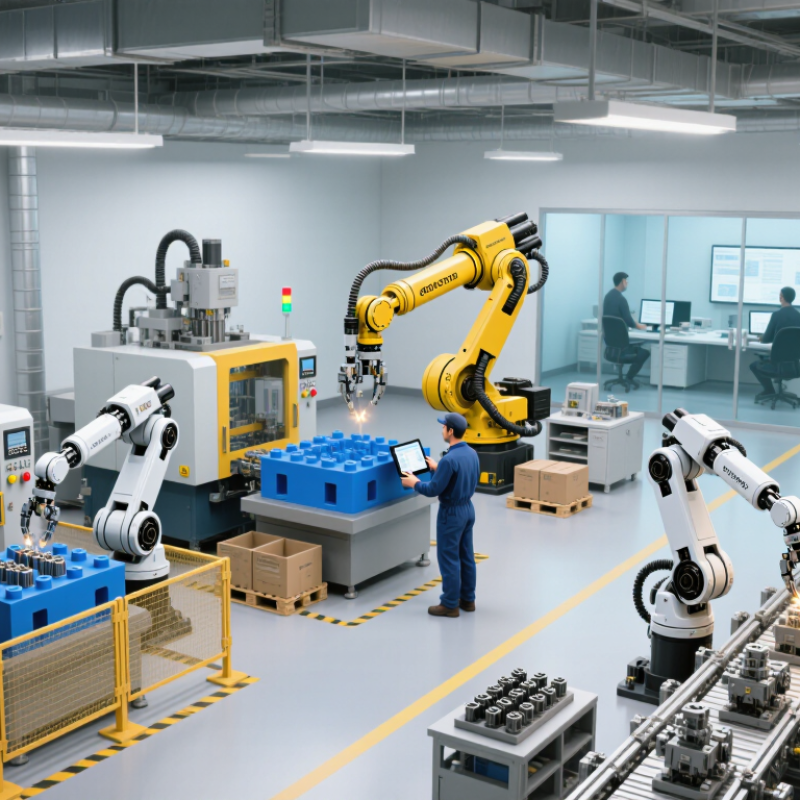
Start by defining the cell, not the robot. Record mold dimensions, part weight, cycle time, ejection method, and required reach. A robot handling hot runners needs different protection than one removing cool parts. Payload calculations must include the end-of-arm tooling.
Balance Speed and Capacity
Cycle time matters. A small oversizing decision can increase energy use and slow movement. An undersized robot may create vibration, rejected parts, or unsafe stops.
Tips
Build requirements from real production records. Measure peak cycle variation, not only the average. Check whether the robot can serve multiple molds without awkward repositioning. Ask integrators for documented uptime, maintenance intervals, and recovery procedures. The IFR data is useful for market context, but it cannot replace a cell study. A spreadsheet rarely captures every jam. I would also test part release under poor conditions, because perfect samples can hide practical weaknesses. Define safety distances and access controls with qualified professionals, following applicable local standards. Reliable selection depends on evidence, repeatable trials, and honest attention to the failures your current process already shows.
Match Robot Type to Payload, Reach, Speed, and Molding Cycle Time
How to Choose Injection Molding Robots in 2026?
Injection molding robots should match the machine, mold, and production rhythm. According to the International Federation of Robotics’ World Robotics 2024 report, factories installed 541,302 industrial robots worldwide in 2023. That growth makes correct sizing more important, not optional. Start with payload. Include the gripper, sprue, part, cables, and a safety margin. A robot rated for 10 kilograms may perform poorly near its limit.
Reach must cover the mold opening, part drop zone, conveyor, and any inspection station. A longer arm is not always better. Excess reach can reduce stiffness and repeatability. Check the robot’s working envelope at the actual mounting angle. Measure it first. Then compare acceleration and settling time.
Speed matters only when the molding cycle allows it. If the machine cycles every 18 seconds, a fast robot may add little value when mold cooling takes 12 seconds. The robot must complete removal, placement, and signal exchange within the remaining window. IFR also reported more than 4.2 million industrial robots operating globally in 2023, showing how mature automation has become.
Yet published cycle claims can be optimistic. Real parts may stick, deform, or need slower release. Test the complete sequence with the intended gripper and material. My practical mistake was trusting empty-arm speed; production speed was lower. Evaluate payload, reach, speed, and cycle time together, not as separate specifications.
Compare Cartesian, SCARA, and Six-Axis Robots with EUROMAP 67 Interfaces
Choosing Plastic Injection Molding Robots in 2026 starts with the machine interface, not the robot catalogue. EUROMAP 67 provides a standardized connection between the injection molding machine and robot controller. It commonly carries start signals, cycle status, mold-area safety signals, and fault information. Verify pin assignments, voltage levels, safety circuits, and software mapping before installation. A connector that fits is not proof of full compatibility.
Cartesian robots remain practical for straight vertical extraction. Their programming is familiar, and their motion suits fixed mold layouts. SCARA robots can deliver fast horizontal pick-and-place movements, especially when parts exit on a nearby conveyor. However, their vertical reach and access angle may limit complex tooling. Six-axis robots handle angled inserts, side-entry tasks, and variable part orientation with greater freedom. They also demand more careful reach studies, collision checks, and operator training.
On a real cell, I would test the dry cycle before judging speed. Watch the gripper approach the mold, the cable bend, and the part release point. Small timing errors can create repeated stoppages. EUROMAP 67 helps communication, but it does not solve poor mechanical design. A neat comparison can mislead. The best robot may be slower on paper yet steadier across thousands of cycles. Leave room for manual recovery, sensor feedback, and future tooling changes. I would also question whether a six-axis system is genuinely needed. Sometimes, a well-tuned Cartesian robot is the more reliable choice.
Verify Robot Safety Against ISO 10218 and ISO 13849-1:2023
Choosing a robot for Automated Injection Molding starts with safety evidence, not cycle time. The International Federation of Robotics reported 541,302 industrial robot installations worldwide in 2023. More automated cells also mean more safety decisions.
Check whether the robot, gripper, mold area, and guarding were assessed as one system. ISO 10218 defines safety expectations for industrial robots and their integration. ISO 13849-1:2023 helps evaluate safety-related control parts, including required Performance Level. Ask for the risk assessment, safety function list, validation records, and stop-time measurements. A safety-rated controller alone proves little. The actual gate, light curtain, enabling device, and emergency stop must work together. In factory audits, small gaps often appear at access doors. That detail is easy to miss.
Tips: Request a circuit diagram and a real validation test. Open each access point during a controlled trial. Confirm the robot stops before a person can reach the hazard. Recheck the assessment after mold changes or software updates. A faster robot may create longer stopping distances. The first design can be wrong. Allow room for review. Sources: ISO 10218; ISO 13849-1:2023; International Federation of Robotics, World Robotics 2024.
How to Choose Injection Molding Robots in 2026?
Verify Robot Safety Against ISO 10218 and ISO 13849-1:2023
The chart shows the probability of dangerous failure per hour (PFHd) ranges associated with Performance Levels PL a–e under ISO 13849-1:2023. When selecting an injection molding robot, verify that the robot cell’s safety-related control system achieves the Performance Level required by the risk assessment under ISO 10218, including safeguarding, emergency stop functions, access protection, and validation of safety functions.
PFHd ranges shown: PL a ≥ 1×10⁻⁵ to
Evaluate Accuracy, Repeatability, Uptime, and 24/7 Production Capacity
Choosing Injection Molding Robots in 2026 requires more than checking payload and reach. Accuracy affects insert placement, trimming, and part handling. Repeatability matters even more during long production runs. A robot that returns within ±0.1 mm can still create defects if vibration, temperature, or gripper flex changes the process. Request test results under realistic loads, not empty-arm demonstrations.
In a real molding cell, uptime is measured at the machine, not in a brochure. Check recovery after power interruptions, alarm diagnostics, spare-part access, and restart time. IFR’s World Robotics 2024 report recorded 541,302 new industrial robot installations worldwide in 2023, with 4.28 million robots operating globally. That growth signals stronger automation expertise, but it does not guarantee reliable 24/7 production. Injection Molding Automation still depends on mold condition, material drying, cooling stability, and operator response.
Ask for production evidence from similar cycle times. Track availability, performance, and quality across several weeks. A practical target is an OEE above 85%, although actual results vary by plant and product. Use ISO 9283 methods when comparing positioning accuracy and repeatability. Keep the test honest. A clean laboratory floor is not a factory floor. I would also inspect cable routing and gripper wear after thousands of cycles. Small failures become expensive at night. Sometimes, the best robot is not the fastest one, but the one technicians can diagnose before a minor fault stops the entire cell.
Calculate ROI from Labor Savings, Scrap Reduction, and Payback Period
How to Choose Injection Molding Robots in 2026?
ROI should start with measured shop-floor data, not optimistic brochures. Deloitte’s 2024 Smart Manufacturing Survey reports expected gains of
10–20%
in production output and productivity from smart technologies. Use that range carefully. Record cycle time, operator hours, reject rates, and downtime for at least
30 days.
For example, two operators may support a cell for
4,000 annual hours. At a loaded cost of
$24 per hour, a 15% labor reduction saves
$28,800 yearly.
If one million parts cost $0.18 each and scrap falls from 15% to 8%, the additional saving reaches
$12,600.
A robot system costing
$80,000 would then have a simple payback of about
23 months. The calculation is useful, but imperfect. Training, maintenance, guarding, and integration can extend payback.
Tips:
Compare three scenarios: conservative, expected, and best case. Include data from
Injection Molding Hand Tools, quality logs, and maintenance records. Check whether workers are redeployed rather than removed. The U.S. Bureau of Labor Statistics’ wage data can help estimate realistic labor costs, but local overtime and benefits still matter. Run a 90-day pilot and track rejected parts beside the machine. A shorter payback is not always better if reliability is weak.
Select Suppliers Using Service Coverage, TCO, Integration, and 2026 Support
Choosing an injection molding robot in 2026 requires more than comparing payload and cycle time. Factory experience shows that service coverage often decides uptime. Ask where technicians are located, how spare parts are stocked, and whether remote diagnostics operate during night shifts. The International Federation of Robotics reported 541,302 industrial robot installations worldwide in 2023. That scale signals stronger automation demand, but it also increases pressure on support teams (IFR, World Robotics 2024).
Measure total cost of ownership over five to seven years. Include installation, grippers, programming, energy use, training, maintenance, and unplanned stoppages. A low purchase price may become expensive after repeated mold changes.
Integration also needs proof. Request a live test with your controller, safety circuit, vision system, and production database. The International Data Corporation expects worldwide data and analysis spending to keep expanding rapidly through 2027, supporting smarter connected factories (IDC, Worldwide Big Data and Analytics Spending Guide, 2024).
Still, connectivity alone does not guarantee useful production data. My own assessment would challenge any supplier promising effortless integration.
Tips:
- Score each supplier across service response time, local inventory, TCO, integration hours, and 2026 software support.
- Require written upgrade policies.
- Check two comparable customer references.
- Ask operators to test the interface.
- A perfect spreadsheet is impossible.
- Leave room for downtime, training gaps, and changing molds.
- Verify cybersecurity practices and data ownership before connecting the robot to factory systems.
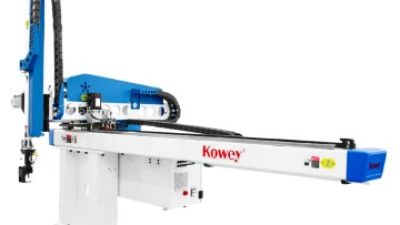
High-Speed Bull-Head 3-Axis Full-Servo Robots: Advancing Precision Injection Molding Automation
High-speed bull-head 3-axis full-servo robots are redefining precision automation for injection molding, particularly in thin-wall packaging applications. Designed for 250–600-ton injection molding machines, these systems can achieve a minimum pick-up time of 0.5 seconds and an idle cycle of 2.6 seconds, helping manufacturers maximize machine utilization without compromising product quality. The International Federation of Robotics reported that 541,302 industrial robots were installed worldwide in 2023, reflecting the growing importance of automated, high-throughput production.
A high-rigidity, lightweight frame, precision transmission, and centralized lubrication support stable, vibration-free movement during rapid operation. This reduces the risk of scratching, deformation, and inconsistent removal of delicate products such as lunch boxes and other thin-wall containers. Full-servo control also enables accurate positioning and flexible motion adjustment for different mold designs. With simple setup and low energy consumption, the robot is suitable for continuous 24-hour production. These capabilities align with the efficiency goals highlighted in the World Economic Forum’s manufacturing studies, where automation is increasingly linked to improved productivity, reduced waste, and more resilient factory operations.
FAQS
Check pin assignments, voltage levels, safety circuits, and software mapping. A connector can fit without working correctly. Test every signal before production.
It suits straight vertical extraction from fixed mold layouts. Programming is usually familiar. It can be steady and reliable.
SCARA robots provide fast horizontal pick-and-place movements. They work well when parts move toward a nearby conveyor. Limited vertical reach can affect tooling choices.
Consider one for angled inserts, side-entry tasks, and changing part orientations. It offers greater movement freedom. That freedom needs careful planning.
A dry cycle reveals timing errors before materials are introduced. Watch the gripper approach, cable bend, and release point. Small errors can cause repeated stoppages.
No. It improves communication between the machine and robot controller. Poor mechanical design, weak sensors, or unclear software mapping can still cause failures.
Measure total ownership costs over five to seven years. Include installation, grippers, programming, energy, training, maintenance, and downtime. A cheap purchase may become expensive after frequent mold changes.
Ask where technicians work, how quickly they respond, and where spare parts are stored. Check remote support during night shifts. Request two similar customer references. Promises are not proof.
Request a live test with the controller, safety circuit, vision system, and production database. Let operators use the interface. Connectivity alone may not create useful data.
No. A six-axis robot may be unnecessary for simple vertical extraction. A tuned Cartesian system can be steadier across thousands of cycles. My judgment could change after a real reach study.
Conclusion
Choosing Injection Molding Robots in 2026 begins with clearly defining the production cell, including part weight, mold layout, payload, reach, speed, cycle time, and required handling tasks. The reported 541,302 industrial robot installations in 2023 highlight the importance of selecting automation that can meet both current output goals and future capacity needs. Cartesian, SCARA, and six-axis robots each offer different advantages, while compatibility with EUROMAP 67 interfaces can simplify communication and integration with molding equipment.
A reliable evaluation should also cover compliance with ISO 10218 and ISO 13849-1:2023, as well as accuracy, repeatability, uptime, maintenance access, and continuous 24/7 production capability. Financial analysis should estimate labor savings, scrap reduction, productivity gains, total cost of ownership, and the expected payback period. Finally, assess suppliers by their technical support, service coverage, integration expertise, spare-parts availability, training, and ability to provide dependable support throughout 2026 and beyond.


 Contact Email