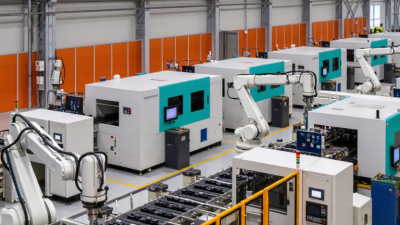
Picking the right Robotic Picking Arm? Honestly, it's almost never just about comparing payload specs. A good arm has to fit your product, your workspace, your picking speed, and the rhythm of your production line. And it needs to play nice with people, conveyors, cameras, and whatever software you're already running.
Rodney Brooks, who founded Rethink Robotics, once put it like this: “The robots are coming, but they are not coming to take our jobs.” That idea is worth keeping in mind when you're weighing automation. Most of the time, the best setup helps operators do their jobs better—it doesn't try to remove every human judgment call. So a practical evaluation should look at reach, repeatability, gripper compatibility, vision accuracy, cycle time, and payload at full extension. The little stuff matters too. A damp carton, a shiny package, or a part that's just slightly out of place can reveal weaknesses fast.
Don't just trust the demo.
A clean showroom test can hide the messy reality. Ask suppliers to run your actual products—damaged packaging, mixed sizes, changing lighting, all of it. Check how the arm integrates with PLCs, warehouse software, safety systems, and maintenance tools. And don't forget total cost: installation, training, spare parts, downtime, energy use. A cheaper sticker price can get expensive quickly if support is slow or programming is a headache.
There's no single best arm out there. That's the uncomfortable truth. A fast six-axis model might be overkill for simple pick-and-place work. A compact collaborative arm might struggle with heavy loads or tough cycle times. This guide will compare the key selection criteria, walk through common trade-offs, and show you how to build a more reliable business case before you choose a Robotic Picking Arm.

Define Picking Profiles with 30–200 Picks/Min and 0.1–50 kg Loads
How to Choose the Right Robotic Picking Arm?
Define Picking Profiles with 30–200 Picks/Min and 0.1–50 kg Loads
Selecting a robotic picking arm starts with the product, not the advertised speed. Define the real picking profile across the full shift. Record item weight, dimensions, surface texture, presentation, and required picks per minute. A 0.1-kilogram pouch behaves differently from a 50-kilogram carton. The arm, gripper, and safety system must handle both the load and its momentum. At 200 picks per minute, even a small delay can create a visible queue. At 30 picks per minute, unnecessary acceleration may waste energy and reduce control.
Test the complete process with representative products. Measure approach time, gripping reliability, release accuracy, and recovery after a missed pick. Vision quality matters when products overlap or arrive with random rotation. Suction may suit smooth packaging, while mechanical fingers can handle uneven surfaces. This is not always clean. A calculation may look perfect, yet dust, soft film, or changing carton sizes can lower performance. Leave practical margin instead of designing around the best result.
Tips: Build a picking table with low, typical, and peak conditions. Check performance at 30, 100, and 200 picks per minute. Confirm the payload includes the gripper and product. Watch the first production trials closely. Small failures matter. Review data weekly, because product flow often changes before the equipment does.
Compare Delta, SCARA, 6-Axis, and Cobot Arms by Reach and Speed
Choosing the right Picking Arm starts with the product path, not the robot label. Measure the farthest pick point, container height, and required cycle time. A delta arm suits lightweight items moving between nearby zones at very high speed. Speed matters. Its parallel structure keeps motion quick, but reach is usually limited. In a packing cell, it can repeatedly grab small cartons within a compact work envelope.
A SCARA arm offers broader horizontal reach and strong repeatability. It works well when parts arrive on a conveyor and must enter trays. Its vertical movement is simple, improving cycle consistency. A 6-axis arm reaches around fixtures, approaches from changing angles, and handles deeper workspaces. It generally trades peak speed for flexibility. Check wrist rotation time, not only advertised arm speed. A fast reach can still produce slow cycles.
Cobots support closer operator interaction and often require less installation complexity. Their speed may be more modest under safety settings. Real output depends on payload, gripper weight, acceleration, vision delay, and conveyor tracking. Test the complete sequence with the heaviest product. Watch the final ten centimeters; settling time is easy to overlook. My rough rule is practical, not perfect. Short reach favors delta arms, balanced motion favors SCARA, and complex orientation favors six-axis or cobot designs. That assumption can fail. Catalog figures still need timed trials.
Match Payload and Reach to Manufacturer Data: 0.5–50 kg, 400–2,600 mm
Choosing a picking arm starts with the product, not the robot catalog. Manufacturer data commonly spans 0.5–50 kg payloads and 400–2,600 mm reaches. These figures define the working envelope, but they do not guarantee practical performance. A 50 kg rating may apply only near the robot base. At full extension, acceleration, wrist torque, gripper weight, and package shape reduce usable capacity.
The International Federation of Robotics’ World Robotics 2024 report recorded 541,302 industrial robot installations in 2023. This continued adoption reflects a demand for measurable productivity, not impressive specifications alone. Check the manufacturer’s payload chart at the exact reach required. Include the gripper, camera, cables, and product load. A 12 kg carton can become a 17 kg wrist load after tooling is added. That difference matters.
For a 400–900 mm workspace, a compact arm may improve cycle time and reduce floor use. A Long Robotic Arm can reach 2,600 mm, but longer reach often brings slower motion and greater deflection. Place a sample carton at the farthest pick point, then test repeated transfers. Record cycle time, placement error, vibration, and missed picks. ISO 10218 safety requirements should guide the cell design, while manufacturer test conditions need careful comparison. I would not trust a payload number without its reach chart. A spreadsheet can still mislead. Real cartons bend, surfaces vary, and suction sometimes fails.
Specify Vision and Gripping Around 0.5–5 mm Accuracy and 10,000 Cycles
How to Choose the Right Robotic Picking Arm?
A reliable picking arm begins with the part, not the robot catalog. Define whether your process needs 0.5 mm or 5 mm accuracy. A 0.5 mm target demands stable fixtures, careful calibration, and repeatable camera lighting. A 5 mm target may allow simpler vision and lower system cost. Measure the object’s size, weight, surface, and presentation speed. Small errors become visible when parts are placed into narrow trays. A Large Robotic Arm can offer reach and payload, but it does not guarantee precision. That assumption can fail.
Test the complete system for at least 10,000 cycles before approval. Record missed picks, slipping parts, camera errors, and position drift. Check performance after warm-up, cleaning, and tool changes. Select a gripper that holds gently but resists vibration. Soft surfaces can deform under excessive force. Shiny parts may confuse vision systems, especially under changing factory light. Fixed illumination helps. Still, real production conditions are rarely perfect. Leave a practical tolerance instead of designing around ideal samples.
Tips: Use a calibration target at the actual picking height. Test full trays, empty pockets, dust, and minor part variation. Ask for repeatability data, not only marketing accuracy. Review results with operators who will maintain the cell. If the system misses one pick every few hundred cycles, investigate the cause before increasing speed. Fast is not always stable.
How to Choose the Right Robotic Picking Arm?
Vision and gripping benchmarks for 0.5–5 mm accuracy and 10,000 operating cycles
Select the arm, vision system, and gripper according to the required positioning tolerance.
Fine insertion tasks typically require around 0.5 mm accuracy, while general handling may accept
up to 5 mm. A design target of 10,000 cycles provides a practical baseline for evaluating durability
and maintenance requirements.
Verify Safety with ISO 10218-1:2025 and ISO/TS 15066 Requirements
Choosing a robotic picking arm begins with the product, but safety must shape the decision.
ISO 10218-1:2025 addresses safety requirements for industrial robot design. It does not make a complete picking cell safe by itself. The arm, gripper, software, fixtures, and surrounding equipment must work as one controlled system.
Check the arm’s stopping performance, reachable area, payload, and operating modes. Then inspect the gripper. Sharp edges, crushing gaps, dropped cartons, and unexpected releases can create serious hazards. Guards, interlocked doors, emergency stops, and safe restart procedures should match the actual layout. A risk assessment should cover installation, normal production, cleaning, maintenance, and fault recovery.
ISO/TS 15066 is especially useful when people and robots may share space. Use its biomechanical guidance to evaluate contact risks, including force, pressure, speed, and body regions. Do not rely on reduced speed alone.
Test the complete application with the intended load, tooling, motion path, and workplace distances. Measurements should be recorded and independently reviewed by a qualified safety professional.
Real production is rarely perfect.
Boxes shift. Sensors become dirty. Operators reach differently. These details can invalidate a paper-based assessment.
Validate protective functions under realistic conditions, including power recovery and communication loss. A compliant component may still create an unsafe cell when integrated poorly.
That is an easy mistake to make, and it deserves honest review before purchase.
Calculate Capacity, OEE, and Payback from 16–24-Hour Operating Models
How to Choose the Right Robotic Picking Arm?
Choosing a robotic picking arm starts with the working schedule, not the catalog speed. A 16-hour model may need 900 picks per hour during production windows. A 24-hour model may achieve the same daily output at a slower, more stable pace. In plant assessments, I compare hourly demand, product mix, changeovers, and planned maintenance. The fastest arm is not always the most productive choice.
Capacity should reflect real operating conditions. For example, an arm rated for 1,200 picks per hour may deliver only 900 usable picks. OEE exposes this gap through availability, performance, and quality. If availability is 90%, performance is 85%, and quality is 98%, effective OEE is about 75%. That result changes labor planning and payback calculations. A spreadsheet can still lie. Use measured cycle times whenever possible.
Payback should include the complete investment: arm, gripper, vision system, guarding, integration, training, and service. Suppose automation costs 120,000 dollars and saves 7,000 dollars monthly in labor and waste. Simple payback is about 17 months. However, a 24-hour schedule may increase maintenance exposure and energy use. A 16-hour schedule may reduce wear but leave equipment idle. Include downtime, rejected picks, seasonal demand, and operator support. I would also test a conservative case with lower OEE. It may feel uncomfortable, but optimistic assumptions often make weak projects look profitable.
How to Choose the Right Robotic Picking Arm? - Calculate Capacity, OEE, and Payback from 16–24-Hour Operating Models
Comparative planning model for three generic robotic picking arm configurations. Financial values are shown in USD and are based on a 300-day annual operating calendar.
| Evaluation Dimension |
Compact Arm
16-Hour Model |
Standard Arm
20-Hour Model |
High-Throughput Arm
24-Hour Model |
| Recommended Application |
Small items, light cartons, short conveyor distances |
Mixed SKU picking, cartons, totes, and case handling |
Continuous high-volume case or tote picking |
| Typical Payload Capacity |
Up to 3 kg |
Up to 8 kg |
Up to 15 kg |
| Typical Working Reach |
900 mm |
1,400 mm |
1,800 mm |
| Design Cycle Time per Pick |
2.0 seconds |
1.33 seconds |
1.0 second |
| Theoretical Pick Rate |
30 picks/minute |
45 picks/minute |
60 picks/minute |
| Scheduled Operating Time |
16 hours/day |
20 hours/day |
24 hours/day |
| Operating Days per Year |
300 days |
300 days |
300 days |
| Availability |
92% |
94% |
96% |
| Performance |
90% |
92% |
94% |
| Quality Rate |
99.2% |
99.4% |
99.5% |
| Calculated OEE |
82.1% |
86.0% |
89.9% |
| Scheduled Picks per Year |
8,640,000 |
16,200,000 |
25,920,000 |
| Effective Good Picks per Year |
7,084,800 |
13,932,000 |
23,329,920 |
| Equivalent Manual Rate |
12 picks/minute |
15 picks/minute |
18 picks/minute |
| Manual Labor Hours Replaced per Year |
9,840 hours |
15,480 hours |
21,602 hours |
| Fully Loaded Labor Cost Assumption |
$24/hour |
$24/hour |
$24/hour |
| Estimated Annual Labor Cost Avoidance |
$236,160 |
$371,520 |
$518,448 |
| Estimated Annual Robot Operating Cost |
$36,000 |
$52,000 |
$76,000 |
| Estimated Annual Net Benefit |
$200,160 |
$319,520 |
$442,448 |
| Estimated Installed Capital Cost |
$95,000 |
$155,000 |
$235,000 |
| Simple Payback Period |
5.7 months |
5.8 months |
6.4 months |
| Annual Good Picks per Installed Dollar |
74.6 picks/$ |
89.9 picks/$ |
99.3 picks/$ |
| Best Selection Trigger |
Lower entry cost and moderate daily volume |
Best balance of payload, flexibility, and utilization |
Maximum output where equipment runs around the clock |
Validate Integration with PLC, WMS, and Pilot-Test Performance Data
Choosing a Robotic Crane Arm should begin with controls, not catalog photos. A reliable lift must exchange clear signals with the PLC. Test start, stop, fault, reset, and safety-state handshakes under load. Then connect the WMS. Confirm that every order, location, quantity, and completion status stays synchronized.
The International Federation of Robotics reported 541,302 industrial robots installed worldwide in 2023. That scale shows adoption, not guaranteed integration.
Run a controlled pilot with real cartons, variable weights, damaged labels, and peak-hour traffic. Record picks per hour, first-pass success, mispicks, cycle time, recovery time, and unplanned stops. Track PLC response latency and WMS transaction errors separately.
The Material Handling Institute’s 2024 Annual Industry Report states that 55% of respondents already use robotics and automation, while 88% expect adoption within five years. Investment is rising. Integration risks remain.
Set acceptance thresholds before testing. For example, require 98% valid picks across three shifts, not one polished hour. Measure recovery after a sensor fault, because downtime often hides in manual intervention. Review each failed transaction with operators and controls engineers. An early pilot may look strong and still expose weak exception handling. That is useful evidence. Revise the PLC state map and WMS retry logic before expanding. A lower pick rate with dependable data may be safer than a faster, fragile system.
FAQS
Common specifications range from 0.5–50 kg payloads and 400–2,600 mm reaches. These figures describe the working envelope, not guaranteed performance. Check the chart carefully.
The rating may apply only near the robot base. At full extension, acceleration, wrist torque, tooling weight, and package shape reduce usable capacity. A catalog number is not enough.
Include the product, gripper, camera, cables, and other wrist-mounted equipment. A 12 kg carton could create a 17 kg wrist load after tooling is added. That difference can affect safety and cycle time.
No. Longer arms can cover distant pick points, but they may move slower and deflect more. Test a sample carton at the farthest position. Measure vibration, placement error, cycle time, and missed picks.
Use real cartons, product variations, and actual pick distances. Run repeated transfers under expected production conditions. Record successful picks, rejected products, delays, and operator interventions. Real surfaces vary.
A 16-hour schedule may need faster hourly output during production periods. A 24-hour schedule may reach the same daily volume at a slower pace. Compare demand, product mix, changeovers, maintenance, and idle time.
OEE combines availability, performance, and quality. For example, 90% availability, 85% performance, and 98% quality produce about 75% effective OEE. A robot rated for 1,200 picks hourly may deliver only 900 usable picks. Measure it.
Include the arm, gripper, vision equipment, guarding, integration, training, service, energy, and maintenance. An investment of $120,000 saving $7,000 monthly has a simple payback near 17 months. That estimate may be too optimistic.
Test lower OEE, seasonal demand, rejected picks, downtime, and operator support needs. A 24-hour schedule may increase maintenance exposure and energy use. A 16-hour schedule may leave equipment idle. My spreadsheet could still be wrong.
Conclusion
Choosing the right Robotic Picking Arm starts with clearly defining the picking profile, including product size, weight, speed, and operating hours. Requirements may range from 30 to 200 picks per minute and loads of 0.1 to 50 kg. Delta, SCARA, six-axis, and collaborative arms should then be compared according to reach, motion speed, flexibility, and working-area limitations. Payload and reach must match verified manufacturer specifications, typically covering 0.5–50 kg and 400–2,600 mm. Vision systems and grippers should support the required product variation, approximately 0.5–5 mm accuracy, and up to 10,000 operating cycles.
A complete evaluation should also confirm compliance with ISO 10218-1:2025 and ISO/TS 15066 safety requirements. Estimate throughput, OEE, labor impact, maintenance, and payback using realistic 16–24-hour operating models. Finally, validate communication with PLC and WMS systems through a pilot test, measuring actual picking accuracy, cycle time, uptime, changeover performance, and recovery behavior before making a final investment.


 Contact Email