Leave Your Message
0%

Picking out a robotic picking arm isn't just some fancy showpiece for your showroom—it’s a real business decision. The right system needs to fit your products, your space, your staff, and the pace of your production line. Sometimes, those slick demos can give you a skewed perspective, hiding the tricky stuff behind the scenes.

Joseph Engelberger, often called the father of industrial robotics, once said, “I can’t define a robot, but I know one when I see one.” That’s still pretty true today. When you're choosing a robotic picking arm, it’s more about consistent, repeatable performance than just flashy, impressive movements.

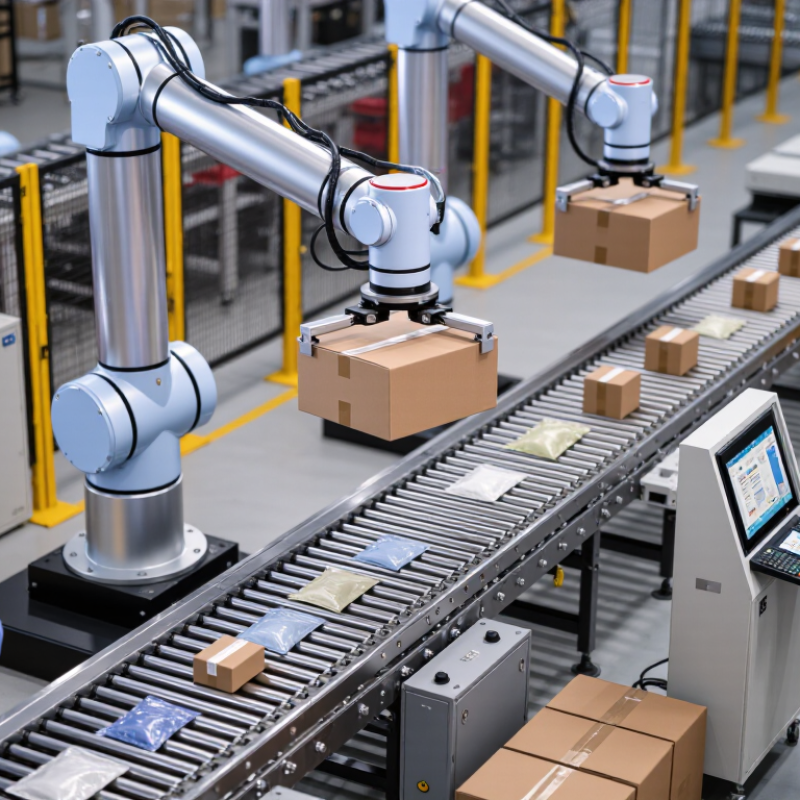
Start by looking at what you need the robot to handle. Take notes on weight, size, surface texture, and how precisely it needs to pick up objects. A soft pouch isn’t the same as a rigid box, and transparent packaging? That can trip up regular vision systems. Also, figure out the fastest cycle time you require. Then, test the robot right there on your actual conveyor line, with your lighting, bins, safety barriers—everything you’d use in real life.

Don’t forget to consider payload capacity and reach. It’s smart to leave some breathing room—operating close to the max might cut into accuracy and reduce the arm’s lifespan. Take a close look at gripper options, how well it works with your vision system, how much effort programming will take, cleaning needs, and how easy it is to get spare parts. Sometimes, a smaller, more compact arm fits better into a tight setup than a big player from ABB or FANUC. But watch out—smaller arms might not handle heavier loads or might slow down under the weight.

And hey, your team matters, too. Operators should be able to perform basic troubleshooting and recovery steps without needing an expert right away. Don’t underestimate how important good training and maintenance time are—they can make or break your operation.

Finally, don’t rely solely on those shiny brochures. Pilot testing with your real products, including mixed items, imperfect placements, and quick changes in production—expect some bumps along the way—that’s all part of figuring out what really works. The best pick balances speed, reliability, how much it costs to fit into your system, and how flexible it is for the future. Remember, no one robotic picking arm is going to be a perfect match for every business—so choose wisely.
How to Choose a Robotic Picking Arm for Your Business?

Define Your Business Goals for Robotic Picking

Before choosing a robotic picking arm, define the business problem in measurable terms.

Are orders delayed by labor shortages, repetitive lifting, or inaccurate picking? Record daily order volume, peak-hour demand, SKU dimensions, item weight, and required picking accuracy. A small operation may need flexibility more than maximum speed. A high-volume warehouse may prioritize cycle time and uptime.

The International Federation of Robotics reported 541,302 industrial robots were installed worldwide in 2023. This shows broad automation growth, but adoption alone does not guarantee a useful return.

Set practical targets, such as reducing average pick time by 30%, supporting 1,200 picks per hour, or lowering product damage below 0.5%.

Include difficult cases, such as transparent packaging, soft goods, and items stored at inconsistent angles. They often expose weaknesses during testing.

Your goals should also define integration and payback limits. Check whether the arm can connect with warehouse software, vision systems, safety controls, and existing conveyors.

The 2024 MHI Annual Industry Report identifies robotics and automation as major investment priorities across supply chains, yet budgets remain closely examined. A spreadsheet may promise a fast return. It can still be wrong.

Include training, maintenance, gripper replacement, energy use, and downtime. Run a short pilot with real products, not ideal samples.

Measure successful picks, recovery actions, operator intervention, and performance during peak periods. Keep human review in the process.

Automation should solve a clear operational constraint, not simply add impressive equipment.

Assess Product, Payload, and Picking Requirements

How to Choose a Robotic Picking Arm for Your Business?

The International Federation of Robotics reported 541,302 industrial robots installed worldwide in 2023. That scale shows strong adoption, but popularity does not guarantee suitability.

Start with the product. Measure length, width, weight, surface texture, packaging flexibility, and temperature.

A glossy pouch may slide, while a rigid carton needs different contact pressure. Record real production samples, not ideal samples.

Payload calculations must include the gripper, adapter, cables, and product. A 5-kilogram item may require an arm rated above 8 kilograms.

The center of gravity also matters, especially when the product extends from the wrist. ISO 9283 testing guidance helps teams compare repeatability and positioning performance under defined conditions.

Still, laboratory figures can differ from a dusty, fast-moving production line.

Picking requirements need measurable targets. Document cycles per hour, bin depth, product variation, allowable damage, reach, and available floor space.

Interact Analysis has repeatedly identified e-commerce and logistics as major drivers of robotic automation demand.

However, high speed can expose weak feeding systems. One missed pick can stop downstream packing.

Test the hardest SKU first. That choice may reduce headline speed, but it reveals practical limits.

Teams often underestimate changeover time. They also forget that lighting, reflections, and overlapping products can reduce vision reliability.

A short pilot using normal operators and mixed inventory provides more trustworthy evidence than a polished demonstration.

Compare Robotic Arm Types and End-of-Arm Tools

Choosing a robotic picking arm starts with the product, not the robot catalog. A six-axis arm suits irregular bins, angled presentations, and changing reach points. A four-axis SCARA-style arm often wins on flat-layer picking and short transfers. Delta arms deliver speed over conveyors, but their workspace and payload remain limited. The International Federation of Robotics reported 541,302 industrial robots installed worldwide in 2023, with 4.28 million operating globally. Adoption is high. Fit is still local.

End-of-arm tooling determines whether a carton moves gently or drops. Vacuum cups work well on sealed boxes, smooth film, and consistent surfaces. Finger grippers provide stronger control for rigid parts, but can mark soft packaging. Adaptive or compliant tools handle variation, although they add weight, maintenance, and failure points. Mixed cartons may need tool changers or hybrid gripping. That choice can make the arm slower than expected. A 2023 report from the Association for Advancing Automation recorded 31,159 robot orders in North America, showing strong demand across different applications, including material handling.

Test the complete system with real packaging. Measure successful picks per hour, mis-picks, changeover minutes, air consumption, and recovery time. Watch crushed corners and sliding labels. A spreadsheet can still lie. I would not trust a showroom cycle count alone. Product dust, loose film, and uneven cartons often expose weak assumptions. Use production samples for at least several shifts, then review the tooling’s grip force and maintenance access before approving the final arm.

Evaluate Vision, Accuracy, Speed, and Flexibility

Choosing a robotic picking arm starts with the workpiece, not the machine. In warehouse trials, I examine camera performance under glare, shadows, dust, and uneven lighting. A strong vision system should identify shape, position, orientation, and damaged packaging. Test real products, not only clean samples. Small errors become expensive at scale.

Accuracy must match the task. For fragile items, measure placement repeatability and gripping force. For high-volume orders, compare cycle speed with actual picking success. A faster arm is not better if it drops products or needs frequent corrections. I once overvalued headline speed and underestimated changeover time. That mistake changed the evaluation.

Tips: Record successful picks per hour, not theoretical cycles. Test different product sizes and surfaces. Check whether operators can adjust settings without specialist support. Flexibility matters when inventory changes. Look for adjustable grippers, simple software, and quick tool changes. Also review maintenance access, safety controls, training requirements, and service response. Ask for performance data from comparable applications. Be cautious with perfect demonstrations. Real operations are rarely perfect.

Check Integration, Safety, Space, and Maintenance Needs

How to Choose a Robotic Picking Arm for Your Business?

Integration should guide the purchase, not impressive movement demos. Check whether the arm communicates with your existing controller, conveyor, vision system, and warehouse software. Confirm data formats, response times, and fault signals before signing any agreement. A small mismatch can stop an entire line. Ask for a live trial using your products, packaging, and expected picking speed. Measure twice.

Safety requires more than an emergency stop button. Request a documented risk assessment from a qualified safety professional. Check guarding, access doors, light curtains, speed limits, and force control. Operators should understand restart procedures and safe cleaning routines. Local machine safety requirements may also affect installation and training. I have seen teams underestimate product changes; a soft item and a rigid container can create very different hazards. Space is unforgiving.

Measure the arm’s reach, mounting height, cable routes, and service clearance. Leave room for technicians to open panels without moving nearby equipment. Review payload limits, grip pressure, cycle time, and recovery after dropped items. Maintenance planning matters just as much. Confirm lubrication intervals, washable surfaces, diagnostic access, spare-part availability, and expected repair time. Keep records. A simple maintenance log can reveal repeated jams before they become expensive downtime. Some early estimates will be wrong, so review them after a short production trial.

How to Choose a Robotic Picking Arm for Your Business? - Check Integration, Safety, Space, and Maintenance Needs
Business Requirement Recommended Arm Profile Integration Check Safety Requirements Space and Layout Maintenance Needs Selection Guidance
Small, lightweight picking Payload: 3–5 kg
Reach: 500–900 mm
Suitable for small cartons, components, and packaged goods.
Confirm digital I/O, Ethernet or industrial communication support, camera compatibility, and gripper mounting options. Use risk assessment, protective guarding or monitored safety functions, emergency stops, and safe speed limits. A compact arm can often fit on a bench or small cell. Allow space for the arm’s full reach, cable routing, and operator access. Check gripper fingers, suction cups, filters, cables, and lubrication intervals. Keep spare wear parts available. Best when products are light, the work envelope is compact, and the cell must be easy to relocate.
High-speed conveyor picking Payload: 3–10 kg
Reach: 800–1,300 mm
Prefer a high-repeatability arm with coordinated conveyor tracking.
Verify encoder input, conveyor-tracking capability, vision latency, PLC communication, and cycle-time performance under actual load. Add guarding, safety-rated monitoring, interlocked access points, and a validated stop-and-restart procedure. Reserve room for conveyor infeed and outfeed, reject lanes, camera zones, guarding, and safe maintenance access. Inspect belts or drive components where applicable, gripper vacuum performance, vision lenses, and conveyor synchronization. Choose this profile when throughput and accurate timing matter more than minimum purchase price.
Mixed-SKU order picking Payload: 5–15 kg
Reach: 900–1,500 mm
Flexible tooling and machine vision are usually required.
Confirm barcode or object-recognition support, recipe management, warehouse-system connectivity, and rapid product changeover. Validate handling of unknown product positions, dropped objects, pinch points, and human access during replenishment. Plan for multiple storage locations, tote presentation, camera sightlines, and clear separation between people and moving equipment. Schedule regular checks for camera calibration, gripper wear, software backups, and product-specific tooling. Select when product variety is high and the system must adapt without frequent mechanical reconfiguration.
Heavy-case or pallet picking Payload: 15–50+ kg
Reach: 1,500–3,000+ mm
Use a suitably rated industrial arm and end-of-arm tooling.
Check palletizer or depalletizer software, PLC and safety-controller compatibility, load-center limits, and floor or pedestal requirements. Use a formal risk assessment, perimeter guarding, safety scanners where appropriate, rated lifting accessories, and controlled access. Allow for pallet footprints, stack height, arm reach, guarding, maintenance clearance, and floor loading. Verify foundation requirements. Follow manufacturer service intervals for reducers, brakes, bearings, cables, and tooling. Inspect fasteners and lifting interfaces. Choose only after confirming payload at the required reach and wrist orientation, not just the nominal payload rating.
Collaborative workstation Payload: 3–16 kg
Reach: 700–1,300 mm
Suitable where people and automation share a task area.
Confirm supported peripherals, hand-guiding options, safety I/O, vision integration, and simple operator controls. Collaborative operation is not automatically safe. Complete an application-specific risk assessment covering speed, force, tooling, and products. A collaborative cell may reduce fencing, but it still needs clearance for the arm, tooling, workpieces, emergency access, and operator movement. Favor tool-free changeovers, accessible cables, simple diagnostics, and preventive inspection procedures that operators can follow. Best for flexible tasks with frequent human interaction, provided the complete application—not only the arm—is assessed.
Food, pharmaceutical, or clean production Payload: 3–15 kg
Select materials, seals, and finishes suitable for the cleaning and hygiene environment.
Check washdown or cleanroom suitability, hygienic gripper design, traceability data, recipe control, and integration with inspection systems. Protect operators from wet floors, sharp tooling, unexpected restart, and cleaning-related hazards. Validate all safety functions after washdown. Design for drainage, cleanable surfaces, controlled airflow where required, and access to equipment without contaminating the process. Use documented cleaning procedures, inspect seals and corrosion-prone parts, and keep maintenance records for critical components. Prioritize environmental compatibility and cleanability before comparing speed or nominal payload.
Remote or multi-line operation Payload and reach should match the common workload across lines, with standardized tooling where practical. Require remote diagnostics, user permissions, program backup, network segmentation, event logging, and clearly defined support ownership. Ensure remote access cannot bypass local safety controls. Test recovery procedures after network loss, power loss, and controller restart. Standardize cell dimensions, control-panel locations, cable paths, and service access to simplify deployment across facilities. Use condition-based monitoring where available, scheduled inspections, documented spare-parts lists, and technician training. Choose this approach when consistent operation, rapid troubleshooting, and repeatable deployment are strategic priorities.
Planning note: Payload, reach, speed, and cycle time must be verified with the actual product, gripper, load center, conveyor timing, and required safety configuration. Complete an application-specific risk assessment and confirm applicable local machinery and workplace-safety requirements before installation.

Calculate Total Cost, ROI, and Long-Term Scalability

Choosing a robotic picking arm starts with total cost, not the purchase price. Include the arm, gripper, vision system, integration, safety equipment, training, software, and floor changes. Add maintenance, energy, spare parts, and production downtime. A useful formula is: total cost of ownership equals installation cost plus operating costs minus measurable savings.

For example, an arm costing $45,000 may require $18,000 for vision and gripping, plus $30,000 for integration. If annual maintenance reaches $8,000, the first-year cost becomes $101,000. Assume two shifts, 300 working days, and $22 loaded labor cost per hour. At 70% productive utilization, labor savings could approach $147,840 annually. After maintenance, the estimated payback is about eight months. This calculation changes quickly when downtime or rejected picks increase. My first spreadsheet missed retraining costs. That mistake matters.

Scalability deserves equal attention. The International Federation of Robotics reported 541,302 industrial robot installations worldwide in 2023, showing continued automation demand. However, the MHI 2024 Annual Industry Report highlights workforce shortages and integration complexity as persistent supply-chain challenges. Choose an arm that supports changing payloads, mixed product sizes, new grippers, and standard communication interfaces. Test five difficult SKUs, not only the easiest box. Measure cycle time, pick accuracy, recovery time, and uptime for several weeks. A lower-cost system may deliver better ROI initially, yet become expensive when every new product needs custom engineering. Long-term value depends on flexibility, service access, and whether your team can operate it without constant outside help.

How to Choose a Robotic Picking Arm for Your Business?

Calculate Total Cost, ROI, and Long-Term Scalability with a five-year planning model.

Planning assumptions: two manual picking positions at $45,000 per worker per year, compared with one robotic picking cell requiring $150,000 for equipment, gripper, safety, and integration, plus $25,000 per year for supervision and $11,000 per year for maintenance.

The robotic option produces an estimated five-year saving of $145,000 against manual picking. Based on approximately $54,000 in annual net operating savings, the estimated payback period is about 2.8 years, with a first-five-year ROI of approximately 97% on the initial investment.

For long-term scalability, prioritize an arm with sufficient payload and reach, flexible end-of-arm tooling, accessible controls, safety-system compatibility, and the ability to add another cell without redesigning the entire workflow.

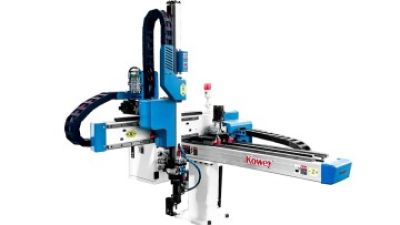
3 Axis Double Stage Single Arm Compact Robot: Features, Benefits, and Applications

The 3 Axis Double Stage Single Arm Compact Robot is designed for automated material handling in small- and medium-sized injection molding operations. Its double-stage telescopic single-arm structure provides a compact footprint while allowing smooth and flexible movement around the molding machine. With a 3-axis servo drive system, the robot delivers accurate positioning, stable operation, and efficient cycle performance. It is precisely compatible with 30–100T injection molding machines, making it suitable for workshops with limited space and diverse production requirements.

During operation, the robot automatically grips, removes, and places molded products and sprues, reducing manual handling and supporting consistent production quality. Its high precision helps minimize product damage, while its efficient motion contributes to shorter handling cycles and improved equipment utilization. The compact design also makes installation and integration more convenient for existing production lines. It is well suited to the mass production of various small and medium-sized plastic components, including applications that require repetitive removal and placement. By combining reliable servo control with a space-saving structure, this equipment supports the practical automation upgrade of injection molding workshops.

FAQS

What should I assess before choosing a robotic picking arm?

Measure product length, width, weight, texture, packaging, and temperature. Use real production samples. Clean samples can mislead.

How should I calculate the required payload?

Include the product, gripper, adapter, and cables. A five-kilogram item may need an arm rated above eight kilograms. Check the product’s center of gravity, especially with extended loads.

Which picking targets should be documented?

Record cycles per hour, bin depth, product variation, allowable damage, reach, and floor space. Include changeover time. It is often underestimated.

How can I test vision performance realistically?

Test glare, shadows, dust, uneven lighting, reflections, and overlapping products. The system should identify shape, position, orientation, and damaged packaging. Test mixed inventory.

Is the fastest robotic arm the best choice?

Not always. Compare successful picks per hour, not theoretical cycles. A dropped product can stop downstream packing. Speed alone is a weak measure.

How should accuracy and gripping force be evaluated?

Measure placement repeatability and gripping force for fragile products. Test different surfaces and sizes. Excessive force may damage soft packaging.

What flexibility features are useful when inventory changes?

Look for adjustable grippers, simple software, and quick tool changes. Operators should adjust settings without specialist support. That requirement sounds small, but it matters.

What should a short pilot test include?

Use normal operators, mixed inventory, and the hardest product type. Record successful picks, errors, damage, and recovery time. A polished demonstration is not enough.

Which practical support factors deserve attention?

Review maintenance access, safety controls, training needs, and service response. Ask for data from comparable applications. I once trusted headline speed too much. That mistake still matters.

Conclusion

Choosing the right Robotic Picking Arm begins with a clear understanding of your business goals, including the products you handle, required throughput, labor challenges, and future production plans. Evaluate product size, weight, shape, surface, and picking frequency to determine the necessary payload, reach, speed, and precision. You should also compare different arm configurations and end-of-arm tools to ensure reliable handling across your product range.

Beyond basic performance, consider vision systems, accuracy, flexibility, and the ability to manage changing picking tasks. Check whether the equipment can integrate smoothly with conveyors, software, safety systems, and existing production lines. Available floor space, maintenance requirements, operator training, and service accessibility are equally important. Finally, calculate the complete investment, including installation, energy use, tooling, maintenance, and potential downtime. A solution with a reasonable total cost, measurable return on investment, and room for future expansion can support long-term operational efficiency and sustainable business growth.


Blog Tags:

    Julian

    Julian

    Julian is a professional marketing specialist with extensive knowledge of injection molding automation and a strong understanding of modern manufacturing requirements. As a dedicated member of a National High-tech Enterprise and Specialized, Refined, Characteristic and Innovative Enterprise, he......
    Next What Is the Best Kowey Robot Type from China?