Leave Your Message
0%

China's injection molding scene has really grown a pretty extensive network of automation providers. In this guide, I’m sharing about ten top companies that’re actually serving plastic processing plants all over the globe. We've looked at these injection molding robot makers through both practical and technical lenses to give you a clear picture.

When checking them out, we focus on things like robot payload capacity, how the axes are designed, how consistent the repeats are, cycle times, and whether they play nicely with different molds. We also consider how fast they take out parts, the end-of-arm tooling options, servo controls, and how well safety features are integrated. A supplier worth trusting is one that offers straightforward specs, solid installation guides, training resources, and quick support after the sale. Those little details really count when you're running a busy production line. For example, a robot might be great at removing parts quickly, but if its grip isn't reliable, you could end up with scratches, warping, or even costly downtime.

And honestly, real-world experience from floor operators often highlights stuff that numbers alone can’t tell you—things like how cables are routed, how user-friendly the controller is, how easy it is to access for cleaning, and how smoothly it recovers after an emergency stop. Engineers can crunch the numbers all day, but the folks working with the machines daily know what really matters. Keep in mind, some manufacturers list impressive specs, but those might be based on testing conditions that don’t match your actual environment—different moldings, materials, or temperatures—so we don’t take those numbers as gospel.

Basically, this guide’s aimed at procurement managers, molders, automation guys, and international buyers. It’s meant to shed light on each company's strengths, focus areas, and service options. Still, I recommend you ask for current certifications, references, detailed integration info, and the total cost of ownership before making a decision. Nothing beats visiting the factory or running a trial in your own plant. Having a good shortlist and some solid evidence is way better than just taking promises at face value. At the end of the day, reliable automation starts with facts, not just fancy claims.
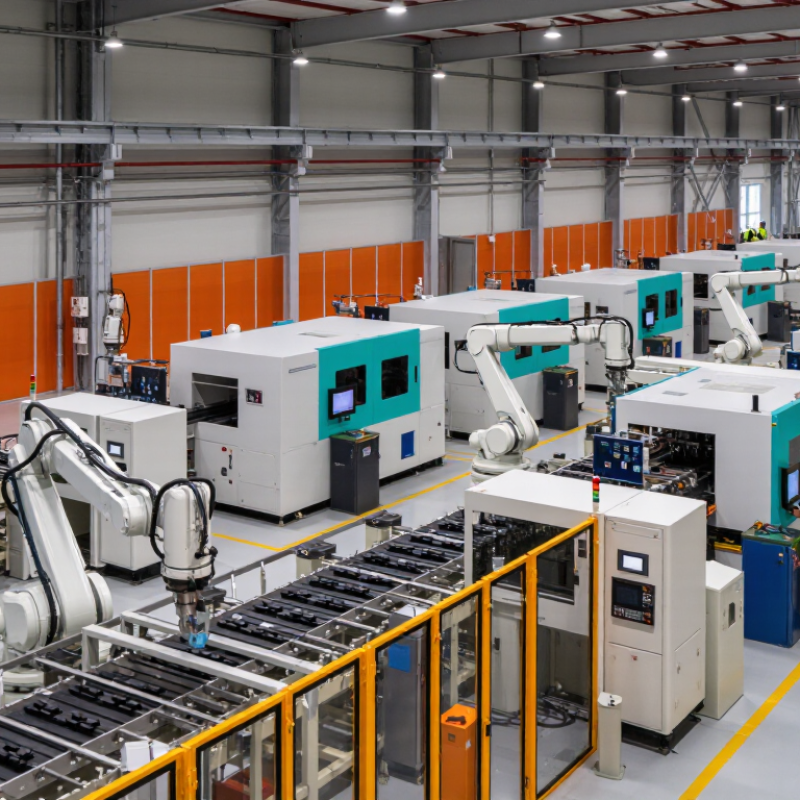
China Top 10 Injection Molding Robot Manufacturers

Industry Overview: The Role of Robots in Injection Molding

Injection molding robots have become practical tools for stable, repeatable production. They support operators rather than simply replacing them.

In modern plants, a robot removes hot molded parts from the mold area. A calibrated gripper prevents scratches and reduces handling risks. The robot can also separate runners, place parts on conveyors, or load inspection fixtures. After each cycle, sensors record position, timing, and abnormal movement. This data helps technicians identify drift before defects increase. Small details matter.

From production experience, robots are most valuable when cycle times remain consistent. A steady removal motion can protect delicate edges and reduce cooling delays. It also keeps workers away from repetitive movements and warm machinery. Still, automation is not flawless. A poorly adjusted gripper may deform a thin component. Excessive speed can create vibration, noise, or unstable placement.

Human judgment remains important. Technicians must check mold alignment, air pressure, safety interlocks, and part quality. Maintenance teams should inspect cables, pneumatic lines, and gripper fingers during scheduled downtime. A clean work area improves reliability too. Data can reveal patterns, but it cannot explain every defect. Sometimes the real cause is simple: a worn fixture, uneven material flow, or an overlooked temperature change. This gap between machine output and practical knowledge deserves careful attention in injection molding operations.

Key Criteria for Evaluating Injection Molding Robot Manufacturers

China Top 10 Injection Molding Robot Manufacturers

Choosing an injection molding robot manufacturer requires more than comparing prices. Start with proven application experience. Ask for cycle-time records, payload data, and videos from similar molds. A supplier should explain robot accuracy under continuous production, not only in a showroom. The IFR World Robotics 2024 report recorded 541,302 industrial robot installations worldwide in 2023. This figure shows strong automation demand, but it does not guarantee suitable molding expertise. Check whether the manufacturer understands part removal, insert loading, packaging, and mold protection.

Technical capability is another key measure. Review repeatability, servo performance, controller access, and integration with injection molding machines. Shorter cycle times matter, but unstable motion can increase rejected parts. Request measured data from a production line. Also examine safety documentation, maintenance procedures, spare-parts availability, and remote diagnostic support. The International Federation of Robotics reported about 4.28 million industrial robots operating globally in 2023. That installed base makes service quality increasingly important. A low purchase price can mislead.

Tips: Compare total ownership cost over five years. Include energy use, training, downtime, and replacement parts. Ask for customer references in your target industry. Test the robot with your actual mold and material. Do not trust every impressive demonstration. Sometimes, the “best” specification performs poorly beside a fast, unevenly cooled mold. A careful factory audit may reveal more than a polished brochure.

China’s Top 10 Injection Molding Robot Manufacturers

China’s Top 10 Injection Molding Robot Manufacturers are reshaping plastics production through practical engineering, responsive service, and application-specific design.

These manufacturers commonly supply three-axis, five-axis, and servo-driven systems for injection machines, material handling, and part removal. Their strongest solutions are not judged by speed alone. Stable cycles matter more on a factory floor.

During equipment evaluations, buyers should inspect payload accuracy, arm rigidity, controller access, and recovery after a power interruption. A robot removing hot parts should maintain repeatable positioning beside the mold, even during long shifts. Look for clear cycle-time data, documented safety functions, and training delivered by qualified technicians. Local engineering teams can reduce commissioning delays, especially when mold layouts change. That practical support often separates a capable manufacturer from a low-cost supplier.

The top ten should also demonstrate experience across automotive components, medical packaging, consumer products, and technical housings. However, published case studies need careful checking. Some figures may describe ideal conditions, not daily production. Ask for references, maintenance intervals, spare-part availability, and factory acceptance procedures. Energy consumption deserves attention too. A fast robot can still increase operating costs if its motion profile is poorly tuned. Smaller manufacturers may offer flexible customization, while larger operations often provide broader service networks. Neither advantage is automatic. A site visit, sample test, and risk review remain essential before purchase.

Robot Types, Features, and Automation Solutions Offered

China’s top ten injection molding robot manufacturers typically offer linear three-axis robots, side-entry systems, servo pickers, and six-axis robotic arms. Each type serves a different production rhythm. Linear robots suit repetitive part removal and stable cycle times. Side-entry models save floor space and support fast take-out operations. Six-axis arms handle complex inserts, trimming, stacking, and secondary assembly.

Practical features matter more than impressive specifications. Servo-driven axes can improve positioning accuracy and reduce sudden movement. Adjustable grippers help protect thin walls, threaded parts, and glossy surfaces. Safety doors, light curtains, and controlled access support responsible operation. Many suppliers also provide mold-machine communication, conveyor links, vision inspection, and production data collection. These functions can connect molding, cooling, labeling, and packing into one workflow.

Integration is rarely perfect. A robot may perform well during testing but struggle with vibration, unstable material flow, or changing mold temperatures. Engineers should check cycle time, payload, reach, cleanability, and spare-part availability before purchase. Training is equally important. Operators need clear procedures for setup, fault recovery, and manual intervention. A lower-cost system may appear attractive, yet hidden adjustment work can reduce its value. The best automation solution is usually the one technicians can understand, maintain, and improve over time.

Comparing Technology, Production Capacity, and Service Support

When comparing China’s top ten injection molding robot manufacturers, technology should be judged on shop-floor results, not brochures. Modern systems combine six-axis or three-axis motion, vision modules, and real-time production data. A stable robot removes parts within a narrow cycle window. That matters when a molding cell runs every 18 seconds. Servo accuracy, payload selection, and mold-side protection also affect scrap rates. Some suppliers offer impressive interfaces, yet operators may need extra training. This gap is easy to overlook.

Production capacity deserves practical inspection. Ask how many robots are assembled monthly, how testing is controlled, and whether critical components have traceable batches. A capable factory should show endurance tests, wiring standards, and documented calibration records. It should also manage customized grippers without slowing delivery. Large output does not automatically mean consistent quality. I have seen schedules look strong until a small design change disrupted installation. Capacity must include engineering bandwidth, spare parts, and commissioning teams.

Service support often separates a workable machine from a costly interruption. Compare remote diagnostics, response times, local technicians, training, and warranty terms. Request clear service-level commitments, not broad promises. During acceptance, test emergency stops, repeatability, machine communication, and recovery after power loss. Manuals should match the delivered software version. They sometimes do not. Buyers should record cycle data for several shifts before approval. This evidence helps reveal heat drift, gripping errors, or unstable communication.

How to Select the Right Chinese Manufacturer for Your Needs

Choosing the right Chinese injection molding robot manufacturer requires more than reading a top-ten list. A supplier may appear impressive online, yet its real strength depends on your production conditions. Define the robot’s payload, reach, removal time, mold size, and expected daily cycles. Share sample parts, machine drawings, and material details before requesting a quotation.

Ask for evidence, not broad promises. A reliable manufacturer should provide factory photos, test videos, technical drawings, and clear acceptance criteria. Check whether the robot can communicate with your molding machine and existing safety system. Confirm end-of-arm tooling options, controller language, spare-part availability, and remote support. Factory audits can reveal assembly quality, cable protection, inventory control, and technician training.

Price matters, but the cheapest proposal can create expensive delays. I once underestimated installation support; a small wiring issue stopped production for several days. That experience made commissioning plans essential. Request a timeline covering design approval, factory testing, shipment, installation, operator training, and warranty response. Ask for references from companies with similar cycle times and product sizes. Be careful with vague efficiency claims. Actual results depend on mold condition, operator habits, and maintenance.

Review payment terms and inspection procedures before signing. Use measurable performance tests, including pick accuracy, cycle consistency, alarm handling, and emergency-stop response. Documentation should include manuals, electrical diagrams, maintenance schedules, and replacement-part codes. A dependable partner will discuss limitations openly, even when the answer is inconvenient. That honesty is often more valuable than a polished sales presentation.

China Top 10 Injection Molding Robot Manufacturers - How to Select the Right Chinese Manufacturer for Your Needs

The following comparison uses anonymized supplier profiles and commonly documented industry specifications for Chinese injection molding robot manufacturers. Actual specifications, certifications, lead times, and service capabilities should be confirmed in the supplier’s quotation and technical documentation.

Rank Anonymized Supplier Profile Primary Robot Configuration Typical Payload Typical Reach Take-Out Time Positioning Repeatability Supported Machine Range Control & Integration Quality & Compliance Evidence to Request Service Capability to Verify Best-Fit Application
1 Supplier Profile 01 Three-axis servo take-out robot 3–8 kg 600–1,200 mm 0.7–1.2 s ±0.05–0.10 mm 50–450 tons Teach pendant; mold-machine and conveyor I/O ISO 9001 certificate, electrical safety file, factory acceptance test Domestic support; export support to confirm High-volume small parts and standard two-plate molds
2 Supplier Profile 02 Five-axis servo robot with wrist rotation 5–12 kg 800–1,500 mm 0.8–1.5 s ±0.05–0.10 mm 100–650 tons Recipe storage; EUROMAP-style interface; safety-door interlock ISO 9001, risk assessment, guarding and emergency-stop validation Remote commissioning available; local partner recommended Automotive interior parts and insert-handling operations
3 Supplier Profile 03 High-speed three-axis linear robot 2–6 kg 500–1,000 mm 0.5–0.9 s ±0.03–0.08 mm 30–300 tons PLC-based control; digital mold and peripheral signals Cycle-time test, repeatability report, electrical conformity documentation Strong factory engineering; spare-parts stock to verify Caps, closures, medical disposables, and thin-wall products
4 Supplier Profile 04 Servo side-entry robot 3–10 kg 700–1,400 mm 0.8–1.4 s ±0.05–0.10 mm 80–500 tons Flexible gripper control; conveyor, vision, and reject outputs Application sample, gripper design review, CE-related technical file if required Installation support varies by destination Space-restricted cells and side-entry demolding
5 Supplier Profile 05 Heavy-duty five-axis robot 8–20 kg 1,000–1,800 mm 1.0–1.8 s ±0.08–0.15 mm 300–1,600 tons Industrial controller; mold protection and multi-peripheral sequencing Load testing, structural drawings, safety validation, preventive-maintenance schedule On-site installation normally available by quotation Large automotive, appliance, and industrial molded parts
6 Supplier Profile 06 Cartesian robot with servo vertical axis 4–15 kg 800–1,600 mm 0.9–1.6 s ±0.05–0.12 mm 120–800 tons Touchscreen HMI; recipe backup; standard industrial communication ports Factory inspection report, component traceability, software backup procedure Good remote troubleshooting potential General-purpose molding cells requiring simple operation
7 Supplier Profile 07 Cleanroom-oriented servo take-out robot 2–8 kg 600–1,200 mm 0.7–1.3 s ±0.03–0.08 mm 50–400 tons Low-particle gripper options; conveyor and inspection integration Material declarations, cleanliness test method, lubrication specification, validation records Cleanroom installation and qualification to verify Medical, laboratory, and precision consumer products
8 Supplier Profile 08 Collaborative robot cell for secondary handling 3–10 kg 700–1,300 mm 1.2–2.5 s ±0.05–0.15 mm 80–500 tons Force-limited operation; vision, labeling, packing, and palletizing options Machine-risk assessment, collaborative safety validation, guarding concept Integration expertise is more important than robot price Low-volume mixed production and flexible post-molding tasks
9 Supplier Profile 09 Integrated robot and automation-cell supplier 5–20 kg 900–2,000 mm 1.0–2.2 s ±0.08–0.15 mm 150–2,000 tons Robot, conveyor, granulator, vision, and packaging sequence control Complete cell layout, FAT/SAT protocol, electrical schematics, software ownership terms Single-point project responsibility available Turnkey automation lines and multi-stage production cells
10 Supplier Profile 10 Economical pneumatic or hybrid take-out robot 2–6 kg 500–1,000 mm 1.0–1.8 s ±0.10–0.20 mm 30–250 tons Basic relay or PLC control; limited peripheral integration Cycle test, pneumatic-component list, warranty terms, spare-parts availability Best suited to buyers with in-house maintenance staff Budget-conscious standard molding and simple sprue removal

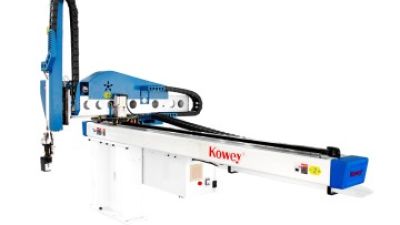
IFR World Robotics & Grand View Research Reports: Light Bull Head 3 Axis Double Stage Single Arm Injection Robot

The IFR World Robotics report recorded 541,302 industrial robot installations worldwide in 2023, while the global operational stock exceeded 4.28 million units. This continued expansion reflects the growing demand for consistent cycle times, lower labor dependence, and safer production environments. In parallel, Grand View Research estimates that the global industrial robotics market will expand at a compound annual growth rate of approximately 10.5% from 2024 to 2030, highlighting strong opportunities for automation in compact and medium-scale manufacturing facilities.

Designed for 250–600T injection molding machines, the Light Bull Head 3 Axis Double Stage Single Arm Injection Robot addresses the practical needs of small-and-medium-sized production lines. Its three-axis servo drive and double-stage, single-arm configuration provide precise movement, stable operation, and a reduced footprint. The structure is well suited to standard workshops where space efficiency and equipment compatibility are essential. By combining flexible positioning with reliable cycle performance, it can support automated product removal, sprue cutting, and material transfer for injection-molded parts.

For standardized, high-volume production, this injection robot helps replace repetitive manual handling and improve workflow continuity. Its lightweight construction simplifies integration with compatible molding machines, while the single-arm design supports efficient movement in confined areas. As manufacturers accelerate automation upgrades in response to rising productivity requirements, this solution offers a practical path toward more consistent and scalable injection molding operations.

FAQS

What should I check before choosing an injection molding robot manufacturer?

Check application experience, cycle-time records, payload data, and videos using similar molds. Ask for production-line evidence, not only showroom demonstrations.

Which robot type suits repetitive part removal?

A linear three-axis robot often suits stable, repetitive removal. It can support consistent cycles and simple layouts. Keep it practical.

When is a six-axis robotic arm useful?

Six-axis arms handle complex inserts, trimming, stacking, and secondary assembly. They need enough reach, payload, and trained operators.

Which technical features matter most?

Review repeatability, servo performance, controller access, communication, and gripper adjustment. Stable movement matters more than an impressive specification sheet.

How can I test integration with my molding machine?

Test the robot with your actual mold and material. Measure cycle consistency, pick accuracy, alarm handling, and emergency-stop response.

What safety and maintenance documents should a supplier provide?

Request safety procedures, electrical diagrams, manuals, maintenance schedules, and replacement-part codes. Confirm light curtains, safety doors, and controlled access.

How should I compare robot prices?

Compare five-year ownership costs. Include energy use, training, downtime, installation, maintenance, and replacement parts. A low price can mislead.

What should factory auditing reveal?

Inspect assembly quality, cable protection, inventory control, testing procedures, and technician training. A polished brochure proves very little.

What support should I expect after delivery?

Confirm installation, commissioning, operator training, remote diagnostics, warranty response, and spare-part availability. Small wiring problems can stop production for days.

What warning signs deserve careful attention?

Be cautious with vague efficiency claims and incomplete timelines. Mold temperature, vibration, material flow, and operator habits affect real results. I underestimated support once. That was costly.

Conclusion

China’s injection molding industry is increasingly adopting robots to improve production efficiency, precision, safety, and consistency. An Injection Molding Robot Manufacturer may provide solutions such as take-out robots, servo-driven systems, collaborative robots, automatic loading and unloading equipment, and integrated production cells. When evaluating manufacturers, buyers should consider technical expertise, product reliability, customization capabilities, manufacturing capacity, quality control, energy efficiency, and after-sales service. Strong suppliers can support different molding machines, product sizes, cycle times, and factory layouts while helping reduce labor requirements and material waste.

This overview introduces ten representative categories of Chinese manufacturers and compares their robot technologies, automation features, production capabilities, and service support. It also explains how to select a suitable partner by assessing application requirements, budget, delivery schedules, compatibility, software functions, installation assistance, training, maintenance, and long-term development potential. A careful comparison of these factors can help companies choose a dependable automation solution that improves productivity and supports stable, scalable manufacturing.


Blog Tags:

    Evelyn

    Evelyn

    Evelyn is a professional marketing specialist dedicated to the injection molding automation industry. With a strong understanding of automated production systems, she communicates complex technical solutions in a clear, practical, and engaging way. Her expertise covers intelligent automation,......
    Previous What Is the Best Kowey Robot Type from China?