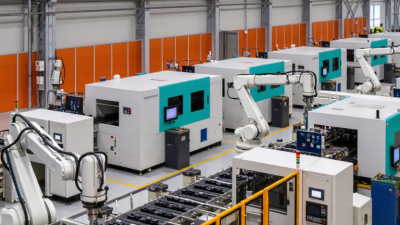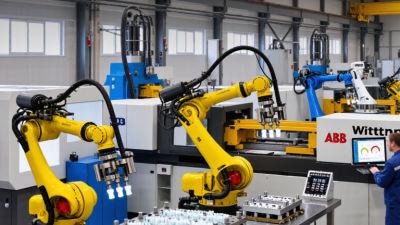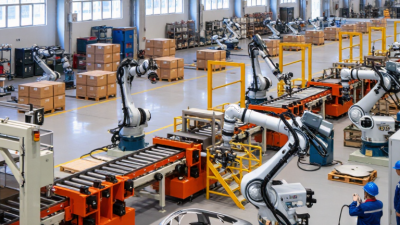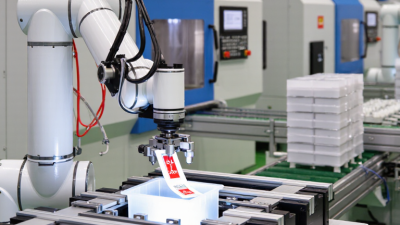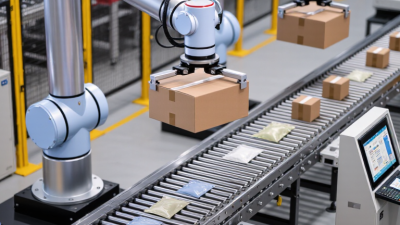
Picking the best Injection Molding Robot suppliers out there isn’t just about flipping through product catalogs. You’ve got to look at application experience, technical support, integration skills, safety systems, and how reliable they’ll be over the long haul. A robot that crushes a simple pick-and-place job might struggle once the automation gets more complex. Cycle time matters, too. And so does consistency.
This overview takes a look at some established names—FANUC, Yaskawa, Sepro Group, Wittmann Battenfeld, ENGEL, and ABB. They cover a pretty wide range of production needs, from compact molding cells to advanced multi-axis automation lines. Their solutions might handle part removal, insert handling, packaging, quality inspection, and machine tending. A good Molding Robot should also talk smoothly with injection molding machines and factory control systems. That’s one detail people often overlook.
Real manufacturing experience still counts for a lot here. Buyers should check installation records, service response, spare-parts access, programming support, and operator training. Spec sheets can point you in the right direction, but factory conditions tell the fuller story. Material behavior, mold design, workspace limits, and production volume can all shift the final decision.
No ranking is ever perfect. Supplier strengths vary by region and application. Some companies offer broader automation ecosystems; others bring specialized molding expertise. Price alone can lead to a misleading comparison. A lower upfront cost may mean more integration work later. So this guide leans toward practical evaluation, not promotional hype. Before buying, readers should verify current models, certifications, and local support. Good automation starts with realistic requirements.
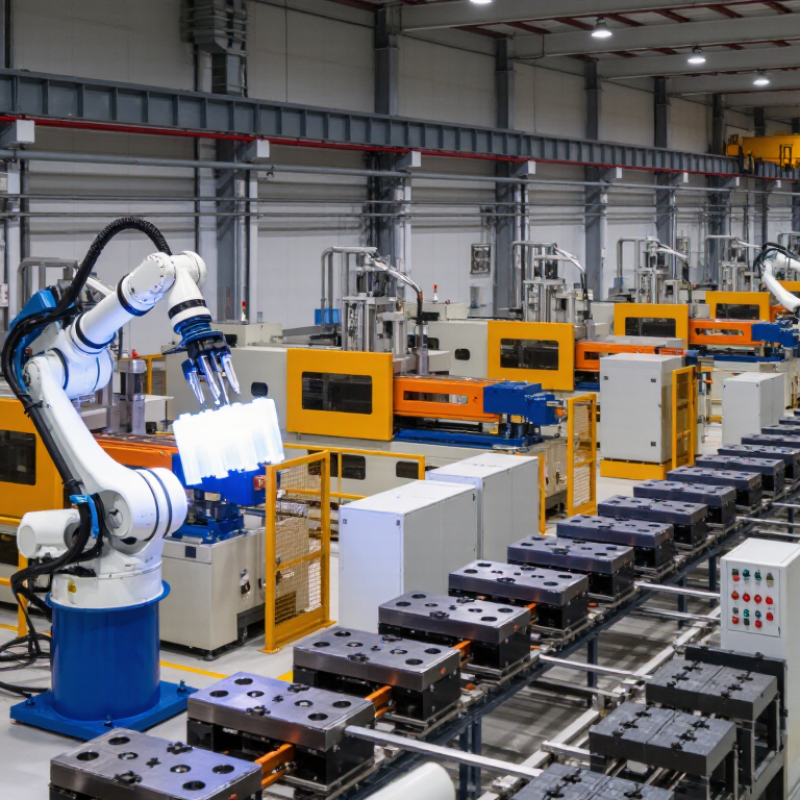
An Injection Robot is an automated arm that removes molded parts from an injection molding machine. It may also place inserts, separate runners, or stack finished components. Mounted beside the press, it follows programmed movements through the molding cycle.
The machine controller sends a signal after the mold opens. The robot moves into the mold area, grips the part with a custom end-of-arm tool, and withdraws at a controlled speed. It then places the part on a conveyor or cooling fixture. Sensors confirm position, grip pressure, and safe access before the next cycle begins. Timing matters. A delay of one second can affect output and part cooling.
Common robot designs include three-axis, six-axis, and side-entry systems. Three-axis models suit repetitive removal tasks, while articulated systems handle inserts and complex placement. In practice, the first calibration is rarely perfect. Tool weight, mold temperature, and material shrinkage can change movement accuracy. Experienced technicians adjust speeds, approach points, and gripping force during commissioning.
Worldwide suppliers typically provide the robot, control software, tooling, guarding, and integration support. Reliable evaluations should examine repeatability, payload capacity, service response, spare-part access, and operator training. A low purchase price can become expensive when maintenance knowledge is unavailable. Clean cable routing and regular inspection also matter, especially around hot molds and moving platens. Part damage often reveals poor alignment before the control screen shows an error.
Injection Molding Automation depends heavily on the robot type selected for each production task. Cartesian robots remain common because they move along three linear axes with predictable accuracy. They suit part removal, sprue picking, and stacking near the molding machine. Their rigid frame works well in stable layouts, although it may occupy valuable floor space.
SCARA robots provide fast horizontal movement and precise placement. They are useful for insert loading, small-part handling, and secondary assembly. Six-axis robots offer greater flexibility. Their articulated arms can approach parts from different angles, even inside crowded work cells. This matters when molds have deep cavities or complex ejection paths. However, flexibility often brings higher programming demands and maintenance costs.
Collaborative robots can support low-volume production and frequent product changes. They may help with visual inspection, trimming, or packaging. Yet their speed and payload limits require careful evaluation. A servo-driven take-out robot can remove warm parts consistently, but the gripper needs proper cooling and accurate alignment. Small errors can leave marks on delicate surfaces.
In practical Molding Automation, cycle time is only one measurement. Operators should also check mold clearance, payload, guarding, and recovery after a fault. Experience shows that the fastest robot is not always the most reliable choice. A simpler system may reduce training time and unexpected downtime. The decision can still be imperfect. Production teams should test real parts, not only rely on catalog figures.
Top Injection Molding Robots Suppliers Worldwide?
Comparing global robot suppliers requires more than checking catalog prices. Start with payload, reach, repeatability, and cycle-time performance. A robot should remove parts smoothly without disturbing the mold. In a real cell, even a small timing error can create scratches, jams, or longer cycles. Ask suppliers for tested cycle data using parts similar to yours. Demo videos are useful, but production trials are more reliable.
Integration is a core feature of effective Injection Automation. Check how the robot communicates with the molding machine, safety system, conveyor, and quality sensors. Clear interface documentation reduces commissioning delays. Operators also need an intuitive pendant, recipe storage, and simple recovery steps after a fault. Look for guarded access, safe stopping functions, and compliance documentation for your target markets. Small details matter. Cable routing, gripper changes, and washdown resistance often affect daily uptime.
Service capability separates suppliers more clearly than polished specifications. Compare training, spare-part availability, remote diagnostics, and response times across regions. Request references from factories with similar materials, part weights, and working conditions. Total cost should include installation, programming, maintenance, energy use, and future expansion. A low purchase price may hide expensive integration work. My own evaluation approach would still leave room for doubt: supplier data can reflect ideal conditions, while dust, temperature, and inexperienced operators change results. Independent testing is worth the extra day.
A supplier-neutral comparison framework for evaluating robots used in injection molding automation.
| Evaluation Category | Core Feature | Typical Market Reference | What to Verify During Supplier Comparison | Why It Matters in Injection Molding |
|---|---|---|---|---|
| Robot Architecture | Robot type | Cartesian Servo sprue picker Six-axis SCARA | Confirm whether the proposed robot matches the mold layout, part geometry, extraction direction, and required auxiliary operations. | Cartesian robots are widely used for high-speed take-out, while articulated robots are better suited to complex handling, trimming, assembly, and secondary processing. |
| Motion System | Number of controlled axes | Common configurations include 2-axis, 3-axis, 5-axis, and 6-axis systems. | Check the number of interpolated axes, simultaneous motion capability, servo control, and whether wrist rotation or part orientation is included. | More controlled axes can improve access, part orientation, and process flexibility, but may increase programming complexity and purchase cost. |
| Machine Compatibility | Injection molding machine range | Robots are normally specified against machine size, mold height, tie-bar spacing, platen layout, and available mounting space rather than tonnage alone. | Verify compatibility with the machine controller, mold width, tie-bar clearance, ejector stroke, mold-opening stroke, and robot mounting position. | Correct mechanical and control integration prevents interference with the mold, nozzle, ejector system, safety gate, and material-handling equipment. |
| Payload | Rated payload and wrist load | Small take-out robots commonly handle a few kilograms; larger handling systems may be rated for tens of kilograms or more. | Calculate the total moving mass, including the gripper, tooling, runners, parts, cables, and any end-of-arm auxiliary device. | Payload must be evaluated at the required reach and acceleration. A gripper that is too heavy can reduce cycle performance and shorten mechanical service life. |
| Reach and Stroke | Horizontal reach, vertical stroke, and withdrawal distance | Required dimensions vary substantially by machine size and mold design; the usable working envelope is more important than a single maximum-stroke value. | Request a layout drawing showing mold centerline, robot stroke, part-drop area, conveyor location, and maintenance access. | Insufficient stroke or reach can cause collisions, limited mold access, difficult part release, or unsafe manual intervention. |
| Speed and Productivity | Cycle time and motion profile | Take-out performance is normally evaluated together with mold cycle time, including entry, gripping, withdrawal, release, and return motion. | Ask for measured cycle-time data using the customer’s actual part mass, mold geometry, gripper, and safety requirements rather than an empty-motion speed claim. | Real productivity depends on synchronized robot and machine movement, stable gripping, safe mold clearance, and repeatable part placement. |
| Accuracy | Repeatability and positioning consistency | High-quality servo systems commonly publish repeatability values in millimeter or sub-millimeter ranges, depending on robot type and axis. | Compare the stated repeatability standard, test conditions, payload, travel distance, temperature, and whether the value applies to the complete system or only one axis. | Consistent positioning supports reliable part removal, insert loading, trimming, stacking, packaging, and downstream inspection. |
| End-of-Arm Tooling | Gripper and vacuum-system flexibility | Typical solutions include pneumatic grippers, vacuum cups, magnetic tools, needle grippers, sprue grippers, and custom interchangeable tooling. | Verify tool weight, gripping force, vacuum monitoring, quick-change options, cooling-water or air connections, and compatibility with the part material. | Proper tooling reduces part deformation, eliminates dropped parts, improves demolding reliability, and protects cosmetic surfaces. |
| Control and Integration | Machine communication and automation interfaces | Common integration methods include hardwired I/O, safety circuits, industrial Ethernet, OPC UA, and standardized robot-machine interfaces where supported. | Confirm supported protocols, signal lists, handshake logic, alarm exchange, mold-change data, recipe management, and remote diagnostics. | Reliable communication helps coordinate mold opening, ejector action, robot entry, part release, cycle start, and fault recovery. |
| Safety | Guarding, interlocks, and risk-reduction functions | Industrial robot cells should be designed around applicable machinery and robot-safety requirements, including risk assessment, protective guarding, and emergency-stop functions. | Request the safety circuit diagram, validation documentation, safe-speed or safe-stop functions where applicable, and the supplier’s recommended cell layout. | Safety integration is essential because the robot operates near moving molds, ejectors, clamps, conveyors, and manual access points. |
| Environmental Performance | Protection against dust, moisture, heat, and process contamination | Protection levels differ by axis and component. The required rating depends on hydraulic oil, mold-release agents, cooling water, resin dust, and ambient temperature. | Check IP ratings by axis, cabinet cooling, cable protection, allowable ambient temperature, cleanroom suitability, and washdown limitations. | Appropriate environmental protection improves uptime and reduces failures caused by moisture, contamination, heat, and cable degradation. |
| Programming | Operator interface and recipe management | Modern systems generally provide touchscreen programming, teach functions, alarm history, parameter backup, and recipe storage. | Evaluate multilingual support, graphical teaching, password levels, mold-recipe backup, offline programming, and recovery after power interruption. | Clear programming reduces setup time and enables production staff to change molds or products with less specialist assistance. |
| Reliability | Drive system, mechanical design, and availability data | Servo-driven axes, low-maintenance linear guides, protected cable routing, and accessible service components are common design priorities. | Request documented mean time between failures where available, preventive-maintenance intervals, spare-parts lead times, and warranty conditions. | Reliability directly influences production availability, maintenance labor, unplanned downtime, and total cost of ownership. |
| Service Network | Installation, commissioning, training, and local support | Global suppliers may provide direct offices, certified integrators, regional service centers, or remote technical support. | Confirm local response time, engineer coverage, language capability, training scope, spare-parts location, and escalation procedures. | Fast technical support is particularly valuable for mold changes, robot faults, controller replacement, and production ramp-up. |
| Data and Connectivity | Production monitoring and traceability | Available functions may include cycle counters, alarm logs, energy data, production status, maintenance reminders, and connection to factory systems. | Check data ownership, export formats, cybersecurity controls, user permissions, network requirements, and compatibility with the plant’s MES or SCADA environment. | Production data supports OEE analysis, preventive maintenance, quality investigations, and continuous-improvement programs. |
| Commercial Evaluation | Total cost of ownership | Purchase price should be assessed together with tooling, integration, installation, training, energy use, maintenance, software, and spare parts. | Request a complete quotation with exclusions, commissioning scope, warranty coverage, recurring software fees, consumables, and expected service costs. | The lowest initial price may not provide the lowest lifecycle cost if integration, downtime, or support expenses are higher. |
| Validation | Reference applications and acceptance testing | Relevant references should match the customer’s material, part weight, mold type, machine size, cycle time, and automation sequence. | Define measurable acceptance criteria for cycle time, repeatability, part quality, safety functions, alarm recovery, and continuous-run testing. | Application-specific validation reduces commissioning risk and confirms that advertised performance can be achieved in the intended production environment. |
Injection molding robot suppliers vary greatly by region, service model, and application expertise. East Asian suppliers often provide fast-cycle robots for electronics, packaging, and automotive components. Their systems usually emphasize servo control, compact layouts, and competitive pricing. European suppliers commonly focus on precision, energy efficiency, and integration with complex production lines. They often support cleanroom manufacturing and detailed process monitoring.
North American suppliers tend to offer flexible automation for custom molders and medium-volume production. Local engineering support can simplify installation and operator training. Southeast Asian suppliers are expanding quickly, especially near electronics and consumer goods factories. India also has growing capacity, with suppliers developing practical systems for varied factory conditions. Regional strengths are useful, but they are not permanent. I have found that service response often matters more than brochure specifications. A reliable supplier should explain cycle-time calculations, payload limits, mold-change procedures, and spare-parts availability clearly.
Tips: Compare suppliers using the same technical requirements. Check take-out time, repeatability, gripper design, and safety integration. Request a factory trial with your actual molded parts. Ask who handles breakdowns after installation. A low purchase price may become expensive when support is slow. Also inspect software usability; operators may struggle with advanced screens. That detail is easy to overlook. Supplier evaluation should include references from similar plants, not only impressive demonstrations.
Asia represents the largest regional base for injection molding robot suppliers, supported by its concentration of plastics, automotive, electronics, and consumer-goods manufacturing. Europe and the Americas remain important markets for high-precision automation and system integration. The figures show total industrial robot installations in 2023, rounded to the nearest thousand, and are used as a regional demand indicator rather than supplier-specific revenue.
Source: International Federation of Robotics, World Robotics 2024. Regional values are rounded estimates.
Injection molding robot suppliers serve diverse industries, each with different production pressures and quality requirements. Automotive manufacturers use robots for part removal, insert placement, trimming, and visual inspection. These tasks reduce handling damage around hot molds and sharp runners. Medical manufacturers require cleanroom-compatible systems, stable motion, and strict production records. Robots often transfer small components into controlled packaging areas. A minor positioning error can affect an entire batch.
Packaging companies depend on fast pick-and-place systems for caps, containers, and thin-wall products. Consumer electronics factories use robots for delicate housings, connector insertion, and surface inspection. Household goods producers may automate stacking, labeling, and palletizing. Some suppliers also support recycled-material processing, although material changes can alter cycle stability. No supplier fits every factory. In practice, initial cycle estimates can be optimistic, especially after adding inspection or conveyor operations.
Tips: Match the robot to payload, reach, cycle time, and mold layout. Confirm cleanroom standards where required. Request samples from similar materials and part shapes. Review safety functions, spare-part access, training, and integration support before purchase. Experienced suppliers should explain failure points, not only advertise speed. Ask how their system handles misalignment, mold delays, and temporary quality holds. These details often determine whether automation performs reliably during long production shifts.
Choosing an injection molding robot supplier starts with the molding cell, not the catalog. The International Federation of Robotics reported 541,302 industrial robot installations worldwide in 2023. It also recorded 4.28 million robots operating globally. These figures show strong automation demand, but they do not prove suitability for your process.
Ask for verified cycle-time data using a mold, resin, and part weight close to yours. A fast robot can still underperform when gripper changes, conveyor delays, or mold safety signals are overlooked.
Check payload, reach, repeatability, controller access, and communication protocols. The supplier should explain how the robot connects with the molding machine, safety circuit, dryer, vision system, and downstream packaging.
Request a factory acceptance test with measurable targets. Useful figures include dry-cycle time, pick accuracy, changeover duration, and expected availability.
ISO 10218 provides a recognized framework for industrial robot safety, while site-specific risk assessment remains essential.
Standards help. They do not replace engineering judgment.
Service capability often separates a dependable supplier from an impressive demonstrator. Review technician response times, spare-parts coverage, software support, training depth, and local commissioning resources.
Calculate total cost over seven years, including energy, maintenance, tooling, and lost production. A lower purchase price may hide expensive downtime.
I would also request references from plants running similar materials and mold sizes. Still, references can mislead. Your production mix may differ sharply.
No scorecard is perfect; pilot testing remains the safer decision.
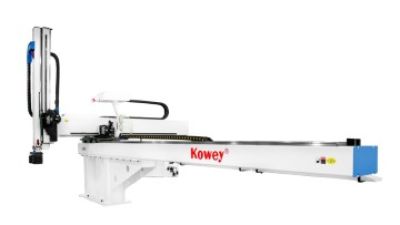
Large-scale injection molding is moving toward faster, more consistent, and highly flexible automation. The International Federation of Robotics reported approximately 541,000 industrial robots installed worldwide in 2023, highlighting the continued shift from manual operations to servo-controlled production systems. In this environment, the Large Bull Head 3-Axis Double Stage and Single Arm Injection Robot is designed for injection molding machines from 1400T to 4000T. Its three-axis servo drive provides accurate positioning, while the double-stage, single-arm structure supports long-range mold entry, stable part removal, and rapid material discharge.
Connected to the molding machine’s mold-open signal, the robot automatically performs mold entry, product picking, mold retraction, and unloading. This coordinated cycle reduces operator involvement, shortens production waiting time, and supports reliable mass production of automotive components, large household parts, pallets, turnover boxes, buckets, and other oversized industrial workpieces. Plastics Europe reported global plastics production of about 414 million tonnes in 2023, reflecting the continuing scale of demand for efficient and repeatable processing. By combining broad reach, fast response, and flexible motion control, this automation solution helps large injection molding operations improve cycle continuity, workplace efficiency, and overall production capacity.
Compare payload, reach, repeatability, cycle time, and integration support. A small timing error can scratch parts or cause jams. Tested data matters more than catalog prices.
A trial uses your actual parts, mold, materials, and factory conditions. It reveals timing problems that demonstration videos may hide. Real conditions matter.
Request tested cycle data for parts with similar weight and shape. Check take-out time, mold clearance, and robot return speed. Ask how the supplier calculates cycle time.
Check communication with the molding machine, safety system, conveyor, and quality sensors. Clear interface documents can reduce commissioning delays. Poor integration becomes expensive.
Look for an intuitive control pendant, recipe storage, and simple fault recovery. Operators should change recipes without complicated procedures. Screens can still confuse people.
Request guarded access, safe stopping functions, and market-specific compliance documents. Inspect cable routing, gripper changes, and washdown resistance. Small details affect daily uptime.
Regional strengths can guide research, but they do not guarantee performance. Some regions emphasize fast cycles, while others focus on precision or flexible engineering. Service response may matter more.
Compare training, spare-part availability, remote diagnostics, and regional response times. Ask who handles breakdowns after installation. A low price may hide slow support.
Include installation, programming, maintenance, energy use, and future expansion. Also consider mold changes, gripper replacement, and operator training. The cheapest quote may not stay cheap.
Similar references show performance with comparable materials, part weights, and working conditions. Ask about dust, temperature, downtime, and operator experience. I would still keep some doubt. Supplier data may reflect ideal conditions.
Injection Molding Robots are automated systems designed to handle, remove, inspect, assemble, and transfer parts during the injection molding process. By coordinating with molding machines and peripheral equipment, they improve cycle consistency, reduce manual labor, protect workers from hot surfaces, and support higher production efficiency. Common types include Cartesian, articulated, linear, and collaborative robots, each suited to different production volumes, workspace requirements, payloads, and levels of flexibility.
When comparing global suppliers, manufacturers should evaluate payload capacity, speed, repeatability, control systems, integration capability, safety functions, maintenance support, training, customization, and total operating cost. Suppliers serve industries such as automotive, electronics, medical devices, packaging, consumer products, and industrial manufacturing. Choosing the right partner requires matching the robot’s technical performance and application requirements with the supplier’s engineering expertise, regional service network, delivery reliability, and long-term support. A careful assessment helps businesses achieve stable quality, scalable automation, and a practical return on investment.