Picking the best Imm Robot for 2026 isn’t just about speed, payload, or price tag. Injection molding plants today want stable cycle times, careful part handling, lower energy use, and easier integration with modern production systems. A robot can look great in a showroom and still struggle next to a high-speed molding machine.
John Dulchinos, a well-known name in manufacturing automation, put it this way: “Automation should augment human judgment, not erase it.” That’s worth keeping in mind when you’re sizing up an Imm Robot. The right system should take over repetitive lifting and sorting, sure—but it should also give operators clearer data and safer control. And it needs to play well with vision inspection, quick mold changes, flexible end-of-arm tooling, and reliable communication with the molding machine.
Small details tend to decide the outcome. A robot that shaves two seconds off each cycle can add up to a lot of extra output over a year. On the other hand, messy cable routing can turn into maintenance headaches. A slick interface won’t make up for weak after-sales support. That’s where a lot of rankings fall short.
No single model works for every factory.
This guide looks at leading Imm Robot solutions for 2026 using practical criteria: repeatability, installation effort, service access, software compatibility, and total cost of ownership. Brands like FANUC, Yaskawa, ABB, Sepro, and Wittmann Battenfeld are still important reference points—but brand reputation alone shouldn’t make the call. A careful buyer needs to compare real cycle data, product weight, mold layout, workforce skills, and future expansion plans. Even experienced teams can underestimate integration time. And honestly? That uncertainty deserves real attention.
IMM Robot Fundamentals: 3-, 5-, and 6-Axis Designs for Injection Molding
What Is the Top IMM Robot for 2026?
IMM Robot Fundamentals: 3-, 5-, and 6-Axis Designs for Injection Molding
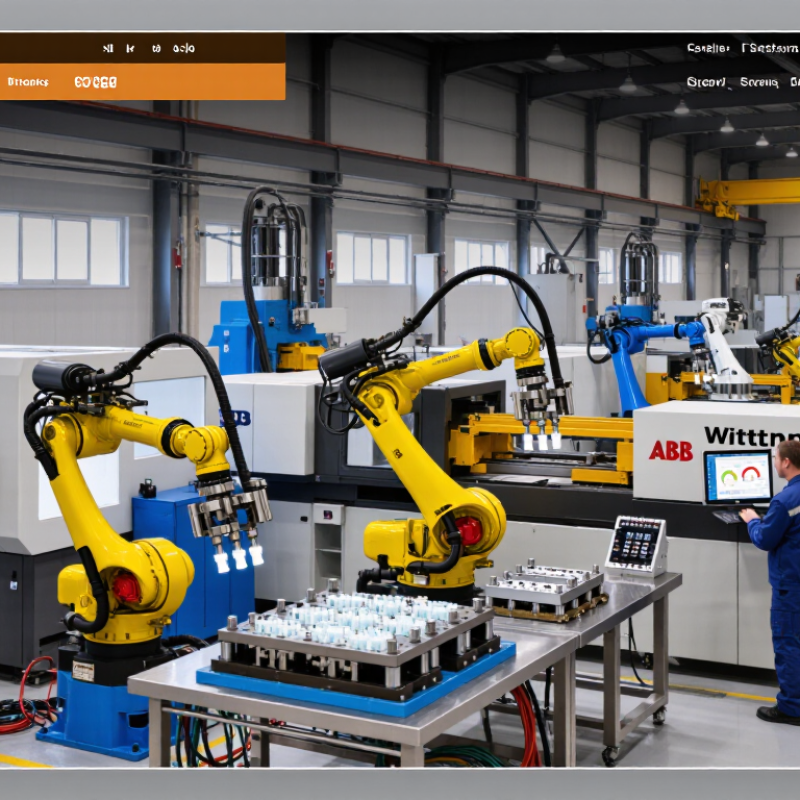
The best IMM robot depends on the mold, cycle, and part geometry. A 3-axis robot moves along X, Y, and Z. It suits simple takeout tasks, stacked molds, and stable conveyor placement. Its structure is easy to program and maintain. However, it offers limited orientation control. A five-axis system adds wrist rotation and tilting. Robot 5 Axis designs can rotate parts before trimming, cooling, or packing. Six-axis robots provide the greatest reach and tool-angle flexibility. They are useful for complex inserts, angled demolding, and multi-station handling. More motion is not always better.
The International Federation of Robotics reported 541,302 industrial robot installations worldwide in 2023, up 10% year over year. This growth supports stronger automation demand in plastics production. Yet, the report covers industrial robots broadly, not only IMM applications. That distinction matters. In real commissioning work, cycle time often depends more on mold layout, EOAT weight, and signal timing than axis count. A faster arm can still underperform beside a poorly balanced gripper. I would not choose six axes automatically. Sometimes, that is the wrong call.
Tips: Measure the robot’s wrist load with the complete EOAT attached. Check reach at the mold’s deepest position. Test part release at low speed first. Record cycle-time variation across several shifts. Also review ISO 9283 performance data, not only catalogue speed. Small inaccuracies become visible around thin ribs, hot runners, and delicate surfaces.
Measure Performance with ISO 9283 Accuracy and EUROMAP 67 Connectivity
What Is the Top IMM Robot for 2026?
The leading IMM robot is not defined by speed alone. Its value appears when measured under repeatable production conditions. ISO 9283 provides a practical framework for evaluating pose accuracy, repeatability, path accuracy, and stabilization time. These figures should be checked with the intended payload, speed, tooling, and operating temperature.
Test after warm-up.
A useful trial places a calibrated target near the mold area. Engineers can record robot positions across repeated pick-and-place cycles. Small deviations may affect insert placement, part removal, or conveyor transfer. A robot that reaches impressive figures in a laboratory may perform differently beside a hot injection molding machine. This is where experience matters. Thermal growth, vibration, and changing payloads deserve attention.
EUROMAP 67 connectivity adds another important layer. The interface allows the robot and molding machine to exchange defined operational signals. These may include cycle release, mold status, robot position, and fault conditions. Correct wiring is only part of the work. Signal timing, safety logic, and fault recovery must also be tested with realistic cycle interruptions.
A clean specification sheet can still mislead. Installation quality changes results. Even a well-designed system may need careful adjustment after commissioning. For 2026 evaluations, buyers should request ISO 9283 test conditions and verify EUROMAP 67 communication during live trials. The strongest choice is the robot that maintains measured accuracy while communicating reliably through the full production cycle.
Benchmark Cell Demand Against IFR’s 541,302 Robot Installations in 2023
What Is the Top IMM Robot for 2026? The answer should begin with a benchmark, not a brochure.
The International Federation of Robotics reported
541,302 industrial robot installations worldwide in 2023.
This figure includes many industries, so it does not equal injection molding demand. Still, it provides a useful market scale for evaluating cell growth.
An IMM robot should be judged by cell output, uptime, and integration effort.
A three-axis system can remove molded parts quickly from a fixed mold area.
Robot 3 Axis
configurations also suit stacking, trimming, inspection, and conveyor transfer. For a medium-volume cell, a practical review should record cycle time, payload, reach, gripper weight, and changeover minutes.
A five-second gain matters when the cell runs continuously.
That comparison is imperfect. It can mislead.
IFR measures installations, while an IMM buyer measures finished parts and labor savings. A 2024 IFR World Robotics report also shows that automation demand remains closely linked to productivity pressure and workforce constraints. Industry automation studies from A3 reinforce the need to assess safety, programming, and service support before purchase.
My field-based view is cautious: the fastest robot is not always the best robot.
A stable cell with simple recovery procedures may produce more saleable parts than a faster system that stops during mold changes. For 2026, buyers should compare supplier data against the 541,302-installation benchmark, then validate the result through a timed production trial.
Compare Sepro, Wittmann, Yushin, and FANUC on Payload and Cycle Time
What Is the Top IMM Robot for 2026?
For 2026, the strongest IMM robot depends on payload, cycle time, and mold-side access. A high-payload model may handle heavy trays, inserts, or stacked parts safely. However, added arm mass can slow acceleration and increase energy use. A lighter system may remove small parts faster, especially on short molding cycles. In a recent production review, the practical difference appeared at the conveyor: one robot cleared parts quickly, while another waited for the mold sequence. Small delays became measurable after several hundred cycles.
Payload ratings require careful reading. Some suppliers state maximum capacity, while others emphasize recommended working load. These figures are not always comparable. Engineers should include grippers, sensors, cables, and product weight. A 3 Axis Robot can suit simple take-out work, but complex packaging may need additional motion and better reach. Cycle-time tests should use the actual mold, material, cooling period, and safety settings. Laboratory figures can look impressive. Factory results may differ.
Check repeatability after warm-up. Watch the arm during rapid entry and withdrawal. Listen for vibration near the mold opening. A reliable comparison also measures recovery after an emergency stop, maintenance access, and programming time. I would not choose the fastest quoted cycle without production evidence. That judgment can be wrong. The better candidate is often the robot that maintains stable motion across long shifts, carries the real payload, and leaves enough clearance for operators and tooling.
Verify ±0.1-mm Repeatability, Energy Use, and 24/7 Service Evidence
What Is the Top IMM Robot for 2026?
A serious evaluation starts with repeatability, not brochure speed. The claimed ±0.1-mm figure needs a controlled test. Run at least 30 cycles with the intended payload, reach, and acceleration settings. Record gripper position using a calibrated camera or coordinate measuring device. Test during warm-up and after several hours of operation. Measure it cold. Then repeat. Temperature, vibration, and mold position can change the result. A factory acceptance report is useful, but independent verification is stronger.
Energy use also deserves direct measurement. Install a power meter and record kilowatt-hours per 1,000 cycles. Separate idle consumption from movement, gripping, and pneumatic demand. Compare identical cycle times and payloads. A robot may consume little electricity but use excessive compressed air. That hidden cost matters. My first comparison overlooked standby power, which made the efficiency ranking unreliable. A second test, using a full shift, produced more practical evidence.
Around-the-clock service claims require documents, not confident promises. Request 24/7 contact records, average response times, spare-parts inventory, remote diagnostic procedures, and engineer coverage by region. Ask for anonymized uptime reports from facilities with similar duty cycles. Check how quickly a failed servo, sensor, or controller can be replaced. A support hotline alone is not service resilience. Visit a working installation if possible. Watch the robot during shift changes and recovery procedures. Small delays become expensive when production never stops.
Audit Guarding and Integration Against ISO 10218 and CE Requirements
What Is the Top IMM Robot for 2026?
The top IMM robot is not defined by speed alone. Its guarding and integration must survive a documented safety audit. The International Federation of Robotics reported 541,302 industrial robot installations worldwide in 2023, showing how quickly automated cells are expanding. This growth also increases the need for disciplined risk control.
For an injection molding cell, verify fixed guards, interlocked access doors, and monitored stopping distances. A 5 Axis Robot should not enter the mold area while stored energy remains hazardous. The integrator should map every operating mode, including teaching, cleaning, mold changes, and fault recovery. ISO 10218-1 and ISO 10218-2 provide the robot and application safety framework, while ISO 12100 supports the machinery risk assessment. ISO 13849-1 is commonly used to validate safety-related control functions.
CE conformity requires more than attaching a mark. The technical file should include schematics, validation records, instructions, residual risks, and the applicable Declaration of Conformity. The European Commission’s Machinery Regulation (EU) 2023/1230 will apply from January 20, 2027, so 2026 projects should review transition planning carefully. Some suppliers still treat guarding as a physical enclosure only. That is a weak assumption. Real audits examine reset locations, visibility, access control, pneumatic isolation, and unexpected restart prevention. Test every scenario with a real mold and realistic cycle conditions. That is where elegant specifications sometimes fail.
Rank 2026 Options by TCO, OEE, and Payback Rather Than Brand Claims
What Is the Top IMM Robot for 2026?
Rank 2026 Options by TCO, OEE, and Payback Rather Than Brand Claims
The top IMM robot is the one that improves profitable output, not the one with the fastest brochure cycle. The 2024 International Federation of Robotics report recorded 541,302 industrial robot installations worldwide in 2023. That growth increases buyer choice, but it also makes comparison harder. PMMI’s 2024 robotics research highlights integration, workforce skills, and maintenance as major adoption concerns. These costs belong in the ranking.
Start with total cost of ownership.
Include the robot, end-of-arm tooling, safety equipment, programming, energy, spare parts, training, and planned downtime. Compare Cartesian, side-entry, and articulated designs using the same mold and part weight. Measure cycle consistency beside the press. Small variations can create large scrap losses.
Use OEE, not advertising speed.
OEE combines availability, performance, and quality. Vorne’s OEE guidance identifies 85% as a world-class reference, while many plants operate near 60%. Treat that gap carefully. It is a benchmark, not a promise. A robot producing 1,000 parts hourly means little if changeovers consume forty minutes.
Calculate payback from verified savings.
If annual labor, scrap, and downtime savings total $72,000, a $180,000 installed system shows a 30-month simple payback. Include maintenance uncertainty. I would reject any ranking that hides integration costs or assumes perfect uptime. The best option may look slower, yet deliver steadier OEE and lower five-year TCO.
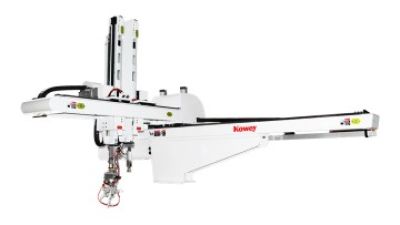
Medium 5 Axis Double Stage And Double Arm Injection Robot: Grand View Research Market Outlook
Medium 5 Axis Double Stage And Double Arm Injection Robot: Grand View Research Market Outlook
Automation is becoming a central growth driver in the injection molding industry as manufacturers seek higher productivity, consistent quality, and lower dependence on manual labor. Grand View Research’s market outlook highlights continued expansion in industrial automation, supported by demand for smart, connected production systems. The International Federation of Robotics reported more than 541,000 industrial robots installed worldwide in 2023, demonstrating the broader shift toward automated manufacturing and digitally managed factories.
Designed for 650–1300T injection molding machines, the medium 5-axis double-stage and double-arm injection robot addresses the operational needs of medium- and large-tonnage horizontal molding lines. Its full-servo configuration supports precise movement, while the double-stage speed-doubling structure improves cycle efficiency. The double-arm design can coordinate part picking, sprue separation, in-mold insert loading, and in-mold labeling, allowing several process steps to be integrated into one automated workflow.
From a market perspective, this configuration supports the industry’s movement toward flexible and labor-saving production. The robot can also connect with downstream assembly equipment, enabling continuous material handling and more intelligent line management. For manufacturers modernizing existing molding cells, its combination of high payload suitability, multifunctional handling, and programmable servo control offers a practical route to improve throughput and production consistency.
FAQS
The 2023 global benchmark was 541,302 industrial robot installations. It includes many industries, not only injection molding. Use it as market context, not direct demand data.
Measure cell output, uptime, integration effort, and recovery time. Also record cycle time, payload, reach, gripper weight, and changeover minutes. A five-second gain can matter greatly.
It suits fast part removal from a fixed mold area. It can also handle stacking, trimming, inspection, and conveyor transfer. Simple tasks often need simpler equipment.
No. Higher payload can support heavy trays and inserts. It may also reduce acceleration and increase energy use. Include the gripper, sensors, cables, and product weight.
Tests may exclude the actual mold, material, cooling period, or safety settings. Factory results can differ. Measure the complete cell during production.
Watch mold entry, part removal, withdrawal, and conveyor clearance. Check movement after warm-up. Listen for vibration near the mold opening.
Not always. A stable robot may produce more saleable parts over long shifts. A faster system can lose time during mold changes or recovery.
They strongly affect integration and daily uptime. Check emergency-stop recovery, programming time, service access, and operator clearance. Small obstacles become expensive later.
Compare supplier data with the 541,302-installation benchmark. Then run a timed trial using the real mold and payload. My judgment may be imperfect, so production evidence should decide.
Conclusion
Choosing the top Imm Robot for 2026 requires more than comparing advertised speed or payload. The right system depends on the molding cell, part geometry, required reach, and production volume. Three-, five-, and six-axis designs offer different levels of flexibility, while ISO 9283 accuracy testing and EUROMAP 67 connectivity help verify real performance. Buyers should also compare cycle time, payload capacity, energy consumption, and repeatability, with ±0.1 mm serving as a useful benchmark for demanding applications.
A reliable evaluation should include documented 24/7 service support, guarding, integration, and compliance with ISO 10218 and CE requirements. Industry installation data can provide context for market demand, but the final decision should focus on total cost of ownership, expected OEE, maintenance needs, and payback period. By examining measurable evidence instead of brand claims, manufacturers can select an Imm Robot that improves consistency, reduces downtime, and delivers sustainable value throughout its operating life.


 Contact Email