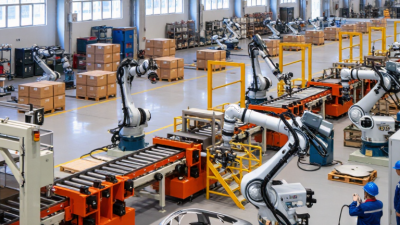
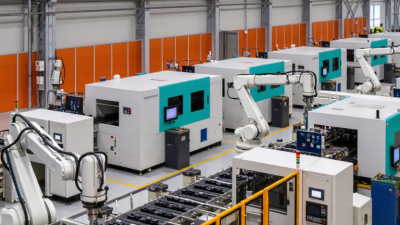
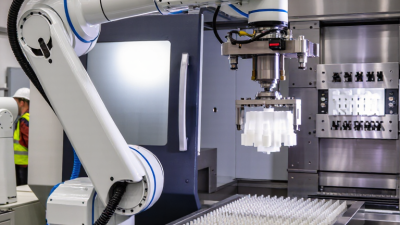
Honestly, a production line doesn't usually change in one big dramatic moment. More often it's just—new product shows up, a fixture gets nudged, or operators spend all shift repeating some tiring motion hundreds of times. A Multi Axis Robotic Arm can really help with those kinds of shifts, since its joints move in several directions and it can adapt without missing a beat. It can reach around a machine guard, flip a component, and drop it into a tray—no need for a separate station for every single move. And honestly, those little cycle details? They matter a lot.
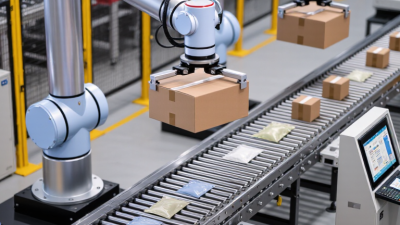
Think about a packaging line, for instance: one arm grabs a carton, rotates it, and slides it under the label applicator. In a machine-tending cell, another arm loads a metal part, waits through the cycle, then takes out the finished piece. The real advantage isn't just having 'more axes'—it's being able to adapt the tool path to the actual workspace. But flexibility alone doesn't guarantee a smooth installation. Honestly, we still haven't nailed down payload, reach, cycle time, gripper design, and operator access — all of those are going to need a careful once-over.
You know, robotics pioneer Joseph Engelberger supposedly once said, "I can’t define a robot, but I know one when I see one." It’s a great quote—sticky, right? But when it comes to automating something today, that gut feeling isn’t going to cut it. You’ve actually got to test the job with real parts and realistic conditions, not just on paper. And don’t forget maintenance access—or what happens if a part shows up slightly misaligned. That kind of stuff matters. Plus, not every task is meant for a robot arm. Sometimes the smarter move is a much simpler device. Look, any real evaluation has to start with the actual work itself—not just the idea that automation’s gonna save you.
What Defines a Multi-Axis Robotic Arm?
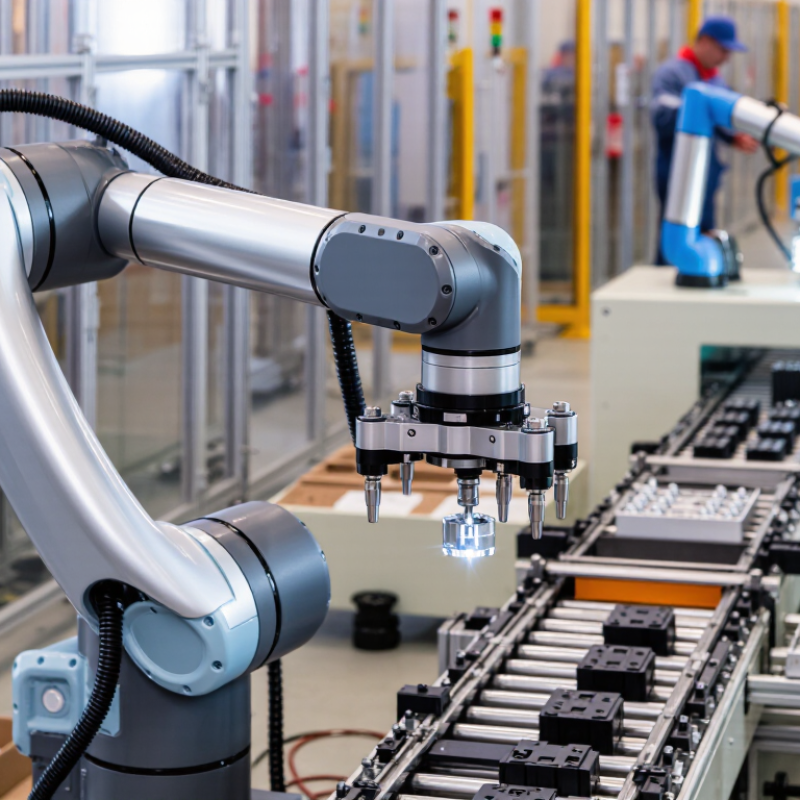
A multi-axis robotic arm is a jointed machine whose movements are controlled along several independent axes. Each axis adds a direction or rotation the arm can use to position its tool. A common six-axis design can turn at its base, bend through its shoulder and elbow, and orient its wrist in three ways. That distinction matters. Axis count describes available motion, not reach, speed, or lifting capacity.
The controller coordinates these joints so the end effector can follow a planned path. For example, a gripper may approach a part from above, rotate to match its angle, then place it into a narrow fixture. More axes, more options. Yet extra movement does not automatically make a task easier. In practice, the neat diagram can mislead: nearby guards, cables, or the arm’s own links may block a desired pose. Engineers check reach, payload, joint limits, and tool orientation together, then test the path at reduced speed. Setup also takes care. A small change in tool length can shift the working point, so calibration needs to reflect the real installation, not just the model.
How Do Its Axes Enable Complex Movement?
A multi-axis robotic arm moves beyond simple pick-and-place paths because several joints can change position together. Each axis adds a direction of movement or rotation. A base joint may sweep the arm across a workcell, while shoulder and elbow joints reach around fixtures. The wrist can then tilt or turn a tool toward a specific surface. That coordination lets the tool approach a part from an angle, not just straight on.
Picture a nozzle following a curved seam or a gripper lifting a part from a crowded tray. The arm adjusts its joints as the tool travels, helping maintain a useful orientation along the path. In Multi Axis Cnc Robotics, this flexibility can support machining and other controlled tool movements, provided the motion plan matches the machine and workpiece. Small changes matter. A few degrees at the wrist can shift the tool tip noticeably, so calibration and collision checks are essential.
More axes do not automatically mean better results. They add setup work, control complexity, and more chances for a poorly planned path to reach a fixture or exceed a joint’s range. Not magic. Engineers still need to define safe limits, test the motion, and inspect the finished part. A practical design question is whether each axis solves a real access or orientation problem. Sometimes, fewer axes are easier to operate and maintain.
Which Automation Tasks Suit Multi-Axis Arms?
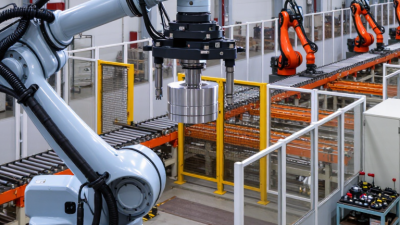
Multi-axis robotic arms suit automation tasks that need movement across several planes. A six-axis arm can reach around a fixture, tilt a part, and approach a machine from different angles. This makes it useful for machine tending, pick-and-place, packaging, and palletizing. A gripper can lift a component from a tray, rotate it, and place it into a machine without changing the workcell layout. Small changes in part position are easier to accommodate than with a fixed-path device. That matters.
The International Federation of Robotics’ World Robotics 2024 report recorded 541,302 industrial robot installations worldwide in 2023. This figure does not prove that every factory needs a multi-axis arm. It does show how widely industrial robots are being adopted. In practice, multi-axis systems are especially helpful for arc welding, fastening, and inspection when the tool must follow a curved surface or reach a recessed area. Stable paths can also support consistent processing from one part to the next.
Yet flexibility has a cost. Extra axes can mean more programming, calibration, and maintenance. A simple transfer between two fixed points may be cheaper with a simpler mechanism. I would question a multi-axis proposal if parts arrive consistently and the motion never changes. Tool weight, cycle time, and access to the work area should be checked before selection. And programming can take longer than expected.
What Efficiency Gains Can These Arms Provide?
A multi-axis robotic arm can improve efficiency by handling several movements in one coordinated cycle. It can pick a part from a fixture, rotate it, and place it at the next station without a separate transfer device. Fewer handoffs can reduce waiting time and help keep production flowing. Small gains add up. In a Multi Cavity Cutlery Mold Matching Packing Line, for example, an arm can sort molded pieces by position before packing. This may reduce manual repositioning, especially when parts emerge quickly from multiple cavities.
Repeatability matters, too. A programmed arm can follow the same path and placement points across repeated cycles, helping limit handling variation. Operators can spend less time moving parts and more time checking quality or replenishing materials. The actual benefit depends on cycle time, gripper design, and how well the arm is integrated with conveyors and sensors. Poorly planned layouts can simply move a bottleneck elsewhere. Changeovers also take time, and tooling needs regular inspection. There is no magic shortcut. A small production trial can reveal whether the arm truly increases throughput, or only adds complexity.
Why Choose a Multi Axis Robotic Arm for Automation? — What Efficiency Gains Can These Arms Provide?
| Comparison Dimension |
3-Axis System |
4-Axis System |
6-Axis System |
| Typical motion |
Linear movement along X, Y, and Z axes; often configured as a Cartesian or gantry system. |
Usually adds a rotary axis to position or orient a part; common configurations include SCARA robots. |
Six coordinated axes provide three-dimensional positioning and tool-orientation control; commonly an articulated arm. |
| Reach and access |
Works well in a defined rectangular work envelope and along straight paths. |
Can reach around a work area and rotate parts or tools, depending on the arm layout. |
Can approach workpieces from many directions and reach around obstacles within its designed workspace. |
| Typical applications |
Pick-and-place, dispensing, inspection, and loading or unloading along fixed paths. |
High-speed assembly, sorting, packaging, and palletizing or handling tasks with part rotation. |
Machine tending, arc welding, painting, complex assembly, and handling tasks requiring varied tool angles. |
| Potential efficiency gain |
Automates repetitive linear movements and can reduce manual transfers between fixed stations. |
Combines positioning and rotation in one operation, which may reduce part reorientation and handling steps. |
Performs multi-angle operations with fewer workpiece repositioning steps, potentially shortening handoffs and setup changes. |
| Flexibility for product changes |
Best suited to consistent tasks and layouts; changes may require adjustments to the travel area or fixtures. |
Offers added orientation flexibility for product families with similar handling needs. |
Often adaptable to a wider variety of part shapes, approach directions, and tool paths through reprogramming. |
| Key trade-off |
Limited tool orientation and access compared with systems that have rotary joints. |
Capabilities depend on the axis arrangement; it may not provide the approach freedom of a six-axis arm. |
More axes can require more programming, integration, and safety planning; extra flexibility may be unnecessary for simple tasks. |
| Best selection criterion |
Choose when the task uses predictable, mostly linear movement within a fixed work envelope. |
Choose when the process needs added rotation without the full flexibility of a six-axis arm. |
Choose when the process needs varied approach angles, complex paths, or access around obstacles. |
Note: Axis arrangements and performance vary by robot design, tooling, payload, reach, programming, and application. Efficiency improvements depend on the process and should be validated through cycle-time and workflow measurements.
How Do They Improve Precision and Consistency?
Why Choose a Multi Axis Robotic Arm for Automation?
How Do They Improve Precision and Consistency?
A multi-axis robotic arm can approach a part from different angles, helping it place components without awkward repositioning. In a packing cell, that may mean picking up a lightweight cup, rotating it, and placing it squarely beneath a filling nozzle. Repeatability matters more than a single perfect movement. ISO 9283 provides methods for testing robot performance, including pose accuracy and repeatability under specified conditions. Actual results still depend on payload, speed, tooling, and setup.
Consistency comes from repeating programmed paths and controlling motion across several axes. The International Federation of Robotics reported 541,302 industrial robots installed worldwide in 2023 in its World Robotics 2024 report. That figure shows broad adoption, not a guarantee of accuracy. A Multi-Cavity Mold Sauce Cup Integrated Packing System, for example, still needs correctly aligned fixtures and regular checks. Small calibration errors can build up. Robots are not magic.
Tips: Check repeatability using the real part, tool, and operating speed. Keep an eye on gripper wear and fixture movement. A quick test at startup can catch drift before it affects a full batch.
Why Choose a Multi-Axis Robotic Arm for Automation?
More axes give a robot more movement and tool-orientation options. This chart shows the typical number of axes in common industrial robot configurations.
Why it matters: Additional axes can help a robot reach around obstacles and maintain the desired tool angle, supporting repeatable processes across varied tasks. Axis count alone does not determine precision: calibration, robot design, payload, and control also affect accuracy and consistency.
What Factors Guide Robotic Arm Selection?
Why Choose a Multi Axis Robotic Arm for Automation?
What Factors Guide Robotic Arm Selection?
Start with the actual workpiece and its path, not the number of joints. Record the pickup point, placement point, and any turns needed between them. A Long Robotic Arm may reach across a large cell, but extra reach can reduce stiffness and make precise placement harder. Reach estimates can be optimistic. Check the full working envelope against fixtures, guards, and nearby equipment.
Payload includes more than the part. Add the gripper, cables, and any sensor mounted at the tool end. Then compare that total with the arm’s capacity at the required reach, not just its headline rating. Consider cycle time, repeatability, and the tolerance the process truly needs. A few millimeters may be acceptable for loading a tray, but not for fitting a small component. Ask for performance data under conditions close to the intended task.
The cell matters as much as the arm. Note floor space, mounting position, dust, heat, and access for maintenance. Confirm that controls can communicate with existing equipment and that operators can safely load materials. A layout drawing may miss a cable snag or a tool change that slows the cycle. That detail is easy to overlook. Test a representative part and tool before finalizing the selection.
How a Light 5-Axis Double-Stage, Double-Arm Injection Robot Boosts Molding Efficiency
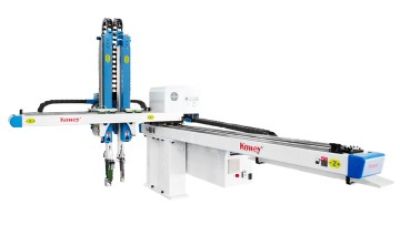
A light 5-axis double-stage, double-arm injection robot can improve molding efficiency by coordinating part removal and downstream handling in one automated cycle. Its lightweight structure supports fast movement, while 5-axis servo control enables precise positioning around the mold. The double-arm, double-stage configuration can help reduce waiting between operations by handling tasks such as product picking, sprue cutting, stacking, and insert embedding. Designed for injection molding machines from 50 to 650 tons, with a Y-axis stroke of 700–1,300 mm, it can serve a range of small, medium, and large production setups.
The wider shift toward automation reflects a measurable manufacturing trend: the International Federation of Robotics’ *World Robotics 2024* report recorded 541,302 industrial robots installed worldwide in 2023, while global robot density reached 162 robots per 10,000 manufacturing employees. In a molding workshop, automating repetitive take-out and handling work can help stabilize cycle-to-cycle operation, reduce manual transfers, and free operators for tasks that require judgment. The robot’s application-specific reach and dual-arm workflow make it a practical option for production lines seeking to improve throughput and consistency without changing the core molding process.
Conclusion
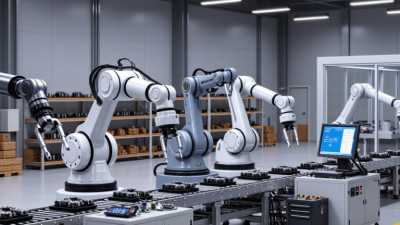
A Multi Axis Robotic Arm uses several coordinated joints to move tools or components through a wide range of positions and orientations. By combining movement across multiple axes, it can reach around obstacles, follow complex paths, and handle tasks that require more flexibility than simple pick-and-place operations. Suitable applications may include assembly, machine tending, material handling, packaging, and precision finishing, depending on the workpiece and production environment.
In automation, these arms can reduce repetitive manual work, shorten task cycles, and support consistent operation across production shifts. Programmable motion helps maintain repeatable positioning and steady process quality, while flexible configurations make it possible to adapt the system to different tasks. Choosing an arm involves considering payload, reach, speed, accuracy, workspace, tooling, safety needs, and integration requirements. Matching these factors to the application helps ensure that the robotic system delivers practical efficiency and reliable performance.


 Contact Email