
Leave Your Message
-
Contact Phone
-
 Contact Email
Engineered for high-cavitation molds, ultra-fast dry cycle times under 0.3s, and round-the-clock reliability in high-throughput food and consumer packaging environments.
How rapid consumer demand, stringent hygienic regulations, and rising raw resin costs necessitate advanced robotic automation in thin-wall injection molding.
High-cavity thin-wall containers solidify in milliseconds. Dynamic servo robots achieve mold entry and part take-out in under 0.28 seconds to prevent cycle stagnation.
Electrostatic label transfer and dummy-core placement demand repeatability within ±0.05 mm, ensuring zero scrap during continuous high-speed food cup labeling.
Eliminating human operators from direct part handling guarantees zero microbial contamination for pharmaceutical vials, dairy containers, and food delivery bowls.
The global plastic packaging sector is undergoing a profound paradigm shift. Driven by fast-moving consumer goods (FMCG), ready-to-eat meal deliveries, and rigorous food preservation standards, converters are forced to push production limits. Injection molding machines (IMMs) operating with high-speed multi-cavitation molds (ranging from 4 to 128 cavities) generate millions of parts weekly. At such astronomical volumes, cycle times are measured down to hundredths of a second. Standard mechanical take-out or gravitational free-drop methods are obsolete; free falling damages polished lip rims, warps thin seal grooves, causes static clustering, and creates severe contamination risks.
Consequently, dedicated injection molding robot automation has transitioned from an auxiliary optional add-on to the central nervous system of modern packaging manufacturing plants. Whether deploying side-entry full-servo Cartesian robots for ultra-thin margarine tubs or high-payload top-entry robots for 5-gallon industrial paint pails, automation balances high-speed mold clearance with intelligent downstream sorting, visual defect rejection, nested stacking, and automatic case packing.
Robust mechanics, low-inertia carbon-composite arms, and synchronized multi-axis servo loops engineered specifically for container packaging lines.
Thin-wall packaging robots undergo intense mechanical stress, accelerating up to 10G and traveling at speeds exceeding 9 m/s. Standard steel or heavy aluminum end-of-arm tooling (EOAT) would generate tremendous vibration, triggering mold-clamp collisions or premature mechanical fatigue. State-of-the-art robotic systems incorporate high-modulus carbon-fiber beams paired with ultra-light aerospace aluminum vacuum plenums. Advanced servo drivers utilize active vibration suppression algorithms, absorbing sudden deceleration spikes within milliseconds to ensure butter-smooth container extraction.
In high-speed multi-cavity container production (e.g., 8-cavity dairy cups or 16-cavity deli lids), dropping a single item inside the mold causes immediate catastrophic mold damage during clamp close. Kowey automation systems utilize individualized digital vacuum switch channels for each separate cavity. If a cavity fails to reach the critical vacuum threshold within 15 milliseconds, the system initiates an instantaneous mold-safety halt, triggering an audible alarm and alerting the upstream IMM before mold closure.
| Robotic Architecture | Target Packaging Segment | Typical Mold Open Time | Total Cycle Range | Key Technical Advantage |
|---|---|---|---|---|
| Side-Entry High-Speed Servo | Thin-wall yogurt cups, deli tubs, round bowls | ≤ 0.28 - 0.45 s | 2.2 - 4.5 s | Shortest horizontal travel; ideal for low ceiling heights. |
| Top-Entry Bull Head 3/5-Axis | Food containers, storage crates, deep boxes | ≤ 0.8 - 1.4 s | 4.5 - 12.0 s | Heavy payload capacity, versatile cross-bay palletizing. |
| In-Mold Labeling (IML) Turnkey | Ice cream containers, butter tubs, oil pails | ≤ 0.9 - 1.6 s | 3.8 - 7.5 s | Simultaneous electrostatic label feed & vacuum part take-out. |
| PET Preform Top-Entry Multi-Stage | 48/72/96/144-cavity beverage preforms | ≤ 1.2 - 2.2 s | 6.5 - 14.0 s | 3-stage air/water cooling plate prevents neck ovality. |
Customized automation workflows addressing the exact physical parameters, cycle speeds, and post-molding handling demands of diverse packaging containers.
Sub-3-second cycles with synchronous multi-stage nesting, auto-counting, counter-rotating stackers, and automated inline sleeve bagging.
Electrostatic charging bars apply pre-printed polypropylene labels into mold cores prior to injection, yielding mono-material, 100% recyclable containers.
High-torque 5-axis servo robots demold 5L to 20L paint pails, orient bail handles, conduct inline pressure leak testing, and palletize autonomously.
Extraction of up to 144 preforms per cycle, transferring them into customized multi-pass water-cooled take-out receivers to eliminate cycle-time bottlenecks.
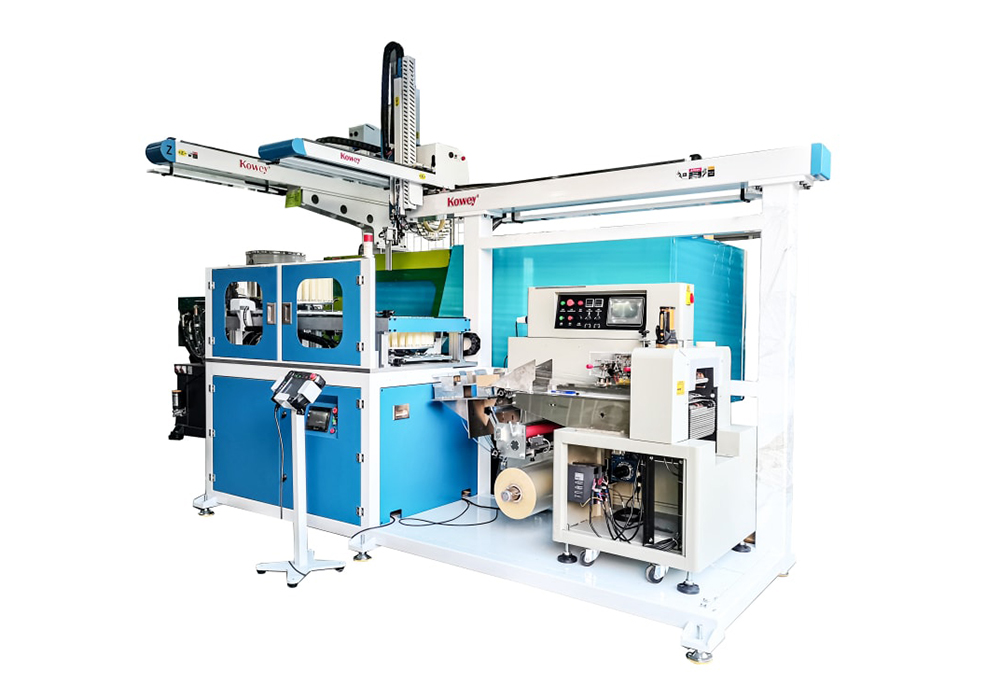
In-Mold Labeling represents the zenith of rigid plastic container decoration. Traditional adhesive labels or dry-offset printing processes suffer from moisture peeling, scratching, and tedious secondary labor overhead. In a modern automated IML cell, the robot serves a dual role: it functions simultaneously as a precision label applicator and an extraction tool.
During mold opening, the robot's dummy core picks die-cut polypropylene labels from an external magazine using high-flow suction cups. The labels are electrified via dedicated static charging heads (up to 30kV) before insertion into the mold cavities. The static charge causes the flexible label to adhere flawlessly against the refrigerated mold cavity steel wall without air entrapment. Concurrently, the reverse side of the robotic EOAT extracts the previously molded containers via custom silicone vacuum cups. Upon mold injection, the molten polymer fuses seamlessly with the label film, forming an indivisible, tamper-resistant, barrier-grade finished container.
Explore our extensive portfolio of standard, specialized, and custom-engineered injection molding robotic platforms.
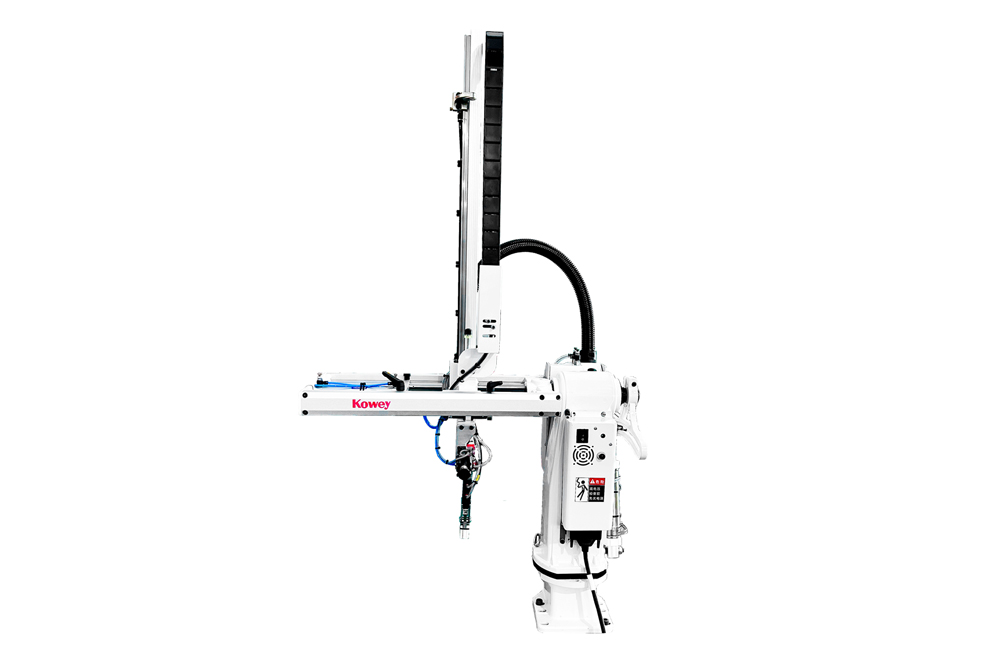
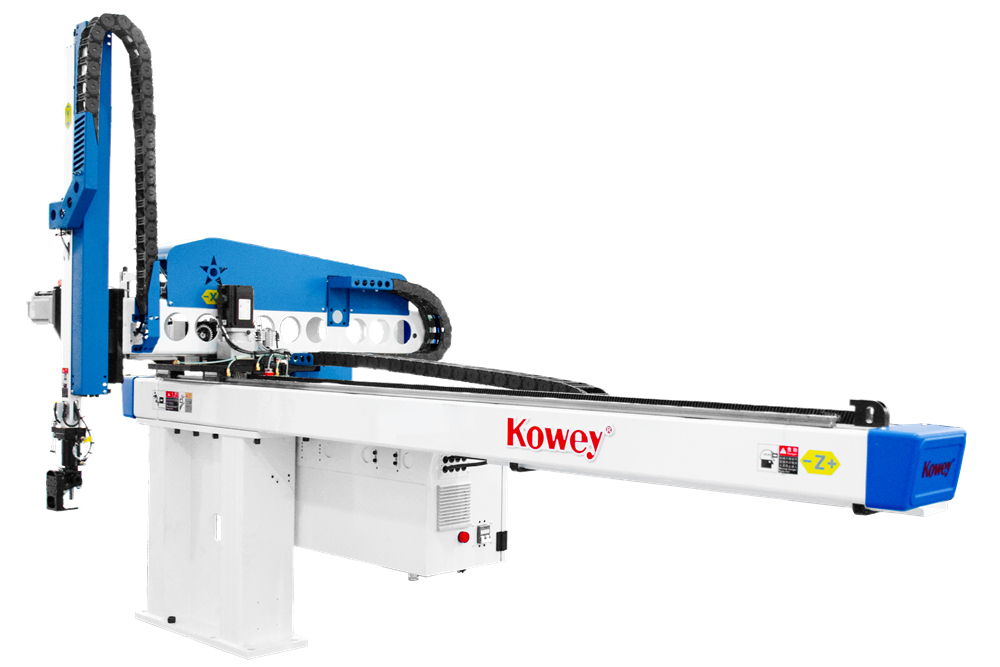
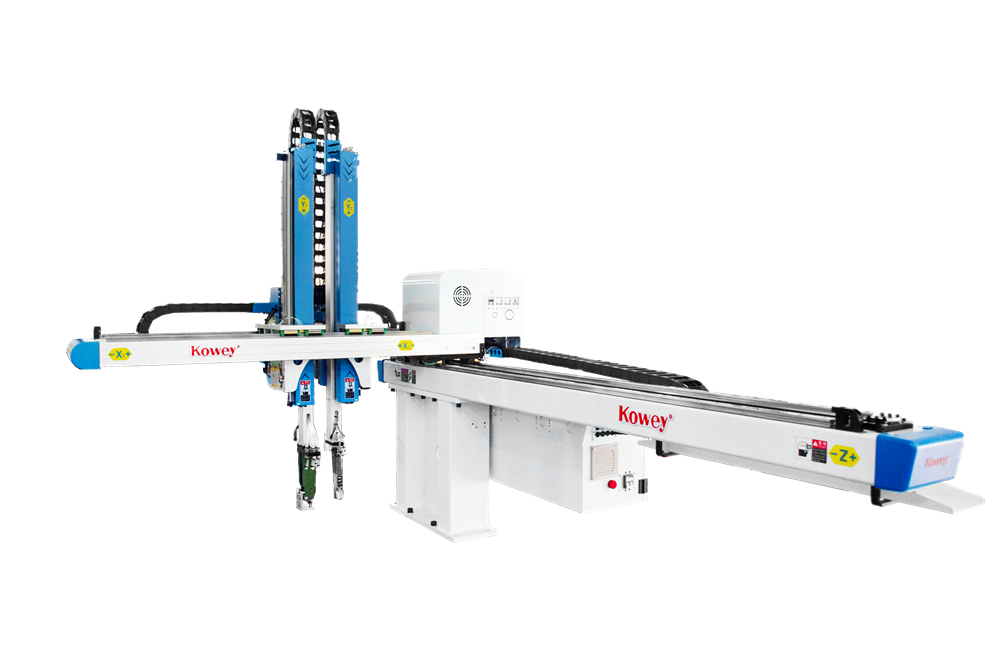
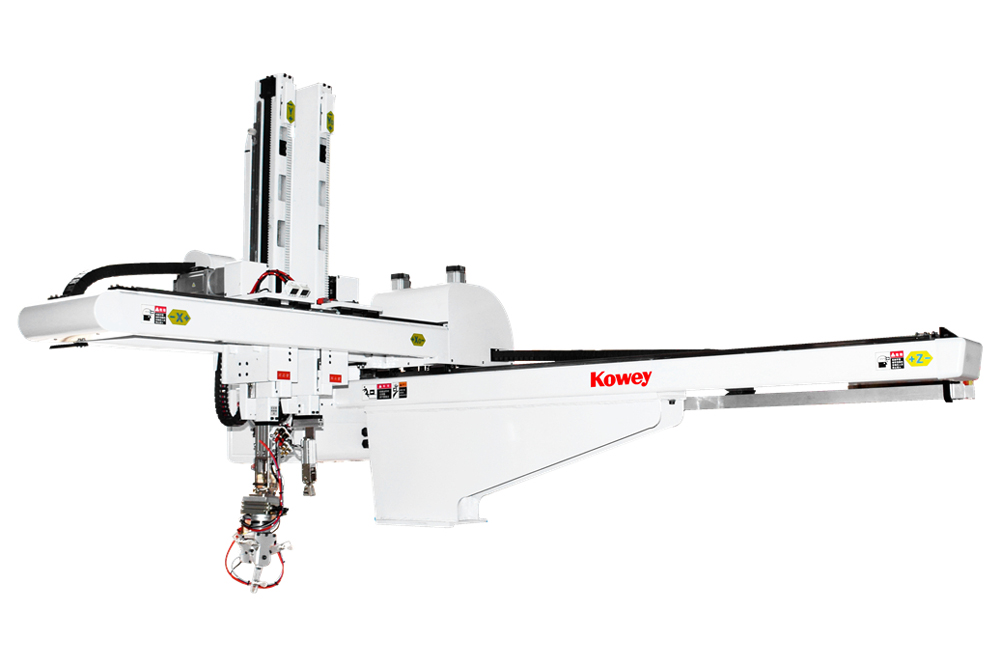
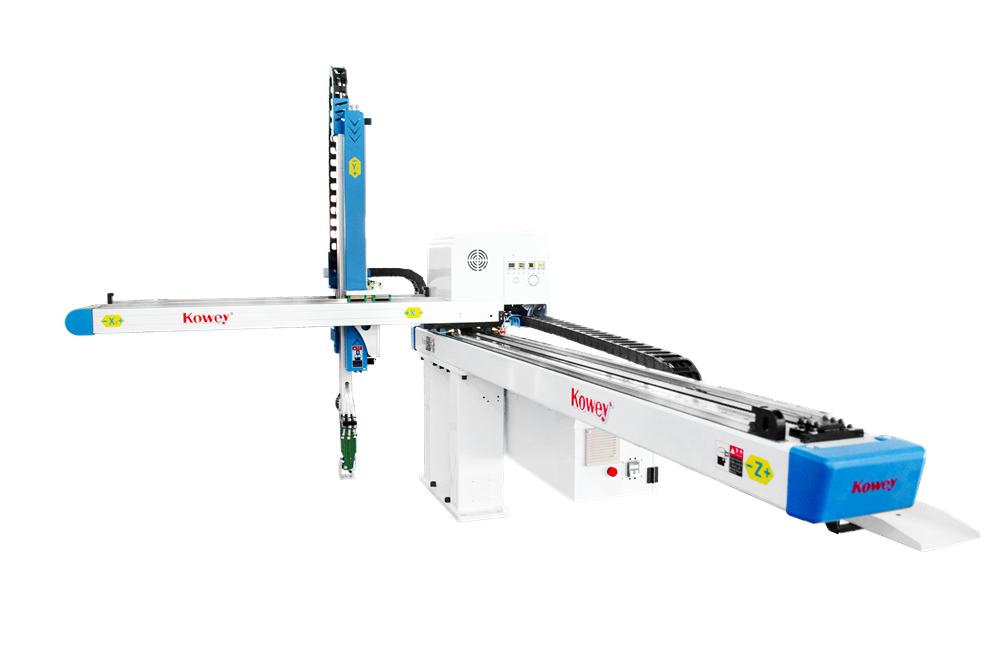
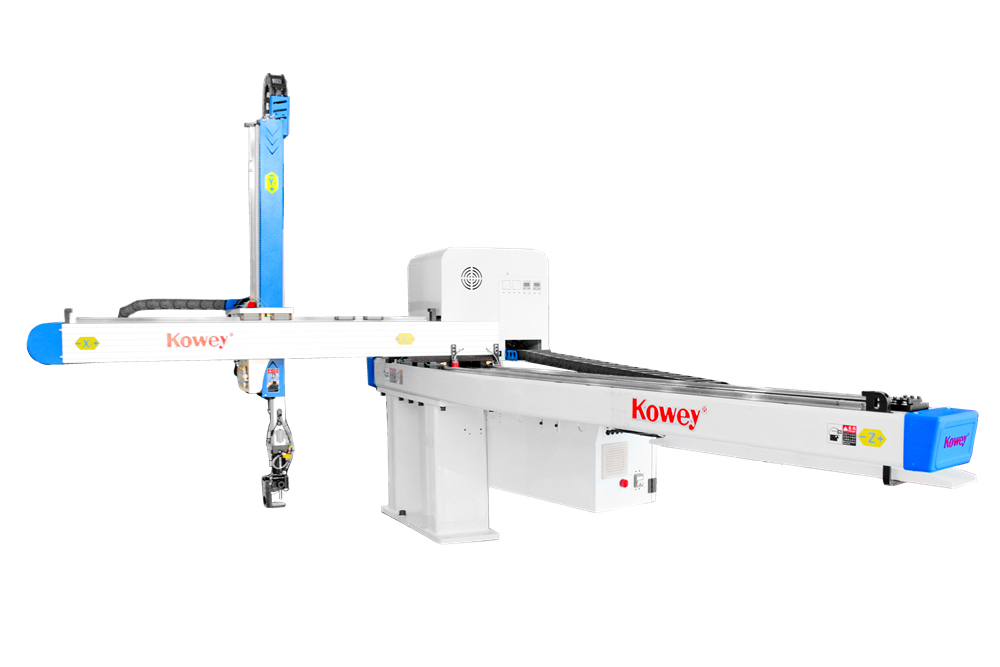
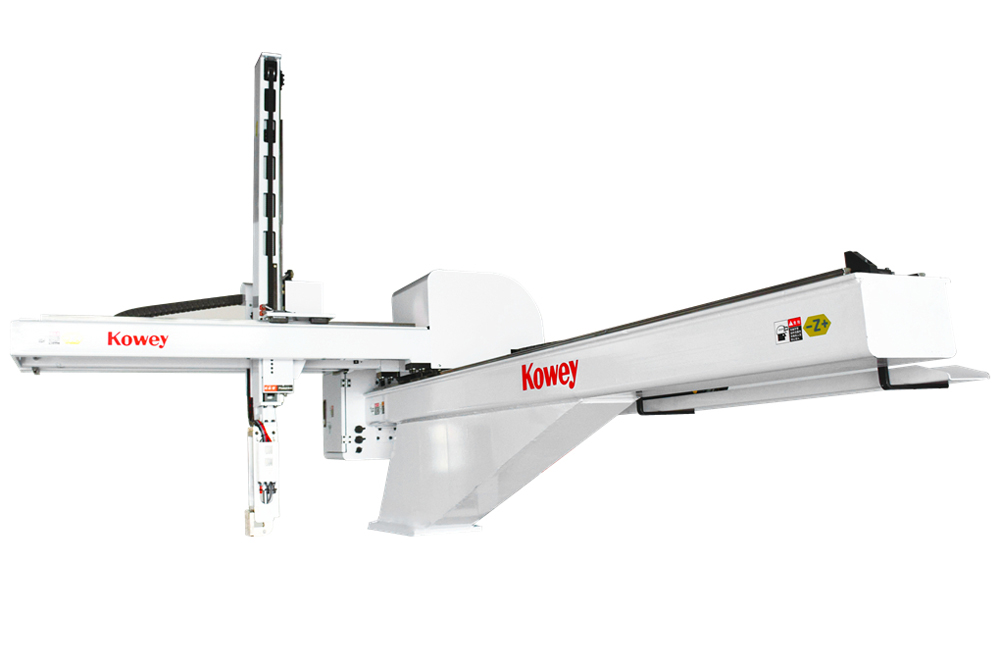
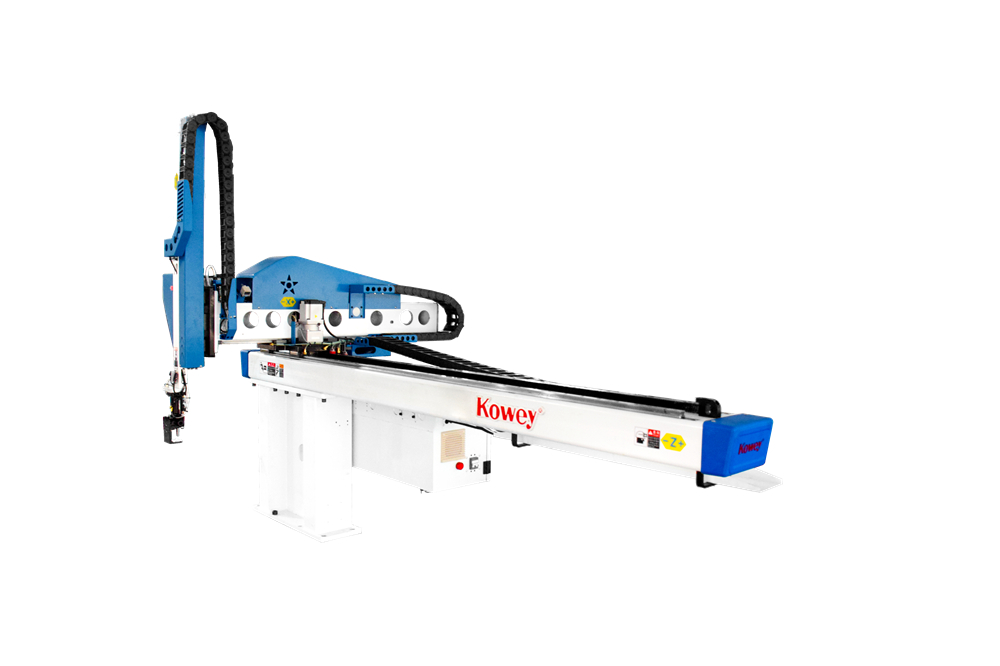
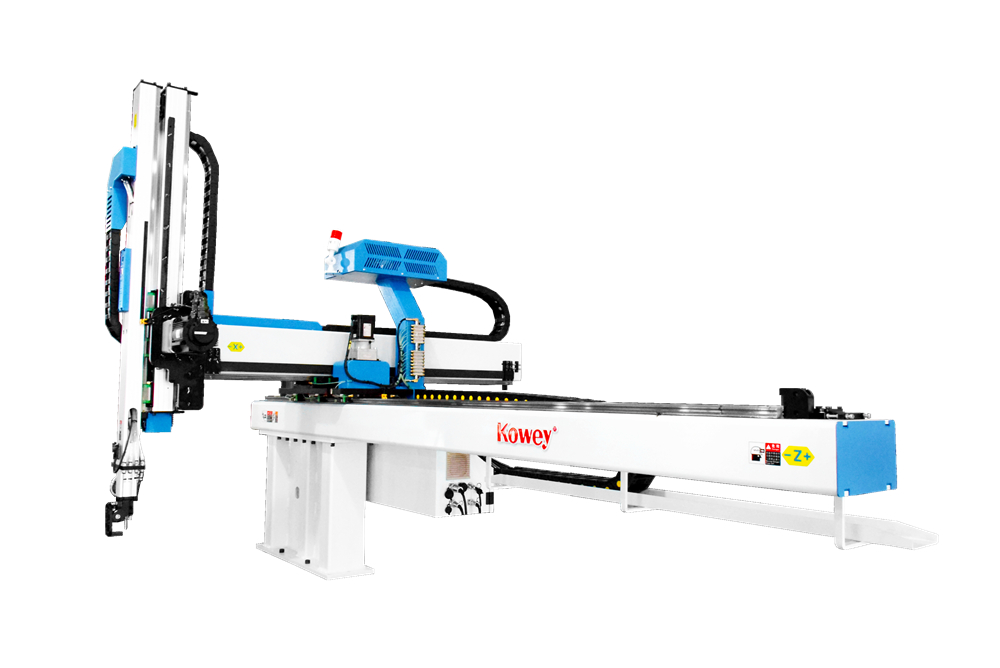
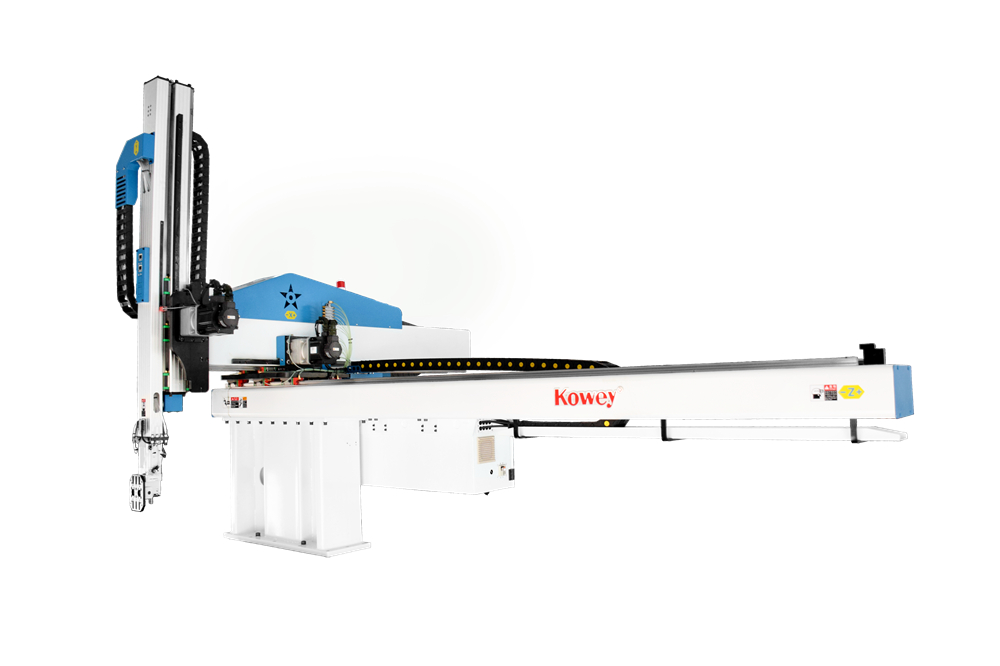
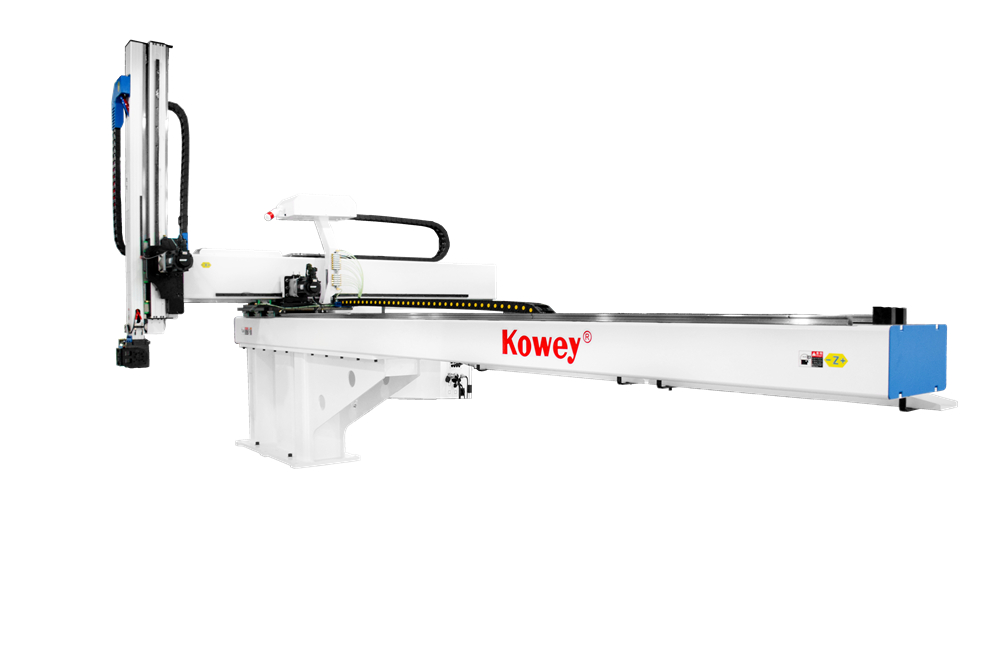
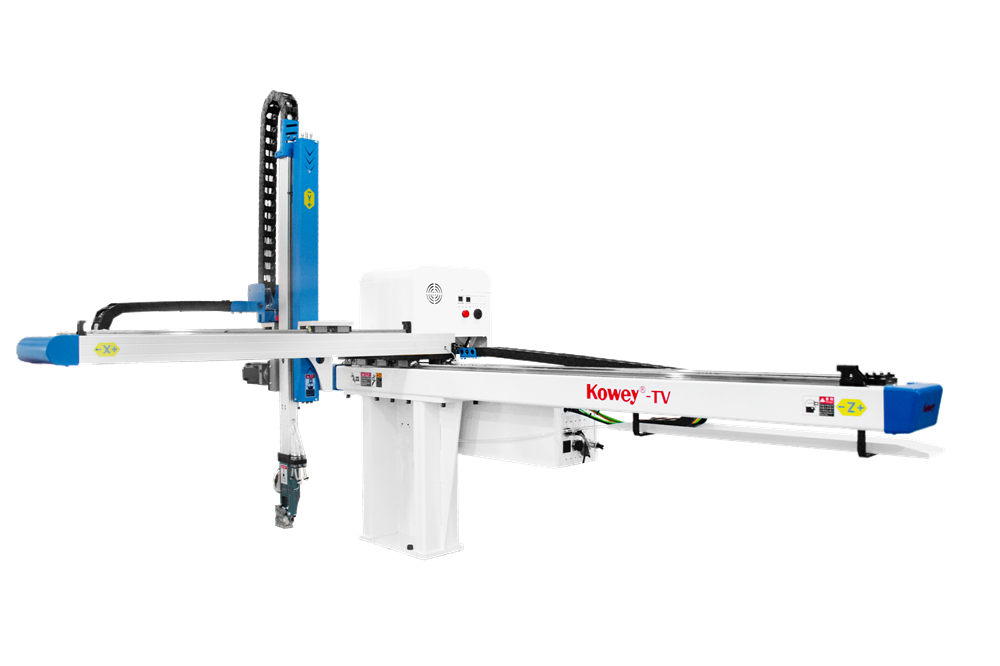
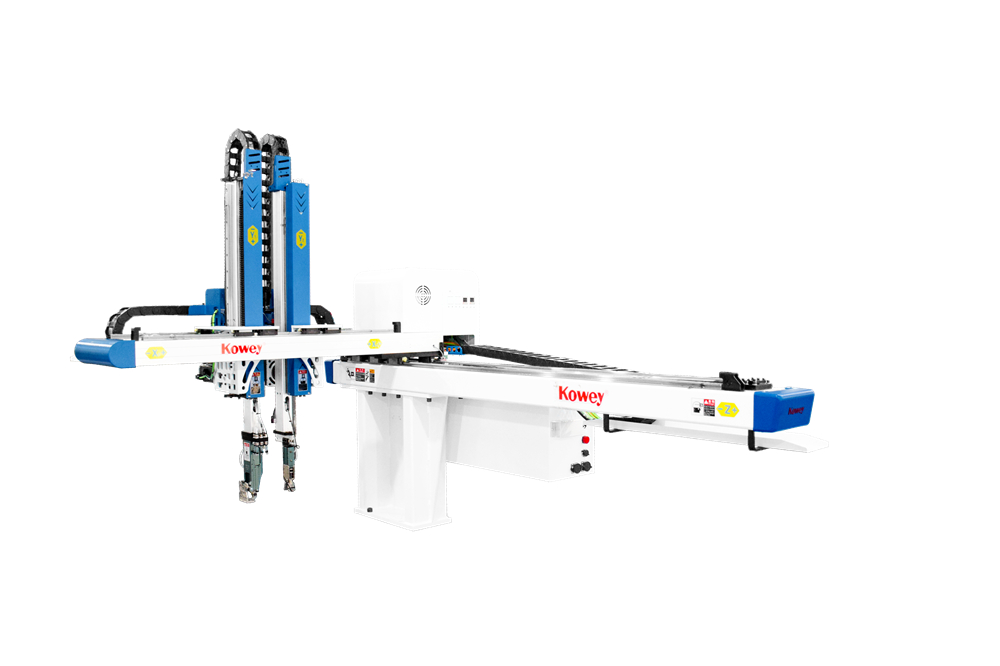
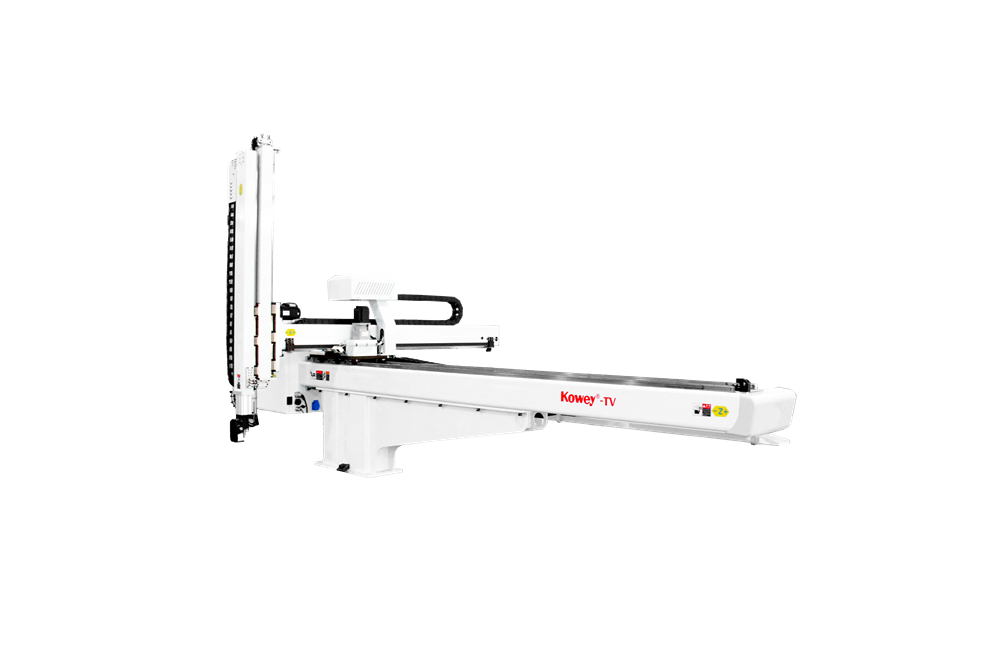
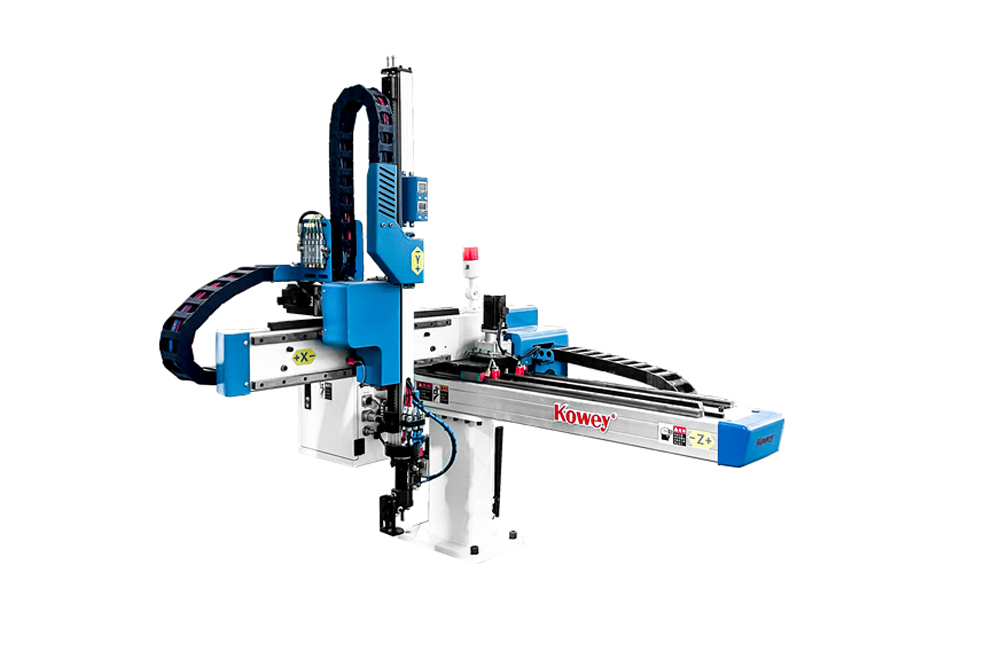
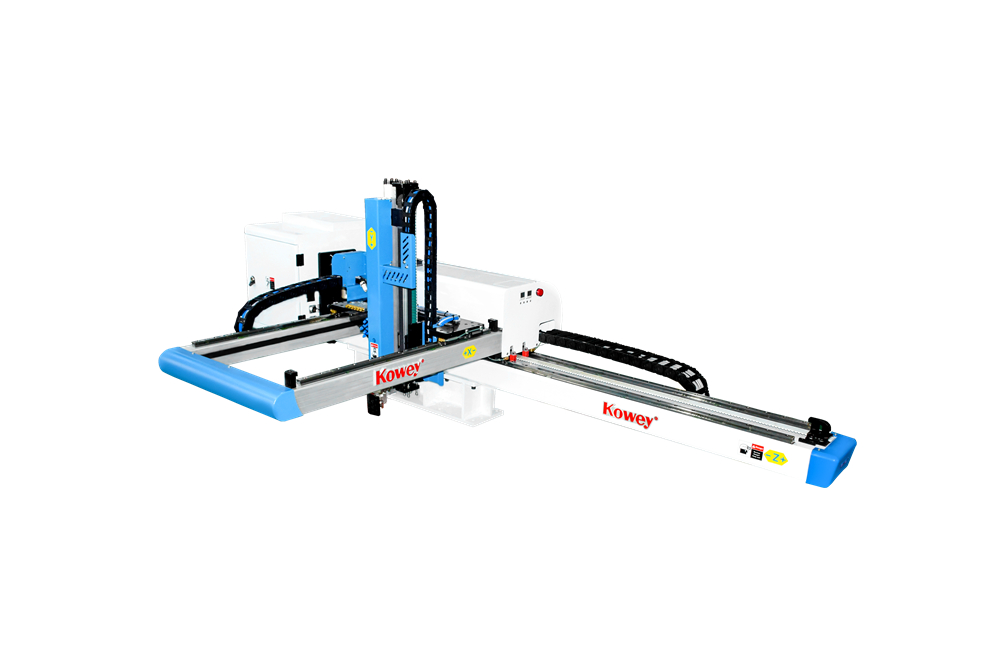
Bridging mechanical motion with real-time neural vision algorithms, predictive maintenance, and standardized machine communications.
Modern packaging lines cannot rely on manual off-line sampling. Kowey automated injection robotic cells integrate inline high-resolution optical inspection stations directly positioned along the robot exit trajectory or conveyor interface. As the robot arm traverses to the discharge area, multi-camera arrays capture 360-degree profiles of the container in microseconds. AI-driven vision software inspects critical failure modes:
When a defective container is spotted, the robot controller receives an instant cavity-specific reject signal, routing the defective piece directly to an integrated regrind granulator chute while flawless containers proceed to automated nesting towers without slowing cycle speeds.
Seamless communication between the injection molding machine and the packaging robot is non-negotiable. Kowey robots feature standard Euromap 67, Euromap 79, and modern Ethernet-based OPC-UA protocols. Through bidirectional high-speed data exchanges, the robot continuously tracks clamping plate position, ejector forward/retract status, and core pulls. If the IMM detects an injection anomaly (e.g., peak injection pressure deviation or cushion shift), the robot automatically flags and diverts the entire current shot, preventing out-of-spec batches from entering logistics pipelines.
Tangible capital expenditure payback modeling, scrap reduction indices, and energy savings for large-scale container converters.
Investing in custom injection molding robot automation produces rapid, mathematically provable return on investment (ROI). In typical packaging operations running 24/7/365, human operators incur substantial cumulative costs: multiple shift wages, social insurances, cleanroom attire, and inherent productivity drops during shift rotations. More critically, human part collection cannot match the rhythmic consistency of a servo-driven automation cell.
By shortening mold-open time by just 0.6 seconds on a 4-cavity food container mold running at a baseline 5.0-second cycle, an automated production line yields over 1,036,800 additional saleable containers annually per machine. Simultaneously, part rejection rates drop from an industry average of 2.8% to under 0.15% due to consistent demolding force and the total elimination of part bruising. When factoring in reduced power usage from modern kinetic energy recovery servos (KERS), most packaging packaging converters recover their entire robotic capital investment within 7 to 11 months of continuous commissioning.
Explore our complete turnkey robotics portfolio designed to maximize yield, cycle efficiency, and reliability across plastic container, cup, and cutlery production.