
Leave Your Message
-
Contact Phone
-
 Contact Email
High-speed mechanical demolding and component orientation systems built for heavy tonnage press cells.

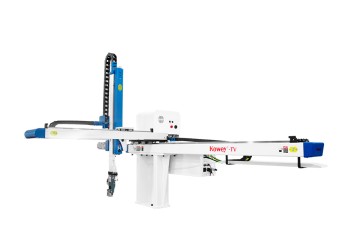
Analyzing structural complexities, cycle time reductions, and the evolution of smart injection automation.
The modern home appliance sector, spanning major white goods like front-load washing machines, side-by-side refrigerators, dishwasher inner tubs, and large-format air conditioner housings, operates under intense market pressures. Production executives grapple simultaneously with shrinking commercial lead times, surging raw polymer costs, and increasingly rigorous cosmetic tolerances. Unlike minor electronic consumer products, home appliances require massive structural plastic parts formed within heavy clamping force injection molding machines ranging between 800 and 4,000 metric tons. Handling parts of this scale manually or via basic pneumatic pickers creates intolerable throughput bottlenecks, heightened defect margins, and substantial occupational safety risks.
To capture margins, top-tier domestic appliance factories have shifted from isolated automation cells to fully integrated cyber-physical manufacturing layouts. Here, the large scale robot for home appliance production lines serves as the central operational hinge. These robust rectilinear gantry and bull-head manipulators do not merely retrieve cooling parts from mold cavities; they actively synchronize thermal conditioning, optical visual quality gates, ultrasonic welding, laser deflashing, and conveyance downstream. As a consequence, high-precision industrial Cartesian automation has moved from being an optional efficiency upgrade to an foundational infrastructure requirement for competitive original equipment manufacturers (OEMs).
The ongoing industrial transition toward Industry 4.0 has introduced critical technological vectors into robotic automation machinery. The integration of high-resolution digital servomotors coupled with low-backlash planetary reducers and advanced lightweight aluminum structural trusses enables large scale robots to move multi-kilogram end-of-arm tooling (EOAT) at accelerations exceeding 4G, all without imparting structural vibration back to the injection machine platen.
Furthermore, Edge AI algorithms and Industrial IoT (IIoT) protocols (such as OPC UA and Euromap 67/73) are becoming universal. Real-time predictive maintenance routines analyze motor torque signatures and linear guide friction levels, detecting micro-anomalies before mechanical degradation interrupts mass production. The emergence of eco-mode regenerative braking circuits within multi-axis servo controllers is also reshaping shop floor energy consumption profiles, recuperating kinetic deceleration energy and returning clean power back into factory networks.
Utilizing dual-stage telescopic mechanical structures to drastically decrease ceiling height requirements while absorbing structural sway during high-speed take-out sequences.
Engineered vacuum cup arrays and customized non-marking polymer grippers ensure Class-A high-gloss appliance facades (like television frames) remain pristine without micro-abrasions.
High-payload wrist units handle simultaneous sprue extraction and large-panel part separation, executing complex spatial rotation maneuvers within confined tool spaces.
Detailed operational breakdown across complex consumer hardware manufacturing domains.
Refrigerator inner linings and crisper drawers present significant challenges due to their deep cavities, thin walls, and large projected surface areas. When molding these high-impact polystyrene (HIPS) or ABS components, thermal variation across the tool can cause severe warpage if demolding forces are applied unevenly. Large scale bull head 3-axis and 5-axis servo robots apply precisely controlled distributed vacuum profiles. Equipped with multi-zone pneumatic feedback sensors, the robot grips the liner uniformly as the mold cracks open, counteracting part retention forces and eliminating physical distortion during high-speed extraction.
Washing machine tubs constructed from glass-fiber reinforced polypropylene require immense structural rigidity and high thermal resistance. These components are heavy, with substantial shot weights, and require prolonged dwell cooling. A heavy-capacity 5-axis full servo dual-arm robot can strip the thick sprue system on arm 'A' while extracting the heavy tub shell on arm 'B'. Downstream, the robotic manipulator places the part into a secondary cooling and circular trimming station, validating balancing tolerances via integrated tactile contact probes before the part enters the final mechanical assembly path.
In the manufacturing of modern flat-panel televisions and large commercial monitors, aesthetic standards are stringent. Bezels demand high gloss, seamless contours, and integrated clip retainers that cannot tolerate ejector pin marks or surface scratches. Specialized television take-out injection robots with double-stage single or double arms maneuver through tight daylight openings. They integrate secondary in-mold sensor verification, extract parts with sub-millimeter repeatable trajectories, and present them directly to automated optical inspection (AOI) vision stations to detect surface haze, flow marks, or pin flashes within fractions of a second.
Split-system indoor unit cross-flow fan assemblies involve complicated multidirectional mold cores and slides to form complex impeller blades. Demolding requires intricate rotational releases coupled with linear ejection. Large scale robotic end effectors customized with auxiliary rotational servo wrists grip these delicate aerofoil structures, rotating in sync with mechanical tool lifters to prevent blade damage. The robotic system then transfers the part onto balancing stations, executing dynamic runout measurements without manual handling.
Browse our flexible lineup of servo-driven, high-speed sprue pickers, compact arms, and heavy-payload cartesian robots.
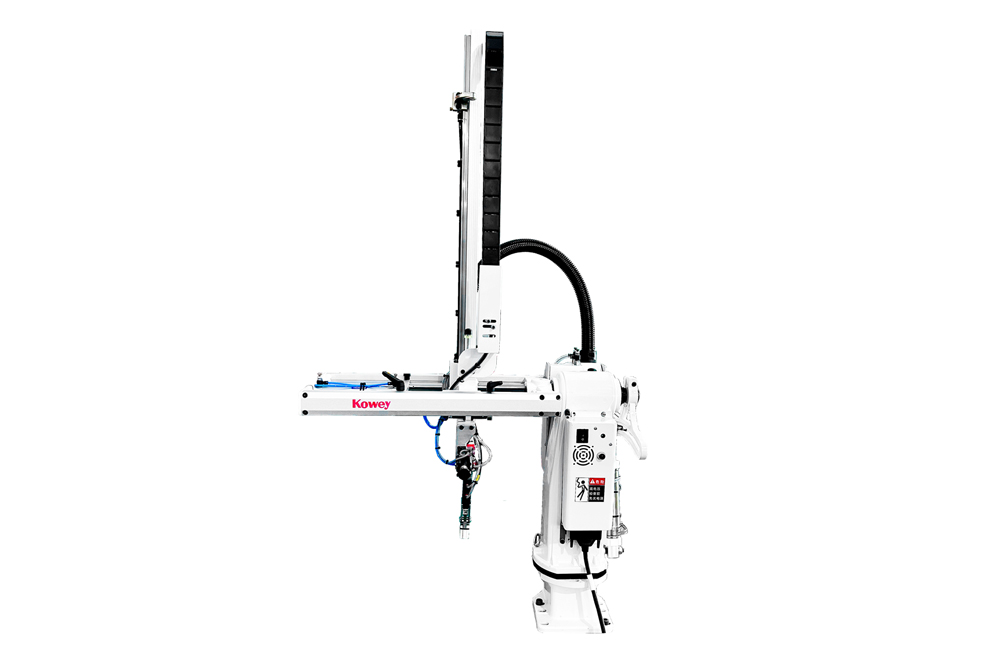
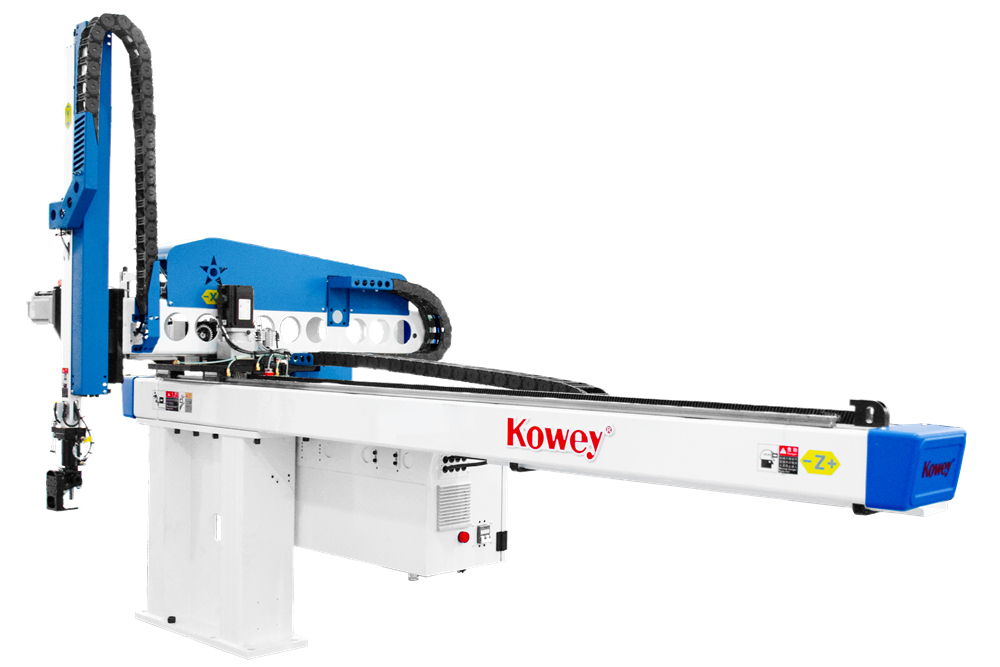
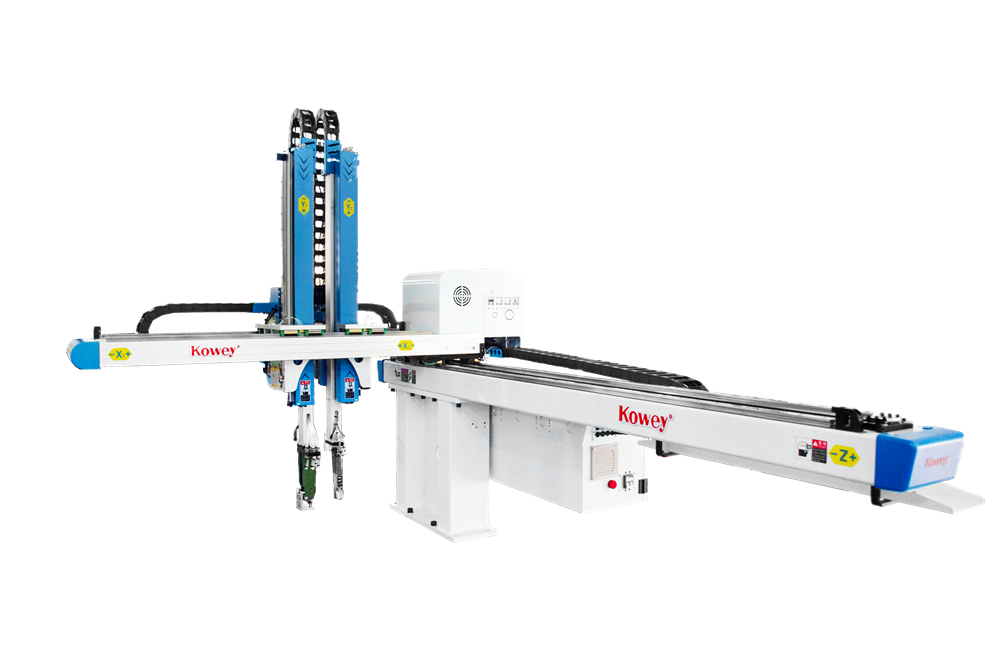
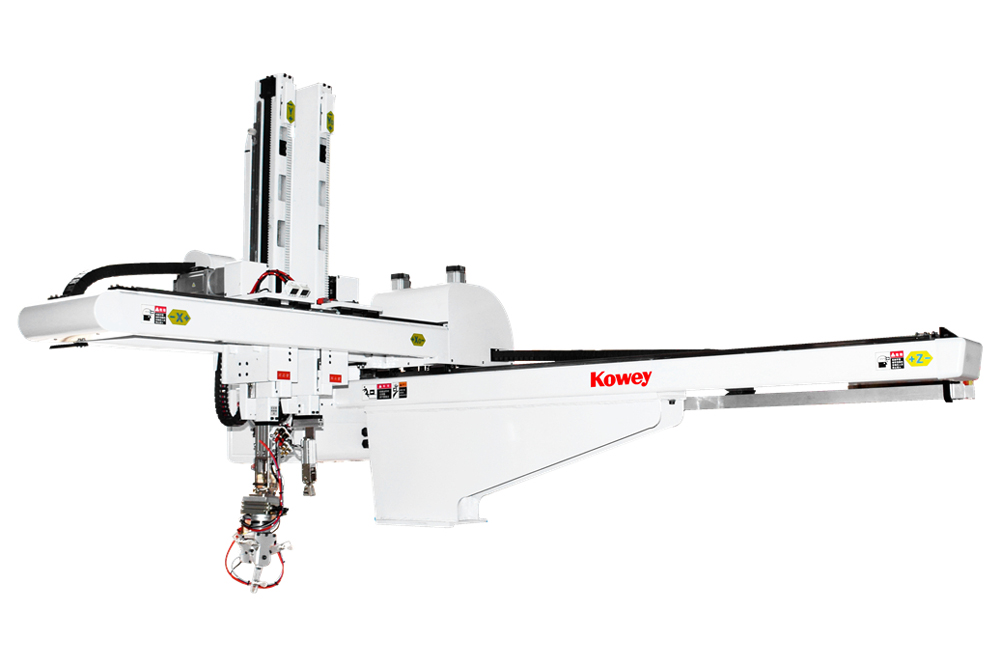
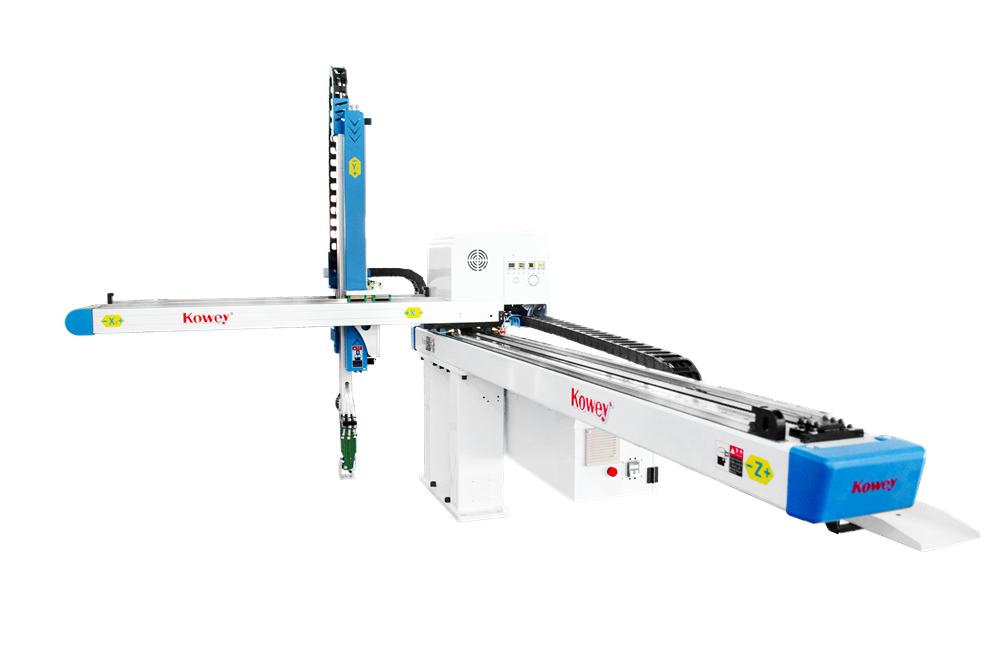
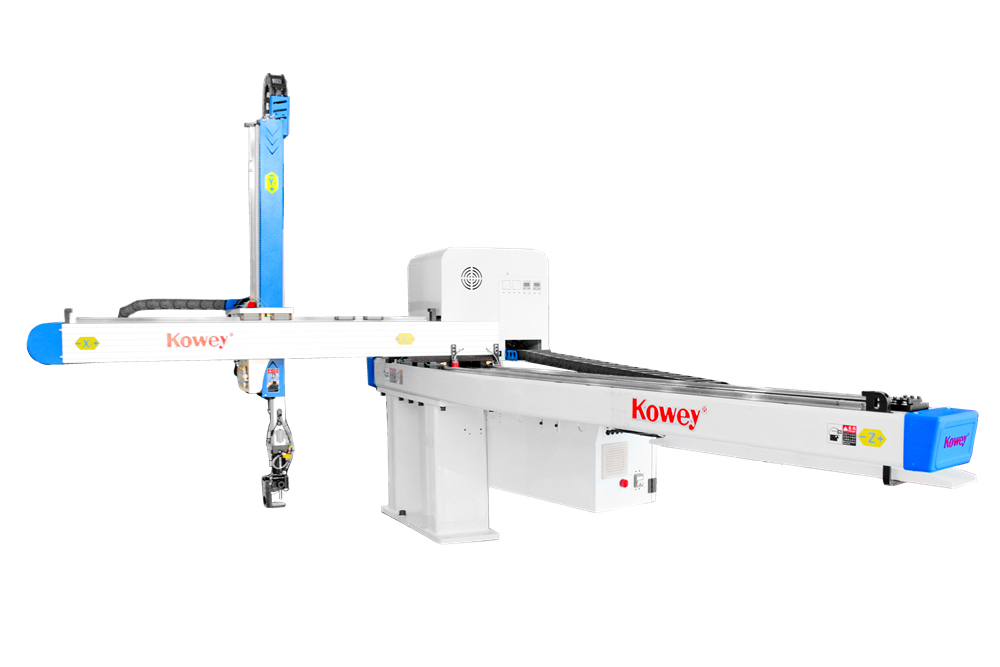
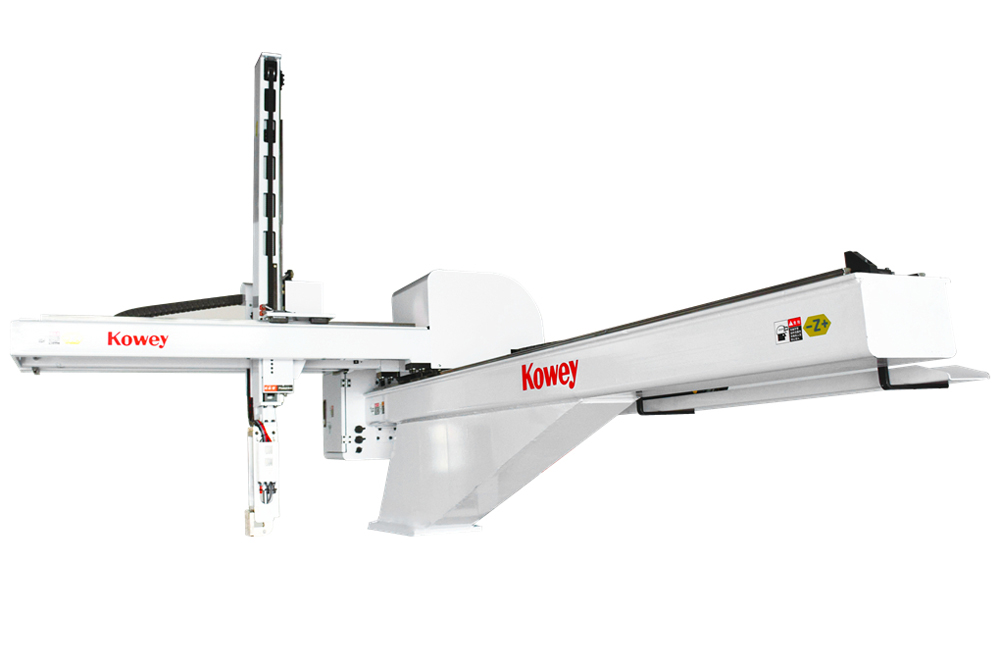
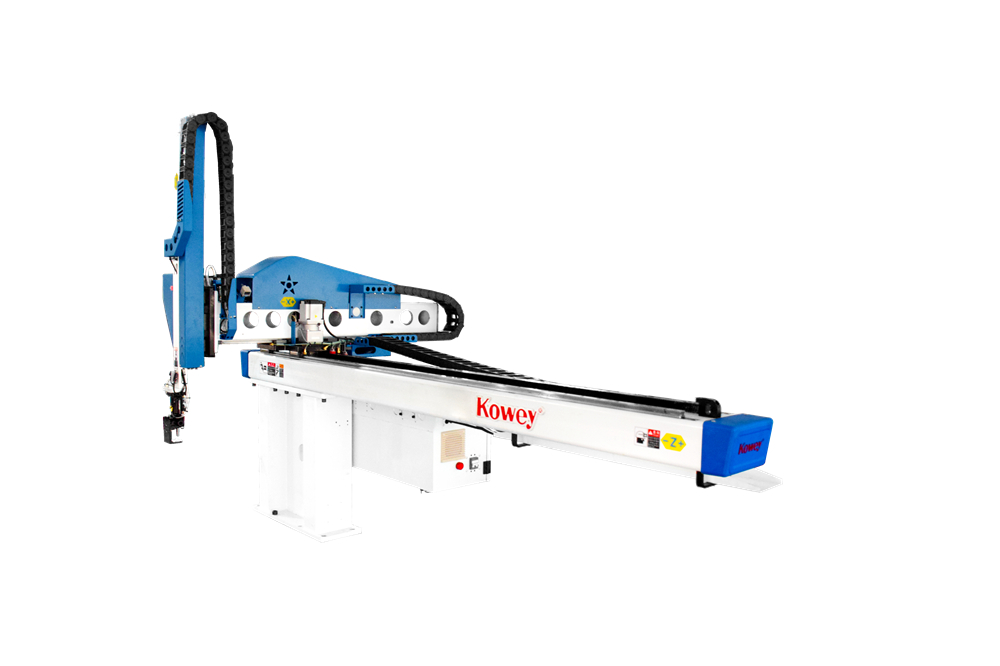
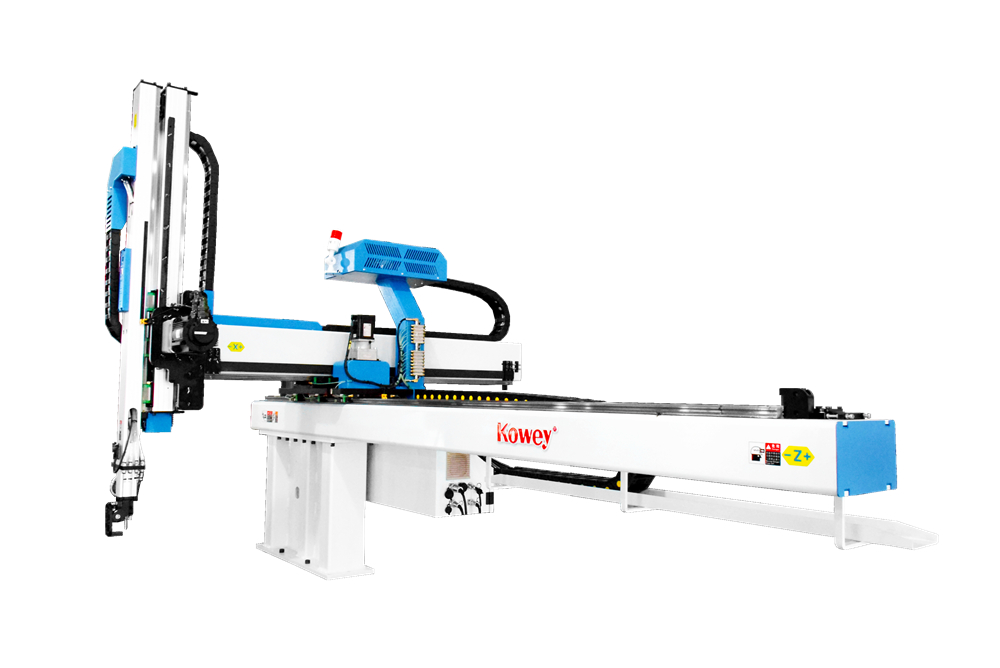
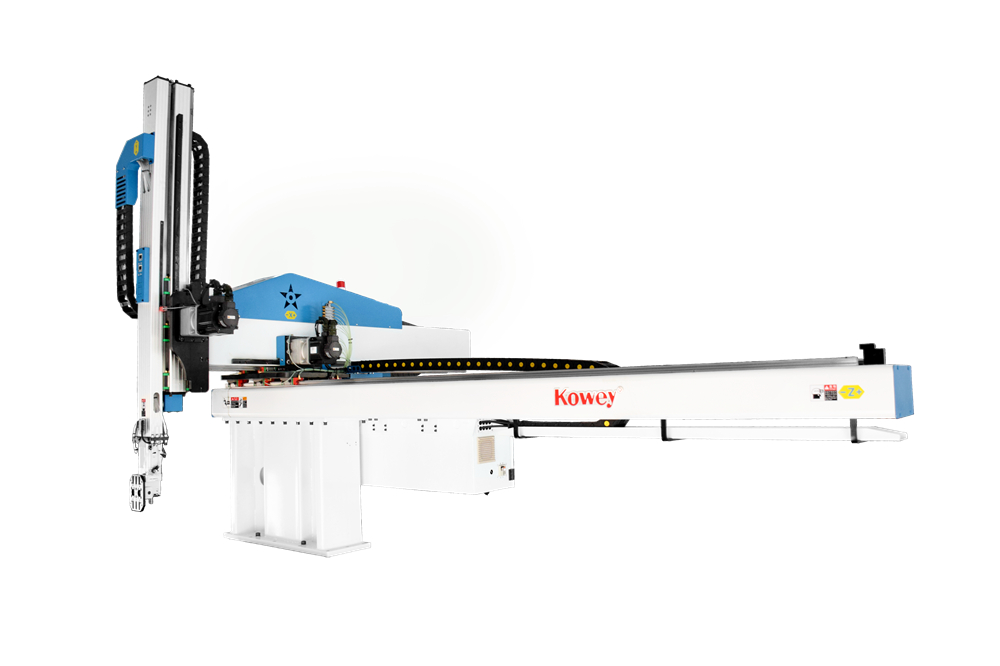
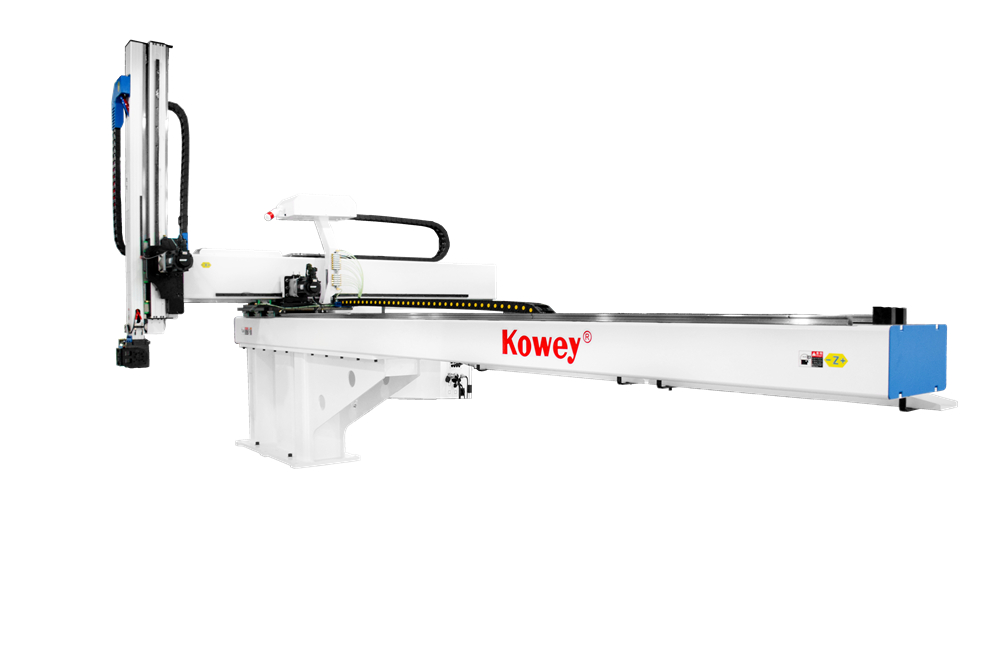
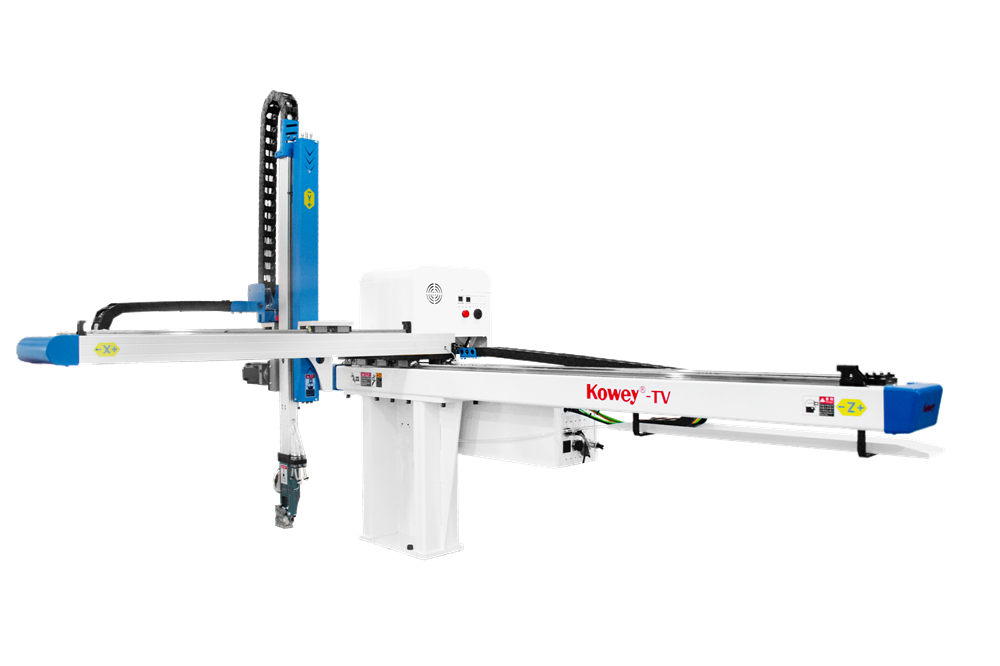
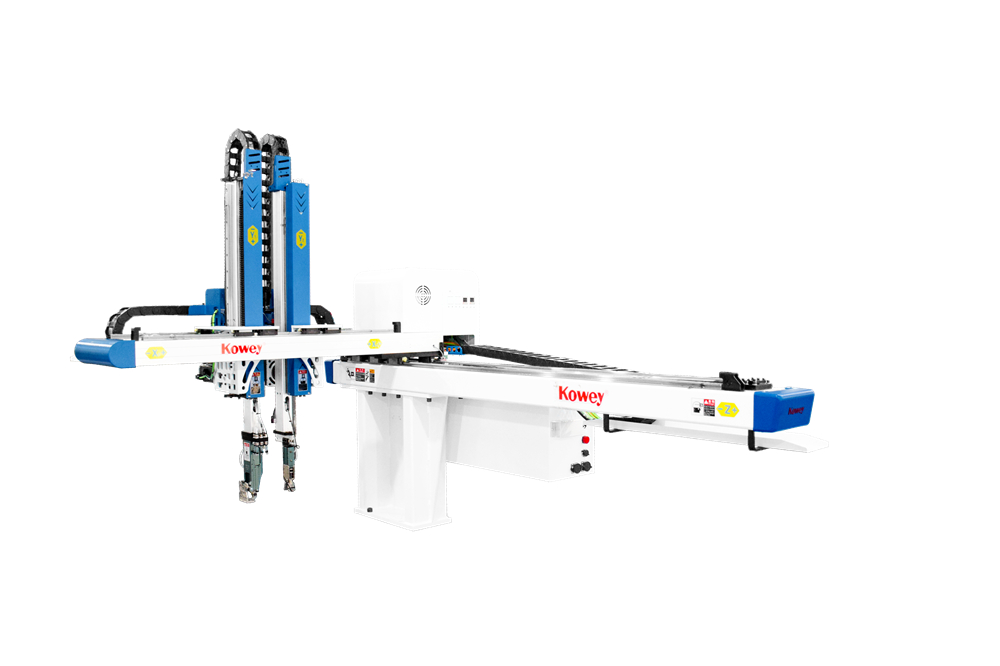
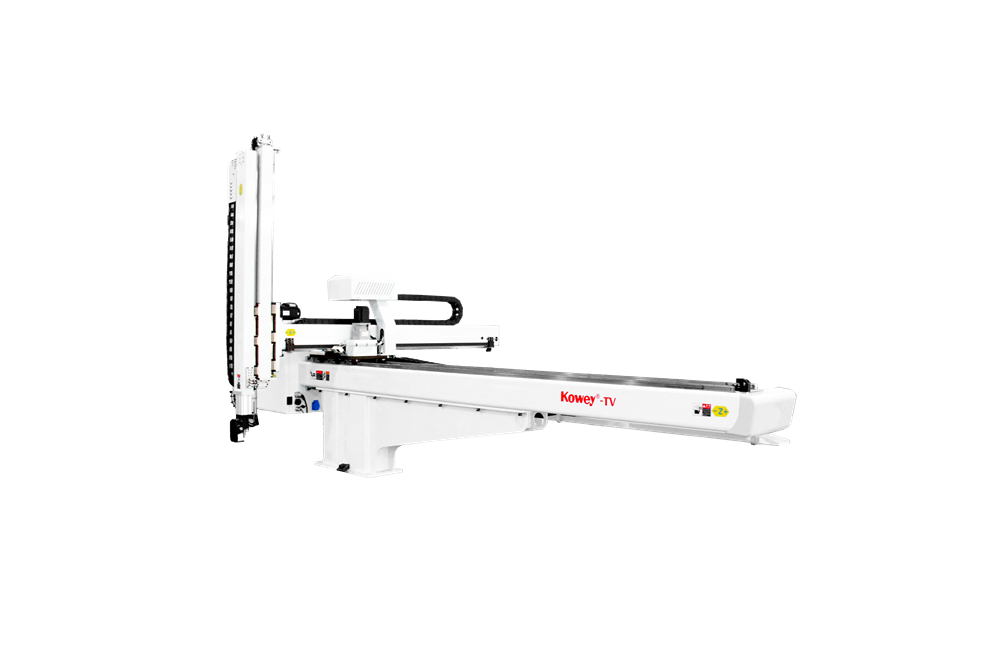
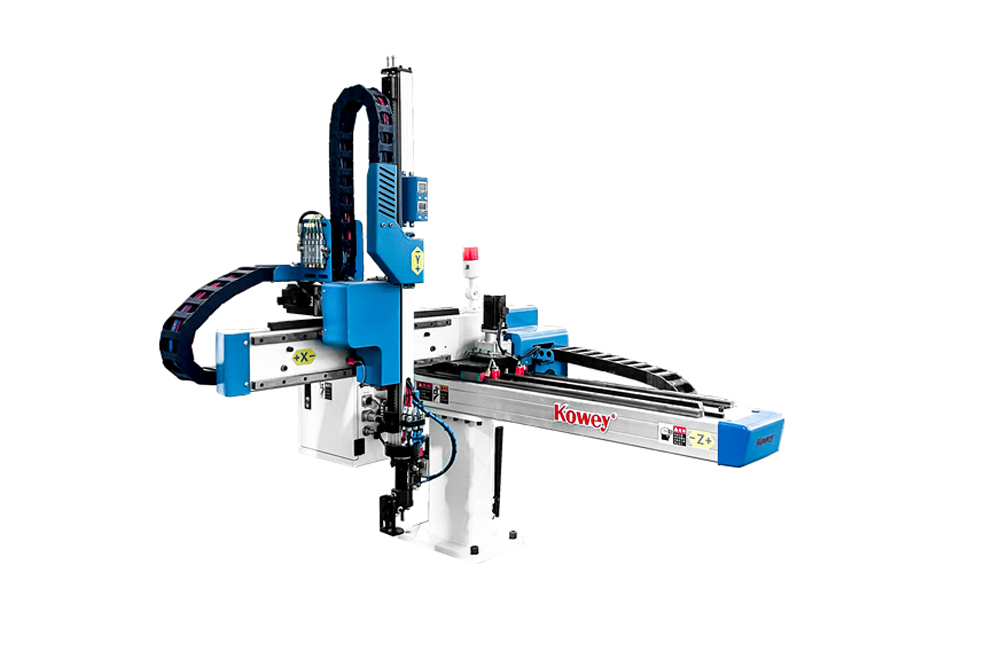
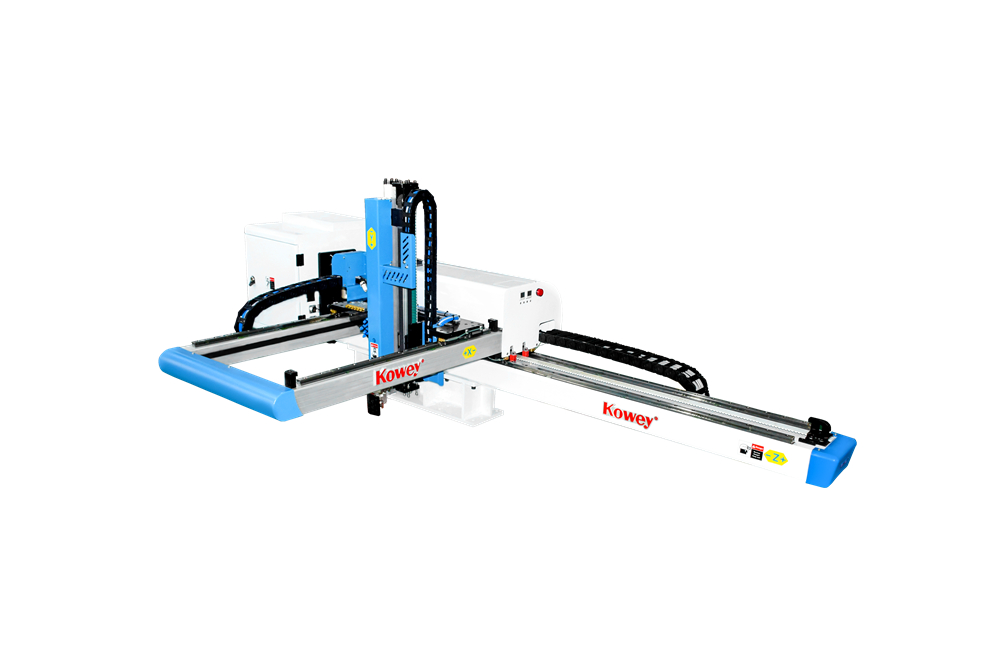
Engineered for endurance across television assembly, high-cavity packaging, and large appliance tooling cells.